
Stand atop the spectacular Dubai Frame and look north. That's old Dubai—Deira. Along the creek, you'll see low-rise buildings, crowded streets, and bustling markets. You'll barely spot anyone in traditional white robes. Instead, faces from India, Pakistan, Bangladesh, and the Philippines fill your view—hundreds of thousands of migrant workers driving cabs, delivering food, constructing skyscrapers. They're the fuel that keeps this city running.
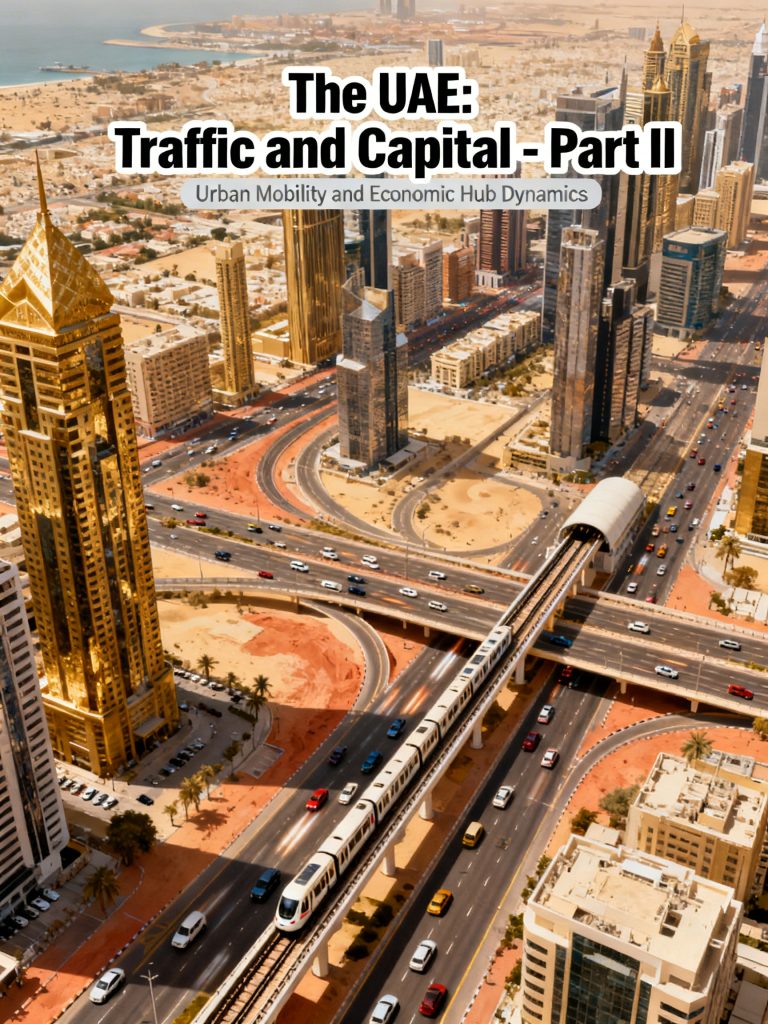
Turn around and face south. That's new Dubai. Sheikh Zayed Road, Burj Khalifa, massive shopping centers—the air thick with the scent of money. It's a monument to the world's tallest, finest, most dazzling achievements. A playground for tourists, the wealthy, and Emirati citizens.
Step down from the Frame and board Dubai's metro during rush hour. You'll notice something odd: almost no one in white or black robes. The carriages echo with Hindi and English—foreigners everywhere. Where are the locals?
The numbers tell the story. The UAE's total population sits around 10 million, but only about 10% hold Emirati citizenship. Nine out of ten people living here don't actually belong here. That 10% who are citizens? Most work for the government or state-owned enterprises, drive private cars, skip the metro entirely, live in government-allocated housing, and lead lives almost completely segregated from the expatriate majority.
The UAE operates a starkly dual-track system. Citizens and non-citizens exist in separate worlds. The welfare is extraordinary—but exclusively for citizens. In the desert era, tribes survived through mutual support. Today's extreme state protection of citizens is simply the modern continuation of that culture.
If you're a citizen, the state provides land, housing, and construction subsidies. You receive up to 70,000 dirhams (nearly $20,000) as a marriage grant. Free education, comprehensive healthcare, government positions, high salaries, stable employment—all standard. To encourage citizens to work in the private sector, the government even offers wage subsidies to make up the difference.
Emirati citizens typically earn around 30,000 dirhams monthly, concentrated in government and state enterprises—high benefits, low pressure, strong stability. Non-citizens face wildly disparate incomes. South Asian laborers earn roughly 1,000 to 2,000 dirhams—a tenfold gap. Non-citizens receive essentially no social benefits. Reports have exposed laborers working 12-hour shifts in 50-degree Celsius heat with no weekends and abysmal living conditions.
From an administrative efficiency standpoint, this system is brilliantly calculated. Welfare spending remains minimal, fiscal burden light, benefit boundaries clear and resistant to expansion. Citizenship carries immense value, strengthening national identity. Many resource-rich nations fall into the resource curse precisely because they implement high welfare before achieving economic diversification, leading to fiscal collapse. The UAE's cold—even ruthless—distribution model cuts off that curse's transmission chain.
But the side effects are equally clear: structural inequality.
The UAE maintains extremely tight control over citizenship. Even if an Emirati woman marries a foreign man, their children don't automatically receive Emirati nationality. They must apply, and approval remains uncertain. Consequently, very few Emirati women choose cross-border marriages—their children's status would be too precarious. This is a closed structure with no integration mechanism and no path for social mobility.
Now you understand why the per capita GDP isn't as extravagant as you'd expect, why consumption rates remain modest, and why fertility rates rival those of East Asian nations. These figures are diluted by that 90% non-citizen population. Look only at citizen fertility rates, and the picture changes completely—high welfare genuinely supports higher birth rates. Data can deceive. You see "per capita," but the reality is extreme inequality.
Emiratis are absolutely wealthy. But most people living in the UAE aren't Emiratis.
Overall, the UAE's model runs remarkably smoothly. Oil provides the foundation, traffic and capital flow in from all sides, 10% of citizens enjoy top-tier welfare, 90% of outsourced labor works without complaint, and massive sovereign wealth funds transform finite underground resources into future welfare assets. This combination sounds stable, doesn't it?
But lift that golden veil, and you'll discover something unsettling. Economic diversification depends on foreign investment. Urban construction relies on migrant labor. The sovereign wealth funds meant to secure the future? They invest in international assets, earning overseas returns. Every pillar supporting this nation's economy rests on external foundations. The only indigenous resource is oil and gas—and that's a finite business. At current extraction rates, it'll last maybe 100 years.
Doesn't that make you uneasy? No matter how impressive the data looks, something feels unstable. For an economy so dependent on external factors, reputation is everything. The world must continuously believe in you for capital, enterprises, and talent to stay. But the UAE's credibility system is under pressure testing.
Labor rights issues, for instance, remain under constant scrutiny from international media and human rights organizations. Financial regulation presents another challenge. Policies famous for high freedom also repeatedly become high-risk zones for money laundering. High freedom attracts legitimate capital but also invites gray money. This hasn't triggered systemic problems yet, but it triggers an investor's instinct—those small discomforts often become future flashpoints.
The UAE government has gradually strengthened financial oversight in recent years, increasing data disclosure. But here's the problem: you can't tighten too much. The free, permissive system is the core selling point of this entire model. Tighten too far, and the flywheel breaks.
What happens when the oil runs out and investment returns can't fill the gap? Fiscal revenue collapses. Raise taxes? Impossible. Zero personal income tax and low corporate tax are the biggest draws for business. Currently, the federal government's largest revenue source isn't taxes—it's non-tax income from work permit application fees paid by foreign nationals. This category nearly doubles tax revenue. If projects dry up and the labor force shrinks, won't that cash flow plummet instantly?
This is a flywheel that soars effortlessly with tailwinds but reverses violently against headwinds. The UAE must constantly find that delicate, fragile balance between freedom and excessive freedom, dependence and excessive dependence. Its native population is too small, consumption-driven growth limited, local industries lack global competitiveness, external dependence runs extremely high, and domestic demand resilience is absent. It resembles an exquisitely crafted shell—beautiful but hollow.
This doesn't mean it's inevitably unsustainable. It simply means its stability and safety margins may not be as impregnable as they appear.
So next time you stand atop the Dubai Frame gazing at this desert miracle, I hope you see more than scenery. See the luck, vision, and ambition behind these wonders—and that quietly ticking countdown to a future test.
Sources and references for this analysis include economic data from UAE government publications, World Bank statistics, and reporting from international financial and human rights organizations.
Reference URLs: