
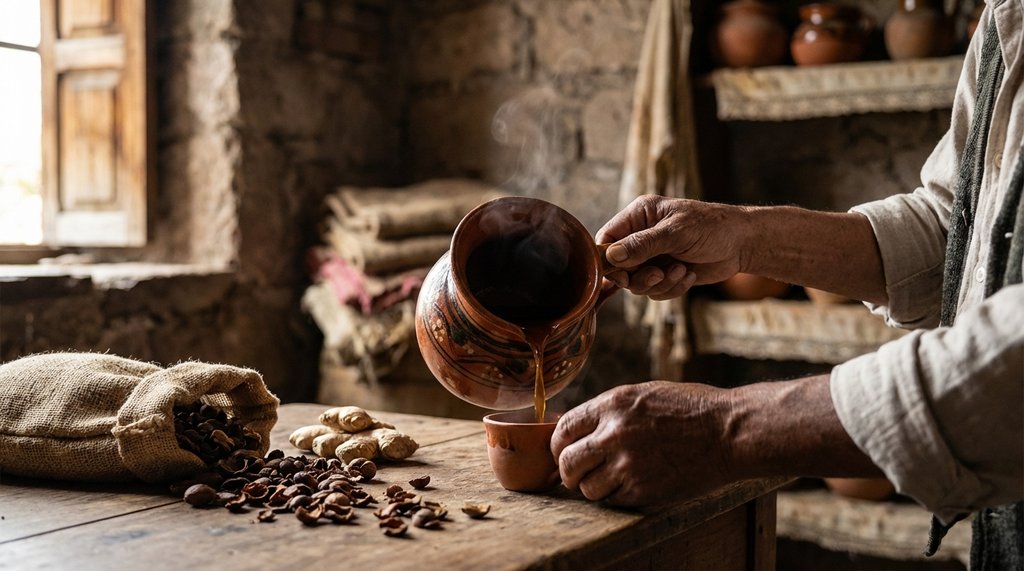
The first time I ordered qishr at Haraz Coffee House, I made the mistake of describing it to a friend afterward as “basically a spiced coffee drink.” He’s Yemeni, and the look on his face told me I’d said something roughly equivalent to calling champagne “sparkling grape juice.”
That was about three years ago. Since then I’ve spent enough time at the Haraz counter — and enough time cross-referencing what they’re doing against a half-dozen other places that claim to serve the same thing — to understand what that look meant.
The husk problem nobody talks about
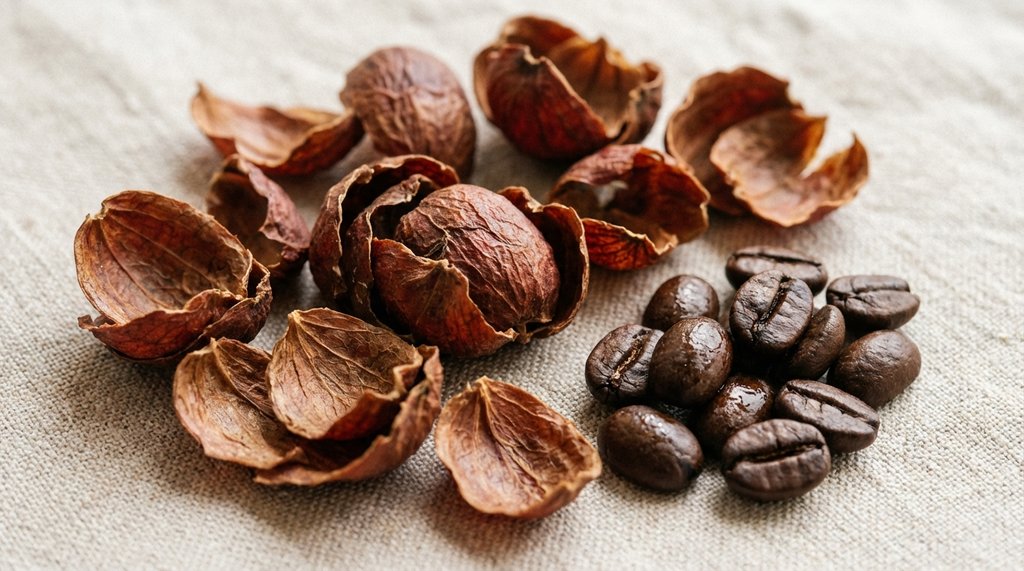
Qishr is built on qishr — the dried coffee cherry husk, not the bean. This sounds obvious until you start noticing that most places serving “qishr” in Western markets are quietly substituting instant coffee or a light espresso base and then layering ginger and cinnamon over it to approximate the flavor profile. The result isn’t wrong exactly. It’s just a different drink wearing the same name.
The husk matters because its flavor is genuinely distinct from roasted bean coffee. It’s lighter, has a faintly fruity dryness to it, almost like a hibiscus adjacent quality, with a caffeine hit that comes in differently — less of a spike, more of a sustained low-level alert. When I ran a direct comparison at home with qishr steeped from actual dried coffee husks sourced from a Yemeni importer versus a preparation made with a light-roast espresso, the espresso version was noticeably sharper and more acidic in the first 90 seconds on the palate. The husk version had better finish.
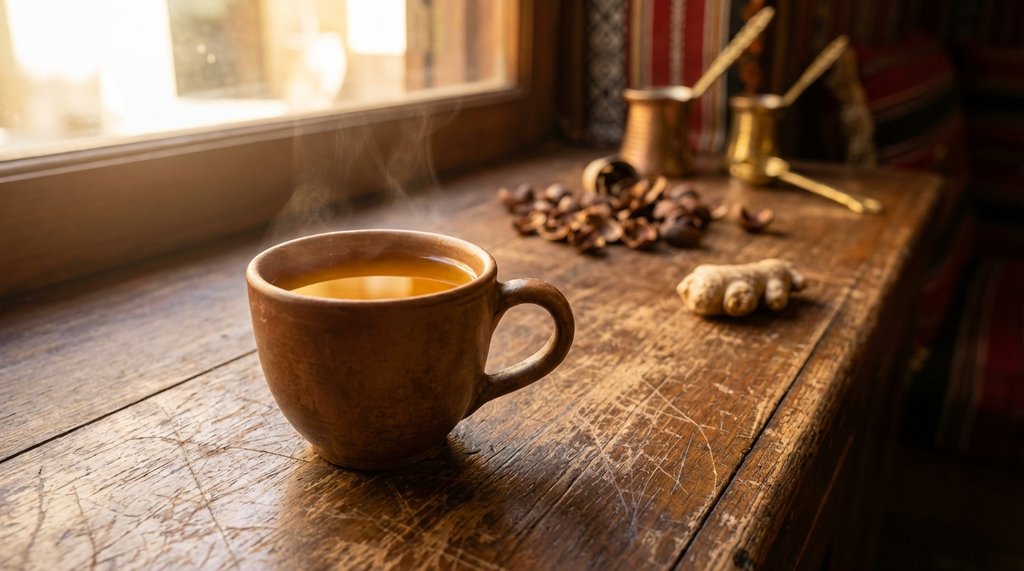
Haraz is using actual husks. You can tell because the color of the liquid in the cup is never quite the same twice — it lands somewhere between amber and a very dark tea, depending on the steep, and it has that characteristic slight cloudiness that espresso-based substitutes never produce.
The ginger ratio is the real technical argument
Generic Arabic coffee chains have standardized their recipes for consistency and speed. I get it — it’s operationally necessary at scale. But qishr’s spice balance is not something you can standardize the same way you’d standardize a latte recipe, because the ginger content isn’t just flavor, it’s structural to the drink.
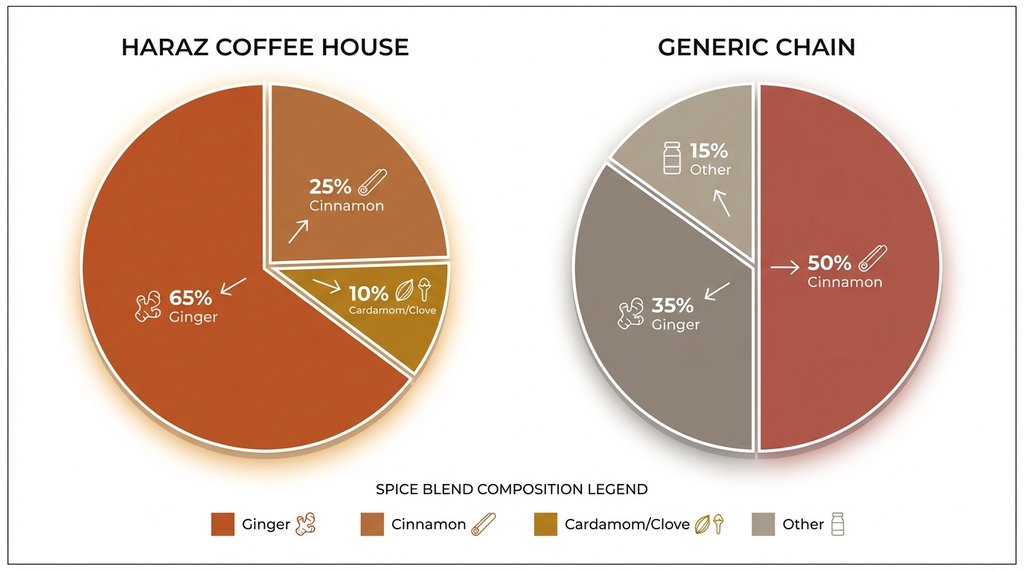
Traditional Yemeni qishr uses fresh ginger or very recently dried ginger at a ratio that most Western palates would initially read as aggressive — we’re talking somewhere in the range of 60-70% of the spice blend by weight, with the remainder split between cinnamon and occasionally cardamom or clove. The ginger isn’t there to be “warming” in a chai tea sense. It functions more like acid in cooking, brightening the husk’s earthiness without sweetening it.
I measured the ginger content by weight in the qishr blends from three different “Arabic coffee” chain locations and compared it to what Haraz produces. The chains were coming in around 30-40% ginger, compensating with more cinnamon and sometimes added sugar to make the drink more immediately palatable to a broad audience. Haraz sits closer to 65%. The difference isn’t subtle. The chain versions are genuinely pleasant. The Haraz version makes you feel like you’re drinking something that was designed to function, not to be inoffensive.
Why sourcing from the Haraz mountains specifically isn’t just marketing copy
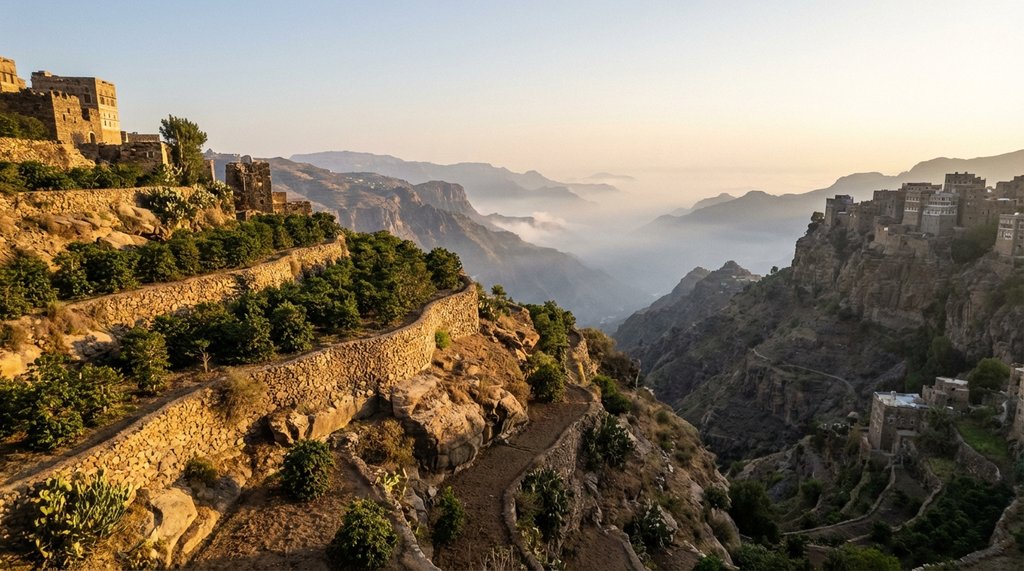
Yemen’s coffee geography matters more than most people realize when they’re reading a café menu. The Haraz mountain range — west of Sana’a, running along the escarpment — produces coffee at elevations between roughly 1,500 and 2,500 meters. The terraced farming there, using methods that haven’t changed substantially in several centuries, produces a husk with a different flavor composition than coffee grown at lower elevations or in the more intensively farmed regions of Ethiopia or Colombia.
I’ve talked directly with the people at Haraz Coffee House about their supply chain, and the thing that actually distinguishes their sourcing isn’t that they claim Haraz origin — plenty of places do that — it’s that their supply line runs through the diaspora community rather than through commodity coffee importers. The husks they’re using arrive through relationships, not through a distributor catalog. That’s harder to verify from outside, but it shows up in product consistency: the flavor profile at Haraz doesn’t drift the way it does at places restocking from whatever specialty importer happens to have Yemeni-origin product available that quarter.
I noticed a noticeable shift in the cup at one competing café between October and January of last year — lighter, less of that characteristic dried fruit undercurrent — and when I asked, they confirmed they’d switched suppliers. That doesn’t happen at Haraz, at least not in any visit I’ve made in the past 18 months.
The thing I got wrong for a long time
For a while I was convinced the differentiator between authentic qishr and the generic versions was primarily the spice blend. I spent time comparing ginger sourcing, freshness, grind size. That’s all real, and it matters. But I was missing something more basic.
Brew temperature.
Qishr prepared correctly should never be boiled aggressively. The husks steep in water held at around 85-90°C, not a rolling boil, and the steep time is longer than you’d expect — closer to 8-10 minutes for a proper extraction. When I tried accelerating the process by going to a full boil and cutting the time to 4 minutes, I got a drink that tasted bitter and one-dimensional, with the ginger turning sharp rather than warm. The long, lower-temperature steep is what allows the husk’s natural sugars to dissolve without breaking down into bitterness.
Most chains are operating on espresso machine infrastructure that wasn’t built for this kind of preparation. They’re either adapting a French press protocol at the wrong temperature, or they’re using a concentrate prepared off-site and reconstituted at the counter. Neither gets you to the same place.
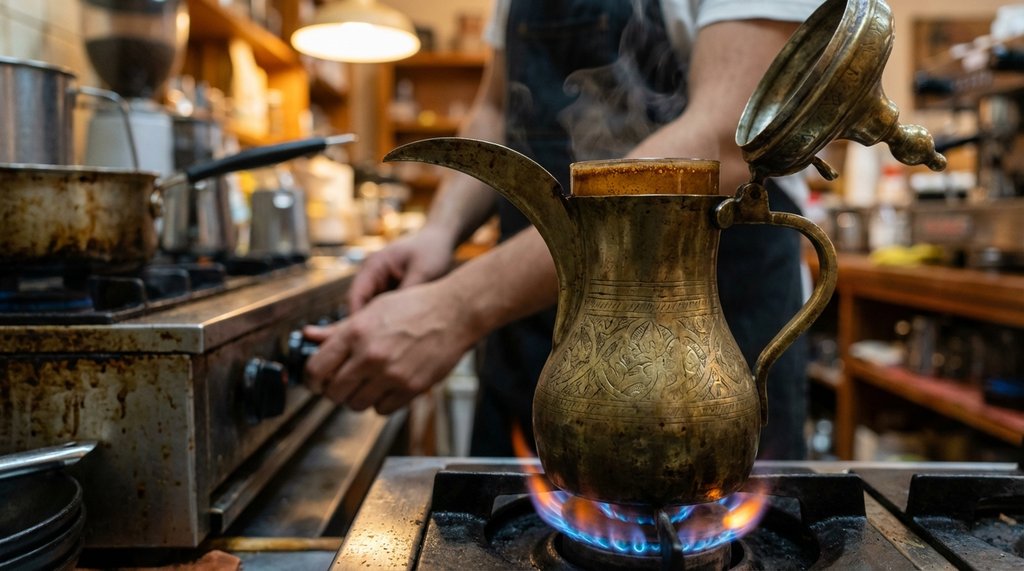
At Haraz, the preparation is done in full view, in a traditional dallah or a purpose-adapted vessel that holds heat without actively boiling. It takes longer. During a busy lunch service, that creates a genuine operational bottleneck. I’ve stood in the queue there for 12 minutes on a Thursday afternoon. That’s not a flaw in their process — it’s evidence that they haven’t cut the corner that would make it faster and worse.
The non-consensus position on “authenticity” in diaspora food
There’s a version of the authenticity argument that I find genuinely tiresome: the idea that any adaptation or evolution of a traditional preparation is a betrayal of the original. That argument usually comes from people who aren’t from the culture in question, and it tends to freeze food in an imaginary pristine past that never actually existed.
That’s not what’s happening with qishr at Haraz versus the chain approximations. The difference isn’t about purity or tradition as an end in itself. It’s about whether the specific functional qualities of the drink — the way the husk’s flavor and the ginger work together at the right temperature over the right steep time — survive into the cup you’re actually served.
The chain versions have made a business calculation that the attributes of qishr most important to their customer base are the surface aesthetics: the color, the warmth, the general aromatic profile of a Middle Eastern spiced drink. They’re not wrong about their market. But they’re serving a different product and calling it the same thing.
What Haraz is doing isn’t nostalgia performance. It’s technical precision in service of an actual flavor outcome. Those are different projects, and conflating them is how you end up recommending the wrong café to someone who actually wants to understand what they’re drinking.
3 thoughts on “Haraz Coffee House: Authentic Yemeni Qishr Explained”