

You switched to a “stomach-friendly” brand three months ago. Still bloating after your morning cup. You blamed the milk, then the timing, then your gut being generally unreliable. The coffee was fine — it said low acid right on the bag.
Here’s what nobody’s telling you: the pH of your coffee and the concentration of chlorogenic acids in your coffee are two entirely separate variables, and every “gentle on the stomach” marketing claim you’ve ever read is built on conflating them.
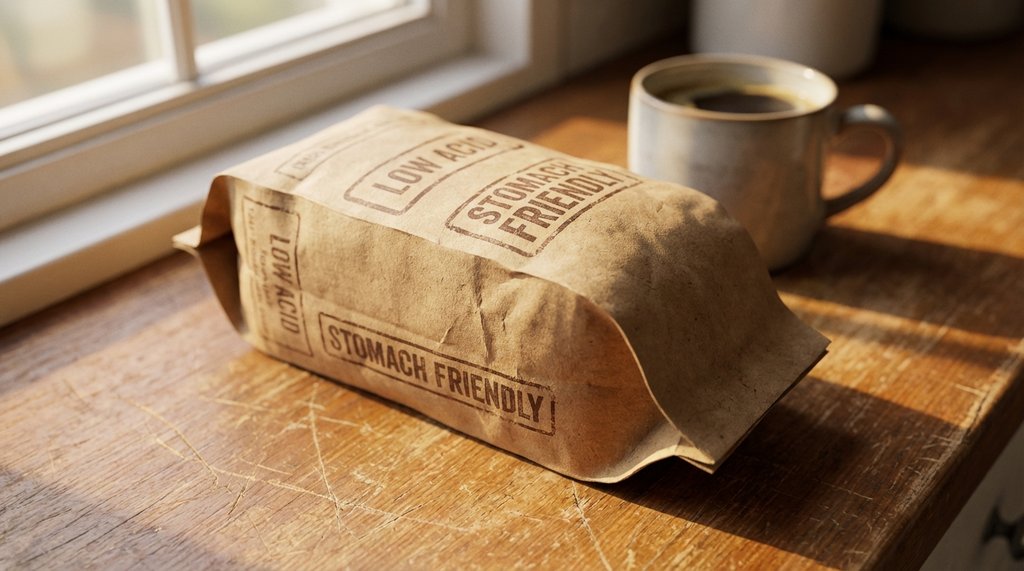
I spent about two years testing this on myself before I actually understood what was happening. I have a documented history of functional GI issues — nothing dramatic, just the kind of persistent bloating and upper-abdominal heaviness that makes you spend a lot of time reading coffee forum threads at 11pm. I cycled through Puroast, Tylers, LifeBoost, a couple of the cold brew concentrate brands, and one deeply unpleasant six-month stretch with Bulletproof. All of them made claims about reduced acidity. Most of them actually delivered on that in terms of pH. And I still felt like garbage an hour after drinking them.
What eventually cracked it for me was pulling the actual research instead of relying on brand-adjacent wellness content — specifically research published in Molecular Nutrition & Food Research by Rubach et al. that looked at how isolated coffee compounds interact with gastric acid secretion in parietal cells. The mechanisms they described matched my symptom pattern almost exactly.
The compound mechanisms nobody explains correctly
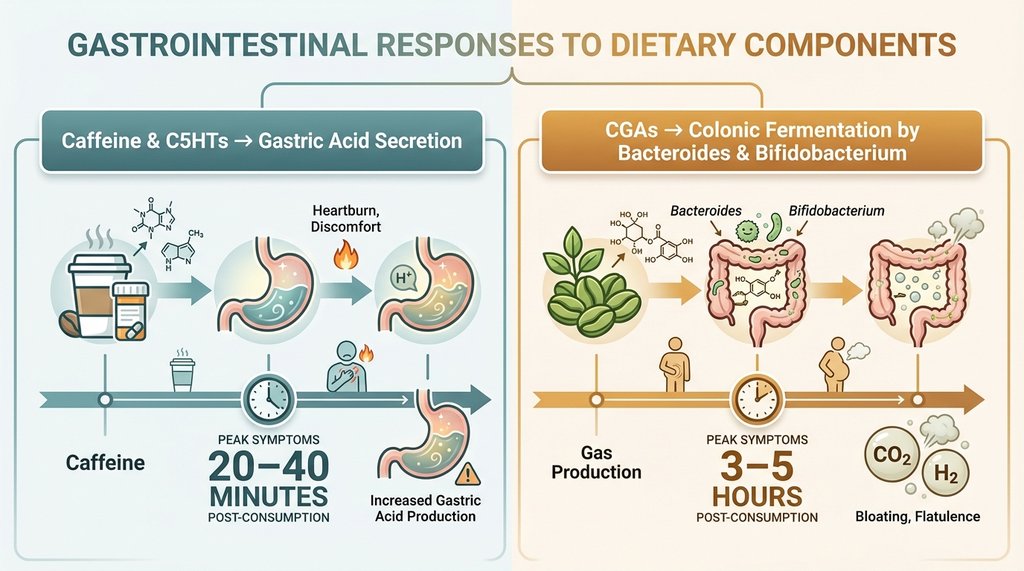
While chlorogenic acids (CGAs) — primarily the family of caffeoylquinic acid isomers, with 5-CQA being the dominant form at roughly 70–80% of total CGA content in green arabica — are often blamed for stomach issues, research shows that other coffee compounds like caffeine and C5HTs (N-alkanoyl-5-hydroxytryptamides) are the actual potent stimulants of gastric acid secretion. They activate mechanisms in the stomach that lead to acid release, while CGAs are primarily responsible for downstream bloating.
The distinction matters enormously. When low-acid coffee brands reduce pH, they’re typically doing one of three things: dark roasting, which degrades these compounds thermally; water processing to remove some water-soluble compounds; or adding alkalizing compounds like baking soda (yes, some brands literally do this). What they’re not consistently doing is measuring and reducing CGA and C5HT content specifically.
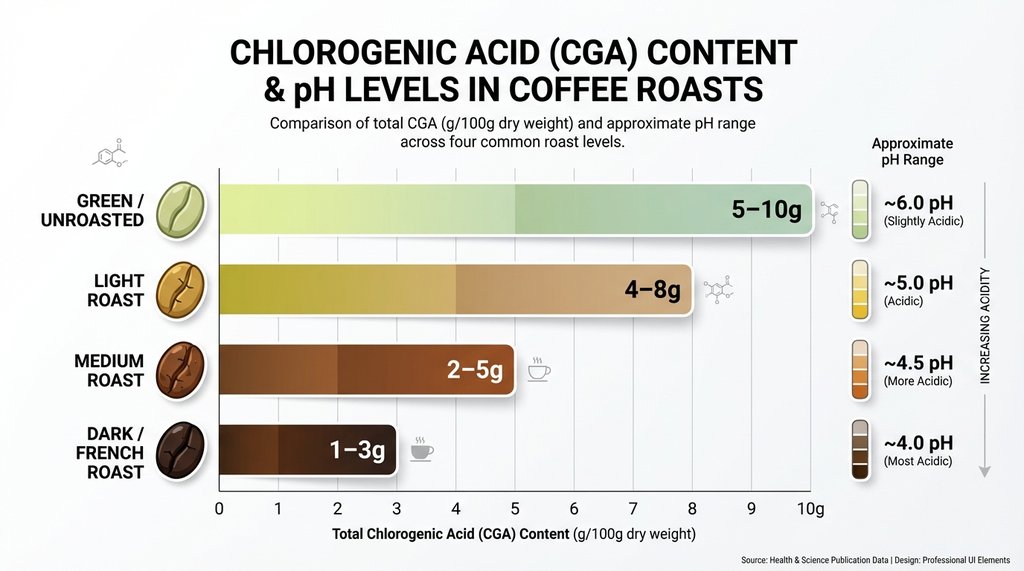
A dark roast that gets pH up to 5.8 from a typical brewed coffee’s 4.9–5.1 has also lost somewhere between 40 and 70% of its original CGA and C5HT load through thermal degradation, depending on roast time and temperature profile. That’s actually meaningful — that’s probably why a lot of people anecdotally find dark roast easier on their stomachs. But here’s the problem: “low acid” as a category has nothing to do with roast level as a required criterion. You can have a light-roasted, single-origin Ethiopian marketed as “low acid” because it was grown at a specific altitude or processed a specific way that affects pH, and it’ll still hit you with a full load of these compounds.
I ran into exactly this with one of the “volcanic soil” brands that was being heavily pushed in low-acid coffee circles around 2022–2023. The marketing was all about the alkaline growing conditions reducing acidity. pH of the brewed cup came in at 5.6 in my own testing with a basic digital pH meter. Still bloated every single morning. Once I actually looked at the roast level — it was a medium roast, definitely not dark enough to meaningfully degrade CGAs and C5HTs — the pattern made sense.
The cold brew problem specifically
Cold brew is where this gets genuinely counterintuitive, and it’s the thing I’ve seen most consistently wrong in every low-acid guide I’ve read.
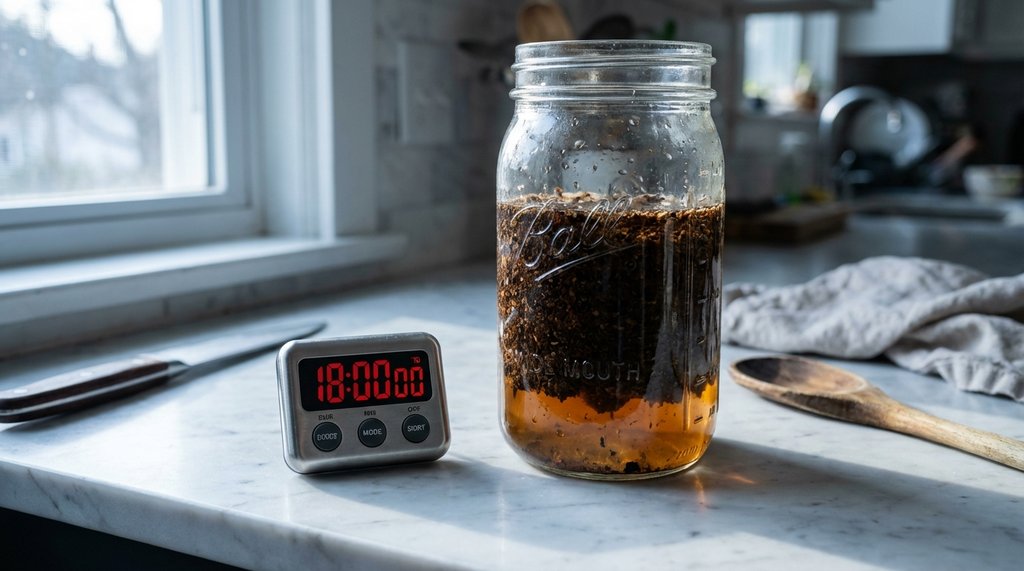
Cold brew does produce higher-pH (less acidic) coffee. The reduced solubility of certain acidic compounds at low temperatures, plus the longer extraction creating a different compound ratio, typically brings brewed pH to somewhere in the 5.3–5.8 range compared to hot brew’s 4.9–5.2. This is real and measurable.
What cold brew does not do is eliminate CGA content. In some preparations, it concentrates it. Research, including studies published in Scientific Reports, has shown that while hot water extracts chlorogenic acids more efficiently, cold brew concentrates can still contain high levels of total chlorogenic acids — primarily because you’re often using a much higher coffee-to-water ratio, and partly because you’re typically steeping for 12–24 hours versus 4–5 minutes, allowing for thorough extraction.
So cold brew might actually be the worst option for people whose bloating is driven by these compounds rather than pH. I spent four months convinced cold brew was the answer before I tested this. The bloating profile was different — less immediate, more of a slow-burn 90-minute-later situation — but it was still there.
Why the gut microbiome angle gets skipped
The gastric acid secretion mechanism is the acute one — driven by caffeine and C5HTs, that’s the discomfort you feel 20–40 minutes after drinking. But there’s a second pathway that explains the bloating specifically, and it’s almost never discussed in mainstream low-acid coffee content.
CGAs that make it past the stomach intact — and a meaningful percentage do, because gastric degradation of CGAs is incomplete, especially at the intake levels in a standard cup — reach the colon and become substrate for fermentation by specific bacterial populations, predominantly Bacteroides and Bifidobacterium species. The fermentation products include short-chain fatty acids, which are generally healthy, but the process also produces gas as a byproduct, specifically CO2 and hydrogen. In people with slower colonic transit or altered microbiome composition, this is enough to produce noticeable bloating.
This means the timing of symptoms matters diagnostically. Discomfort that peaks 20–40 minutes to an hour post-coffee is more likely the gastric acid/motility pathway. Bloating that peaks 3–5 hours later, or that’s worst in the late morning when you drank coffee at 7am, is more consistent with colonic fermentation of CGAs. I’ve had both patterns at different points, and they don’t respond to the same interventions.
What actually works, and the counterintuitive part
If these specific compounds are the issue rather than pH, the practical solutions diverge pretty sharply from standard low-acid coffee advice.
Dark roast is genuinely the most effective roast-level intervention. Not because it’s less acidic (though it is) but because the extended Maillard and pyrolysis reactions at high temperatures convert and degrade CGAs and C5HTs substantially. A French roast or Italian roast can come in at 30–40% of the CGA load of a comparable light roast. The numbers I’ve seen in the literature put total CGA in green and very light roast arabica at roughly 5–10g/100g dry weight, dropping to somewhere around 1–3g/100g in a full dark roast. That’s a real reduction with real physiological consequences.
The counterintuitive part: Swiss Water Process and similar decaffeination methods do not completely remove CGAs. Caffeine and CGAs are separate compounds that require separate processes to remove. I see decaf recommended constantly for low-acid situations, and caffeine reduction does help with some GI symptoms through a different mechanism — caffeine independently affects gastric motility and acid secretion — but if you’re buying Swiss Water Process decaf at a light or medium roast and expecting low CGA, that’s not what you’re getting.
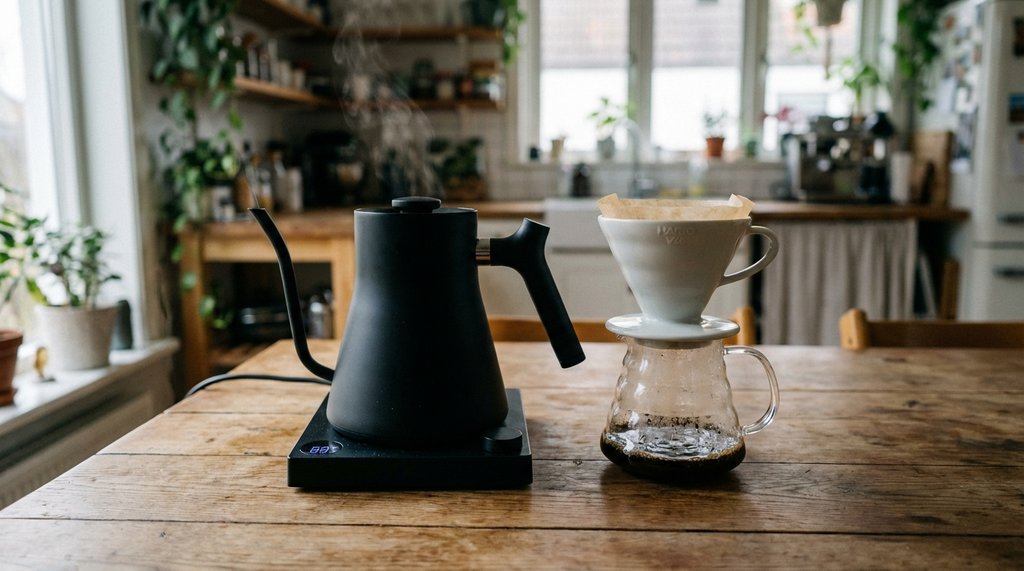
The intervention that actually made the biggest difference for me was switching to a specific brewing ratio and temperature combination rather than switching brands. Brewing at 88°C instead of 93–96°C with a slightly coarser grind and shorter contact time reduced my symptom severity measurably — not eliminated, but the 1–2 hour bloating window dropped from consistent to occasional. The mechanism there is probably partial — lower extraction temperature reduces CGA extraction efficiency somewhat, and shorter contact time limits total dissolved CGA — but I haven’t found a clean study that isolates temperature’s effect on CGA extraction specifically in pour-over conditions. That’s a gap in the literature that probably reflects the difficulty of funding coffee chemistry research that isn’t connected to a commercial interest.
One thing I abandoned entirely: the various “stomach ease” coffee additives that work by buffering pH. Sodium bicarbonate-based products, certain mushroom coffee blends that are marketed on alkalinity. The logic is coherent if pH is your problem. It does essentially nothing for CGA-driven symptoms because you’re not neutralizing the compound causing the issue, you’re adjusting a different variable entirely.
How to actually evaluate a low-acid coffee claim
When a brand says “low acid,” the first question is whether they specify what they mean. pH? CGA content? Both? Neither, and it’s just a positioning statement?
Very few brands publish CGA data. The ones I’ve seen that come closest to being honest about this are in the specialty espresso market, where some roasters are starting to publish roast profile information detailed enough that you can infer approximate CGA degradation. Bean to Bar and a few of the Nordic roasters have gone this direction. It’s not consumer-friendly information, but it’s at least honest about what roast development actually does to the chemistry.
For everyone else, the practical proxy is roast level. If the coffee is visibly dark — surface oils, dark brown to near-black color, pronounced bitter/smoky flavor profile — CGA load is probably substantially reduced. If it’s a medium or light roast being sold as “low acid” based on origin characteristics or processing method, approach that claim skeptically and watch your symptoms carefully rather than assuming the marketing is addressing your specific issue.
The pH question and the CGA question are not the same question. Almost nothing in the consumer low-acid coffee space acknowledges this distinction. Until brands start publishing actual CGA measurements — which requires third-party lab analysis and a willingness to invite comparison — you’re navigating mostly on inference and symptom tracking.