
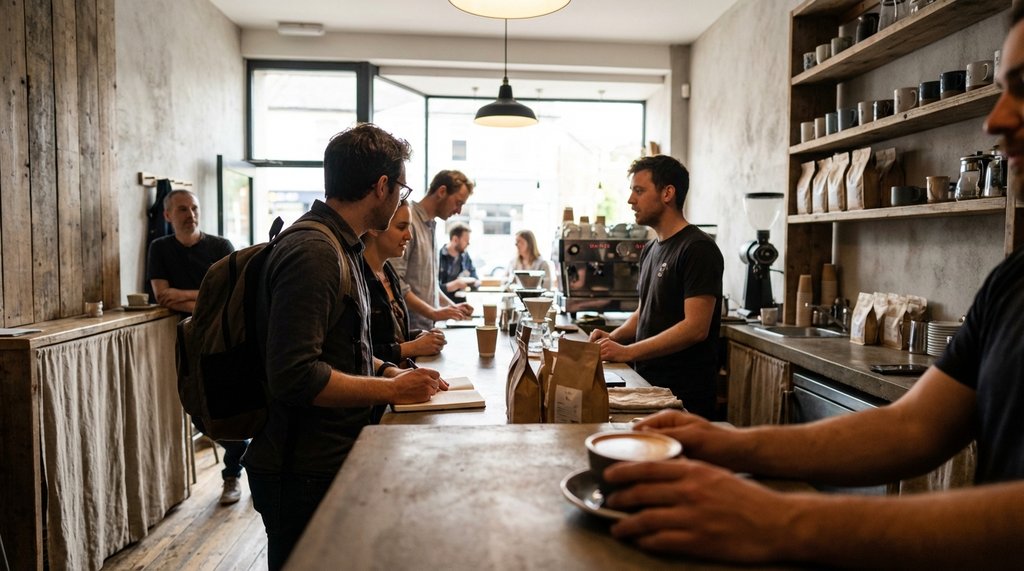
The line at Kei moves fast on weekday mornings — deceptively fast — and that’s exactly where first-timers get burned. You hit the counter, you freeze, the barista (probably Mina, the one with the undercut) gives you exactly 4 seconds of patient eye contact before she’s mentally moved on, and you panic-order the first thing you recognize. You end up with a perfectly fine cortado that has nothing to do with why this place has a cult following.
I’ve watched this happen more times than I can count. I’ve been that person.
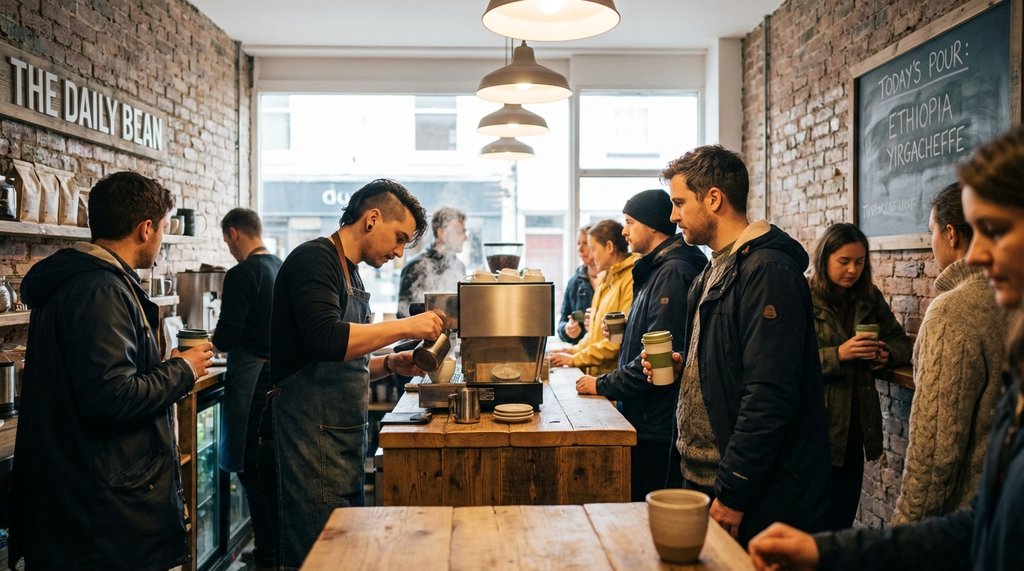
The menu is a trap if you read it top-down.
The top section is basically the “we have to put this here” section — your espresso, your Americano, your latte. Kei does them well, nothing wrong with ordering them. But the reason regulars show up on a Tuesday at 2pm in the rain is buried in the middle column under the handwritten insert that gets swapped out seasonally. That’s where the actual work is happening.
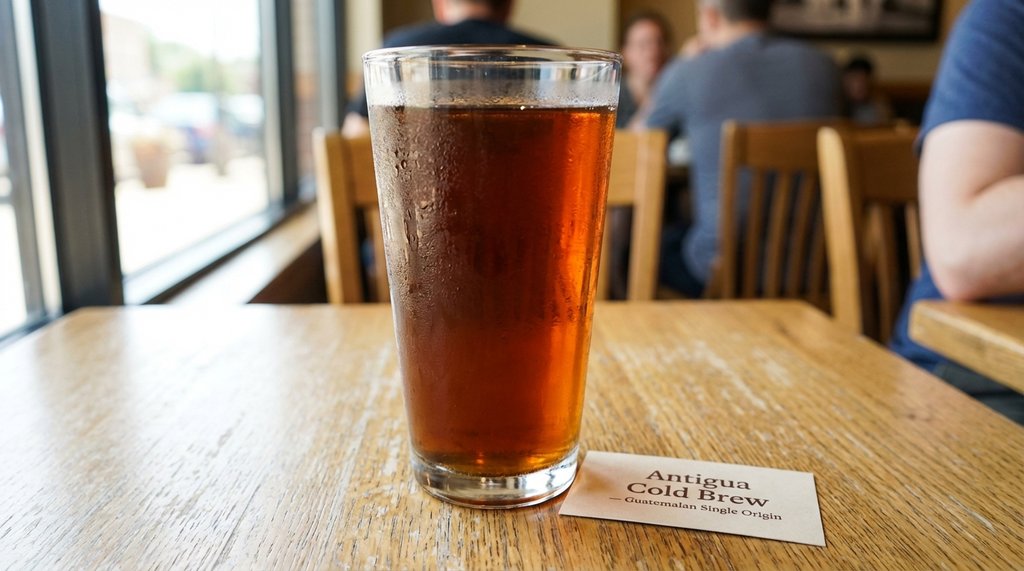
Right now (at least as of the last time I was in, which was a Thursday afternoon two weeks ago when they had the windows all the way open and the place smelled unreasonably good) the seasonal offering is a cold brew built on a Guatemalan single-origin they’re sourcing from a small roaster in Portland. It’s listed as “Antigua Cold Brew” on the chalk board, not on the printed menu. The printed menu shows “House Cold Brew” at $5.50. The Antigua is $7.00 and it’s not the same drink — the house cold brew is fine, medium body, easy, crowd-pleasing. The Antigua has a dry finish that I kept mistaking for a processing note the first two times I ordered it, before I realized it’s the 22-hour steep time. That extra four hours compared to their standard cold brew cycle is doing real work.
Order the Antigua if it’s still up.
The thing nobody tells you about the matcha.
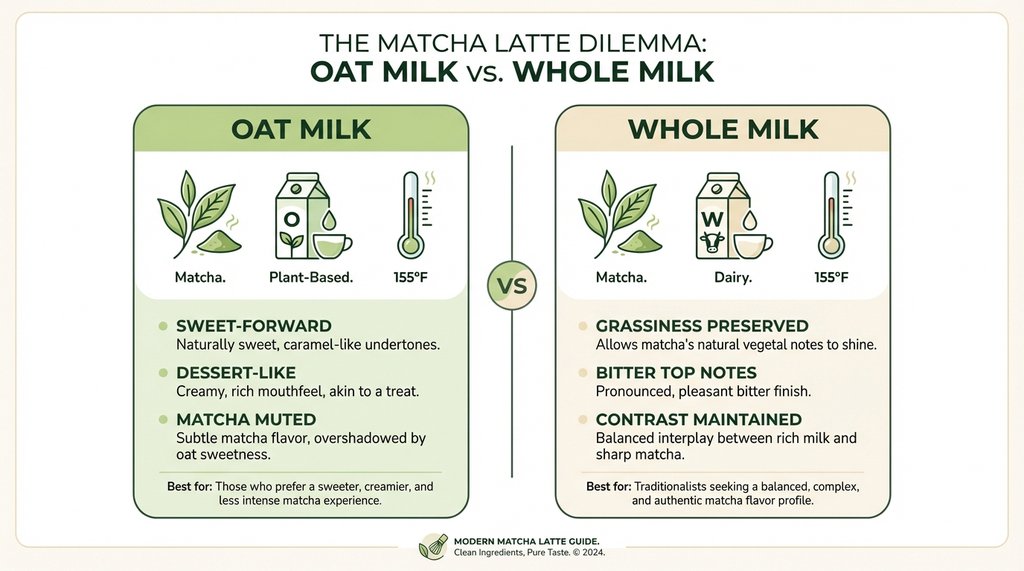
Don’t order it the way it’s listed. The menu says “Matcha Latte” and offers oat, almond, or whole milk. Every first-timer who’s read a few Instagram posts about Kei shows up wanting oat milk because that’s what the photos show. Here’s the friction I ran into my second visit: oat milk at the temperature Kei steams it to — they run hotter than most shops I’ve been to, somewhere around 155°F based on asking Mina once — collapses whatever the matcha is doing. The sweetness in the oat milk takes over and you end up with something that tastes like a dessert drink. It’s not bad. It’s just not what the matcha is.
Whole milk at that temperature is actually the call. The fat holds the grassiness of the matcha in a way that oat doesn’t, and you get actual contrast between the bitter top notes and the milk rather than everything blending into a beige experience. I switched to whole on my fourth or fifth visit and it genuinely changed the drink for me. Asked two other regulars independently — both said the same thing without me prompting it.
The non-consensus take: oat milk at Kei is better for the espresso drinks than for anything matcha-based. That’s the opposite of what most coffee-forward shops will tell you, but it’s specific to how they steam.
Pastry situation.
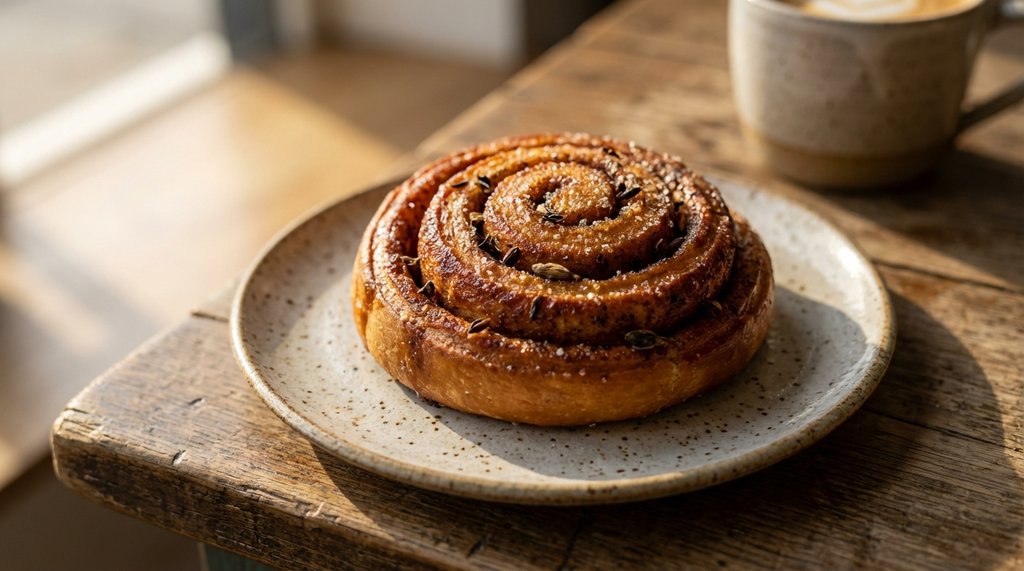
They rotate with two local bakeries. Right now one of the suppliers is a woman named Jolene who runs a small operation out of Avondale, and her cardamom morning bun shows up on Thursdays and Fridays until they’re gone, which is usually by 9:30am on Fridays. Get there after 10am on a Friday and you’re looking at whatever’s left from the second bakery, which is competent but not the reason people show up early.
I made the mistake of assuming weekend mornings would have more stock, not less. The opposite is true. Saturday at 8am is actually the worst time to arrive if pastry selection matters to you, because they fill a smaller order on Saturdays and by the time the weekend crowd hits, the case is genuinely depleted.
If the cardamom bun is not available and you need something to eat, the sesame shortbread is reliable. The croissants — and I want to be clear about this — are fine, but they’re not why you’re here.
Ordering mechanics, because it actually matters at the counter.
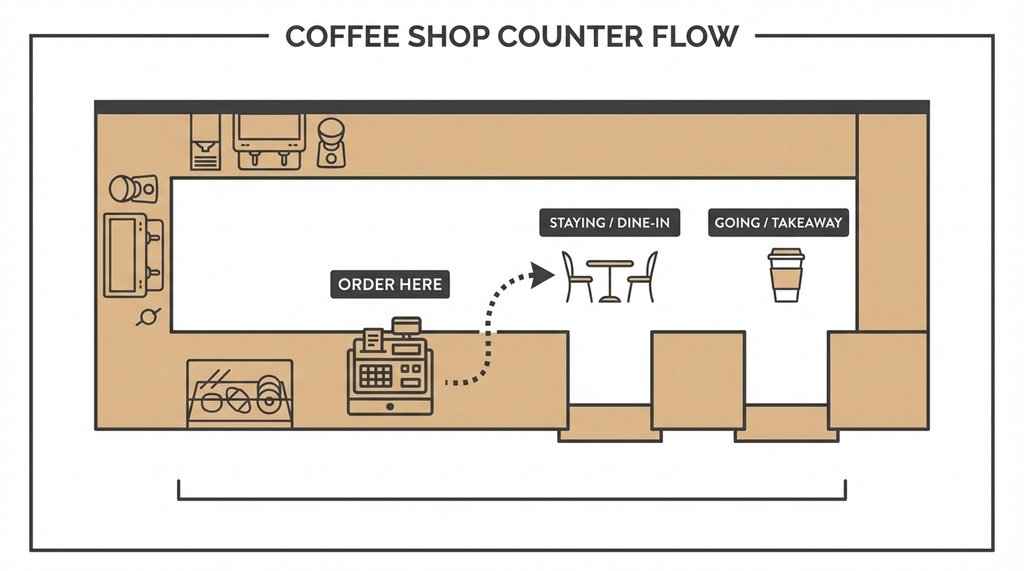
Kei has a configuration that makes more sense once you understand it: there’s one register and two pickup windows. You order at the register, you tell them whether you’re staying or going, and then you either wait at the left window (staying) or the right window (going). This is not explained anywhere and the signage is, charitably, gestural.
First time I went, I waited at the wrong window for eight minutes before the person behind the counter made eye contact with me in a specific way that communicated I was in the wrong spot. My drink had been sitting at the other window. The espresso was not improved by this.
If you’re staying, move immediately to the left after you pay. Do not hover near the register.
On the seating.
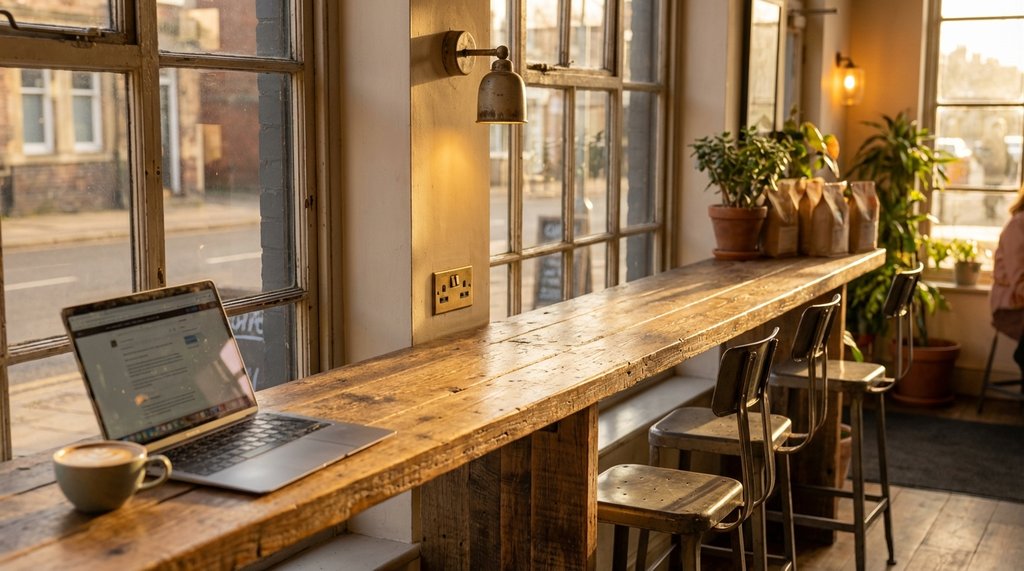
The two armchairs at the back left are almost always occupied between 8am and noon. Don’t plan your visit around them. The bar seating along the window on the south side actually gets good natural light from about 10:30am until 1pm, and there’s an outlet at the far end of the bar that most people don’t notice because the cord for the light fixture runs along the wall near it and it looks like the outlet is part of the fixture. It isn’t. Your laptop will charge fine.
The communal table in the center works, but if you’re doing any kind of call or focused work, the acoustics in the center of the room are rough — there’s something about the exposed ceiling and the hard floor that makes ambient noise collect right in that space. The bar seats are quieter even when the shop is full, which is counterintuitive.
The one thing regulars actually say when someone new asks them what to get:
Ask Mina what’s coming off the new espresso. Not “what do you recommend” — that question is too open and you’ll get a polite answer that doesn’t reflect what they’re actually excited about. Ask specifically what they’re pulling right now and whether there’s anything that’s been dialing in well this week. That question gets you a real answer. That’s how I ended up with a cappuccino made from a natural-process Ethiopian that I would have never ordered off the printed menu, and it was the best $6.50 coffee I’ve had in this neighborhood in a long time.
Kei is not the place to come in with a locked-in order. The whole point is to come in with one or two parameters and let the shop fill in the rest.