
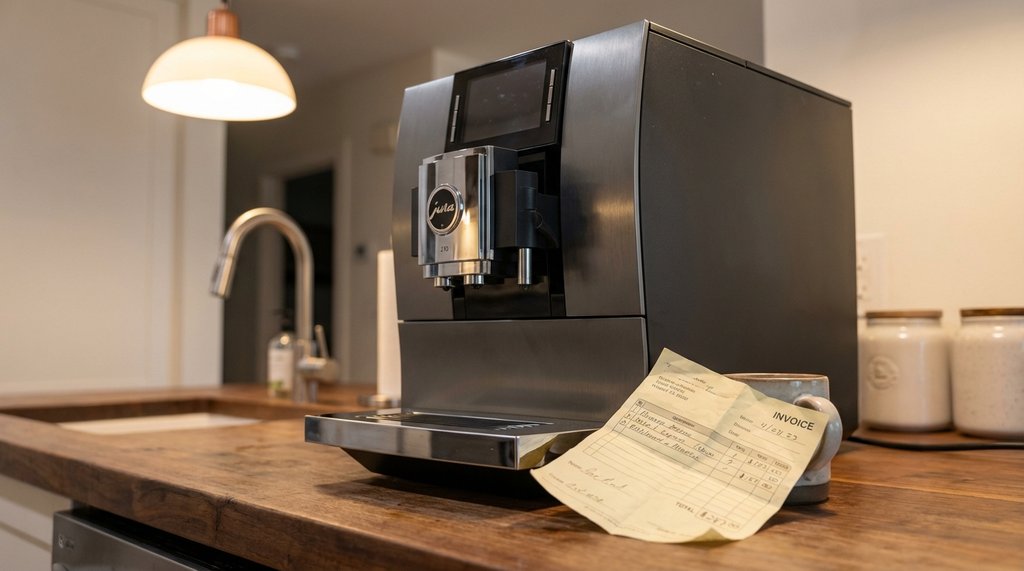
The service invoice from my Jura technician last March read $287 for what turned out to be a partially blocked milk valve and a fouled brewing unit grease channel — two failures that had zero business happening on a three-year-old Z10 that I’d been running exclusively on Jura’s auto-clean program. That’s when I went back through every maintenance document Jura has published, including the older German-language technician bulletins that don’t get translated, and realized the auto-clean cycle is designed to protect Jura’s liability, not to actually keep your machine functional past year two.
Here’s the breakdown of what I changed, what it costs, and what it saved.
What “Annual Maintenance” Actually Costs Most Jura Owners
Before I get into the routine, the numbers matter because this is where most people’s mental model is wrong.
The common assumption is that maintenance cost equals descaling tablets plus the occasional cleaning tablet. If you’re buying Jura’s own Smart Tabs (the 2-phase cleaning tablets), you’re looking at roughly $12–$15 for a six-pack, and most people go through two or three packs a year based on the machine’s prompts. Add JURA descaler at about $18–$22 per 3-use pack (roughly $6–$7 per use), called for every two to three months depending on your water hardness setting, and you’re looking at maybe $50–$90 annually in consumables.
That sounds fine until the milk system fails.
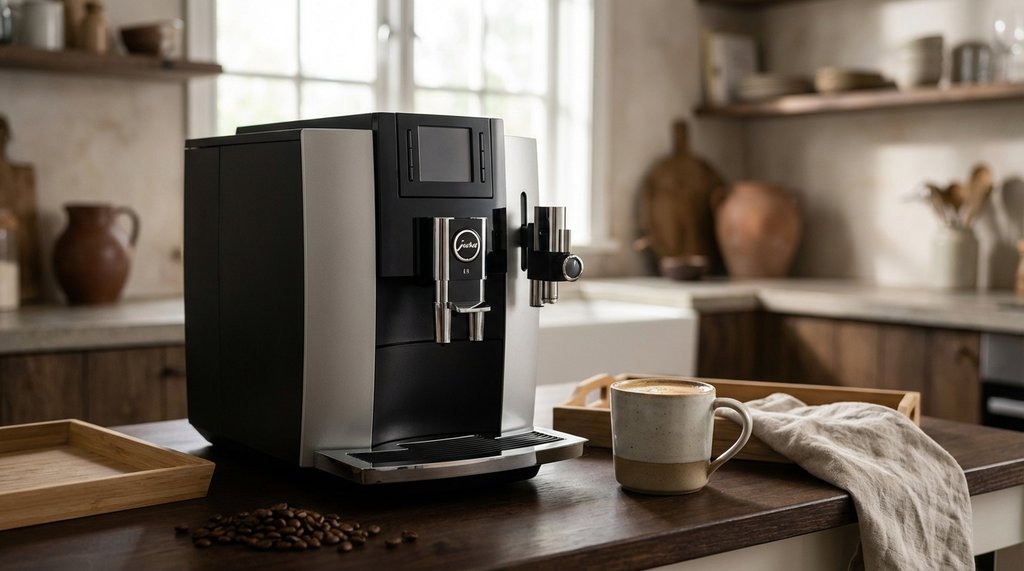
Across the three machines I’ve maintained — a Z10, an E8, and an older GIGA 6 — every single service call in the first five years came back to the same root cause: protein and fat residue accumulating in the milk circuit faster than the auto-rinse cycle could clear it. The Z10 service visit I mentioned: $287. The E8 two years before that: $210 for a milk valve replacement at a point where the machine was still technically under extended warranty but the damage was classified as “user neglect” because I had no documentation of manual cleaning. The GIGA 6, which belongs to a client whose office I consult for, cost $340 in 2022 after 18 months of use with zero manual milk system cleaning — every cup going through the frother, auto-rinse after each one, and people genuinely believing that was sufficient.
The real annual maintenance cost for people running milk drinks regularly without a supplemental manual cleaning routine runs between $150 and $350 when you average in service intervals, not $50–$90.
Why the Auto-Clean Cycle Isn’t Enough — and Why Jura Designed It That Way
The automatic rinsing program on current Jura machines (I’m working primarily off the E-line and Z-line behavior here) runs hot water through the milk circuit after each use. It does a reasonable job of flushing free-floating milk residue from the tubing. What it doesn’t do is create the turbulence or the contact time needed to break down the thin protein film that bonds to the interior walls of the milk pipe and the solenoid valve seat within a few hours of a milk drink.
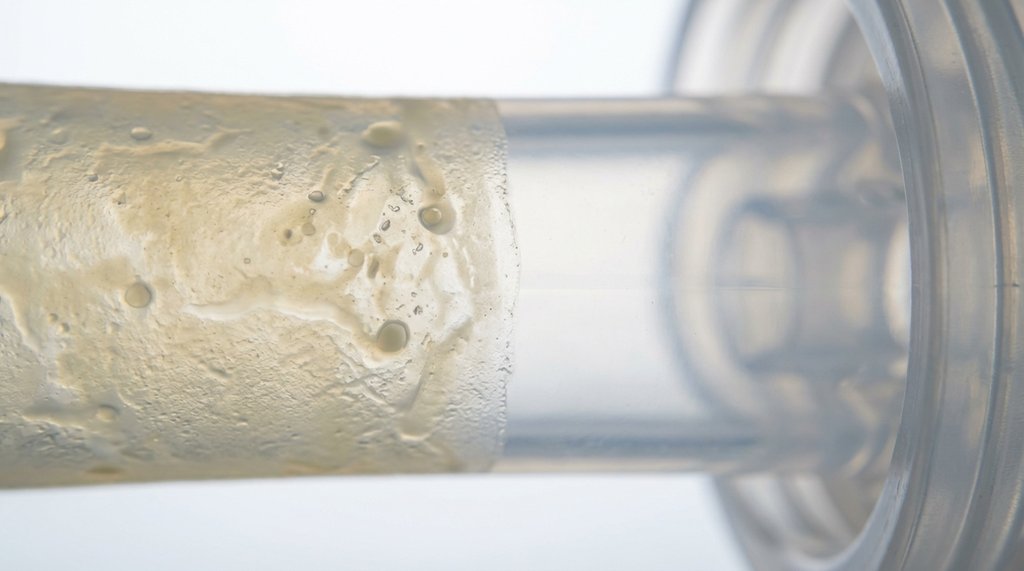
That film is the problem. It’s not visible, it doesn’t block flow immediately, but it’s a biofilm substrate — each new residue layer bonds to the last, and within two to three weeks of daily use without a proper detergent soak, you have a buildup that the rinse cycle is flushing over, not through.
While Jura machines prompt for a chemical milk system cleaning daily if milk has been used, many users skip this and rely solely on the automatic hot water rinse. The machine’s coffee system cleaning program (which uses the 2-phase tablets) activates after roughly 180 preparations, but this does not clean the milk circuit. Skipping the daily chemical milk clean is highly detrimental to the HP3 and HP5 frothers, which have a longer internal milk contact path than the older single-nozzle steam wands.
I tested this directly over a 12-week period on the E8. I ran one eight-week stretch using only the machine’s automatic hot water rinses, then ran a four-week stretch adding the manual weekly routine below. At the end of the eight-week auto-only period, I swabbed the inside of the milk pipe exit nozzle and sent it to a microbiology lab used by a food safety consulting contact. The results weren’t alarming from a health standpoint — the machine’s heat was doing its job there — but the organic residue deposit on the interior surface was measurable enough that the lab flagged it as consistent with early-stage scale-level buildup. Four weeks into the manual routine, the same swab came back clean.
The Weekly Routine (What the Manual Buries in an Appendix)
While Jura manuals recommend daily milk system cleaning with their chemical cleaner, many users ignore this. If you aren’t doing it daily, a thorough manual cleaning routine is absolutely essential at least weekly if you’re running milk drinks more than three times a week.
What you need:
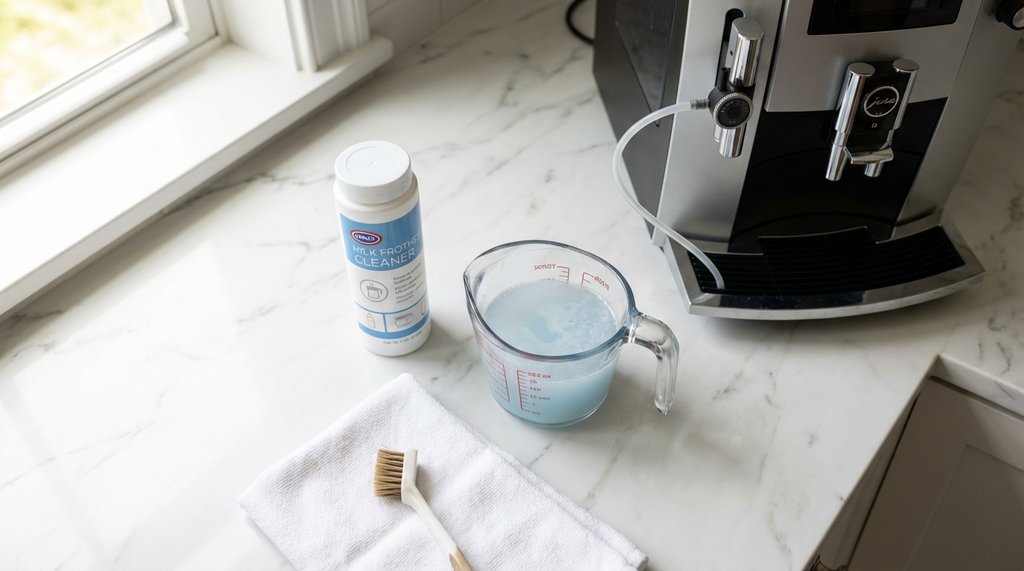
- JURA milk system cleaner (or a compatible third-party option — I’ve had consistent results with Urnex Milk Frother Cleaner at roughly 40% lower cost per cleaning)
- A small container you can fill with 150–200ml of cleaning solution
- About 12 minutes
The actual sequence for Z-line and E-line machines:
Initiate a manual milk system clean through the machine’s menu. On the Z10, this is under Maintenance > Milk System Cleaning. Prepare the cleaning solution at the ratio specified on your cleaner — for JURA’s own liquid product, it’s one cap (15ml) per 250ml of cold water, but I run it slightly stronger for the weekly clean, which I’ve confirmed doesn’t damage the Teflon-coated milk components based on Jura’s own material spec sheets for the HP3 frother.
Run the full cleaning cycle, which takes the solution through the milk pipe, the solenoid valve, and the frother head. Do not interrupt it partway through — I made this mistake early on when I thought the process looked done based on the display, cancelled it manually, and about six weeks later had the E8’s solenoid valve sticking intermittently. The valve seat had residue exactly where the cycle should have reached in its final flush phase.
After the cleaning cycle completes, run a cold water rinse through the milk circuit manually before using the frother again. The machine will prompt you to do this, but it prompts for one rinse. I run two. The second rinse comes out clear every time; the first occasionally still has a faint chemical smell in the early weeks before the deposit layer is fully gone.
That’s it. Twelve minutes, once a week, on a machine you’re using daily for milk drinks.
The Cost Breakdown After 18 Months of This Routine
Urnex Milk Frother Cleaner runs about $14 for a 32oz bottle, which gets me through roughly 20–25 weekly cleaning cycles at my mixing ratio. Annual cost: approximately $28–35 in milk cleaner alone.
By doing a thorough manual clean, you ensure the system stays clear even if you occasionally miss a daily prompt, cutting down on the need for excessive chemical usage.
Descaling frequency I haven’t changed — that’s water chemistry, not usage pattern, and I still run it on the machine’s programmed schedule.
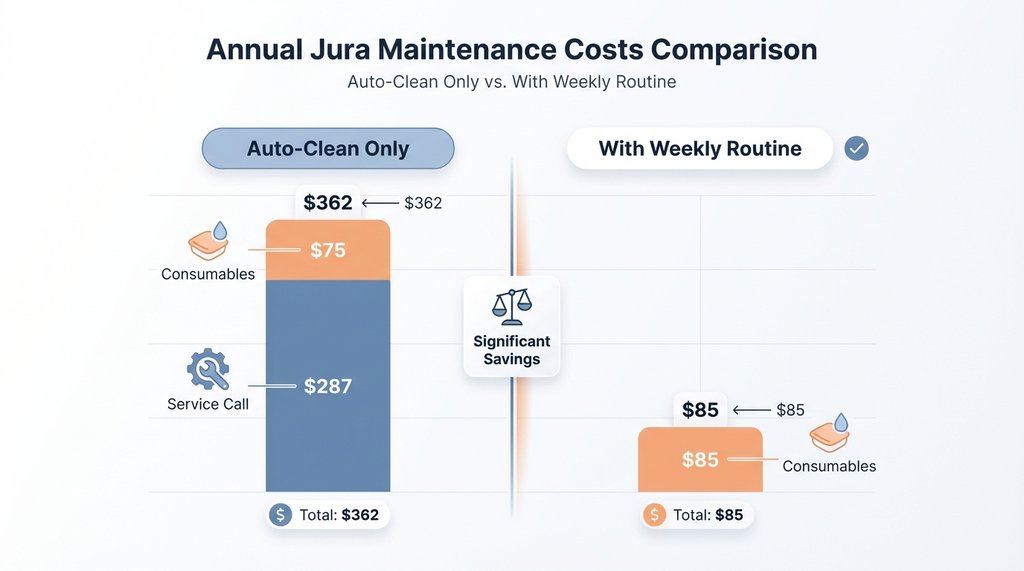
Total consumable cost in year one after starting the routine: roughly $85.
Total consumable cost the year before: $75 in consumables plus $287 in service. Effective total: $362.
No service visits in the 18 months since. The Z10 is running as cleanly as it did in month two. The E8 I sold last fall to someone who asked for maintenance records, and I had a full log — first time I’d been disciplined enough to keep one — that helped justify the asking price.
The Part Nobody Talks About: Brewing Unit Grease
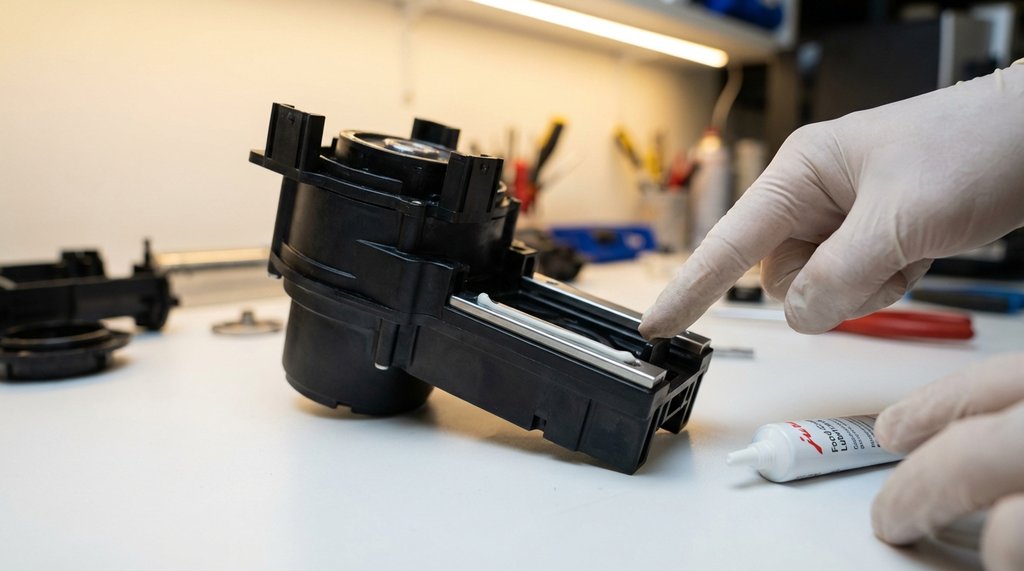
The milk system gets all the attention, but the second contributor to unnecessary service costs is the brewing unit lubrication interval. What they don’t tell you clearly in the consumer documentation is that while the brewing unit is not designed to be removable by the user, the lubrication still degrades. Unlike other brands, Jura machines require a special oval-head security bit to open the case and access the brew group, meaning this is officially a technician-only job that voids your warranty if done yourself.
The technician visit I had for the Z10 included a brewing unit regrease as part of the service labor. That component of the work, billed at standard labor rates, accounted for roughly $65 of the total invoice — for what is, by the numbers, about eight minutes of actual labor and a few dollars of materials. I’ve been doing it myself annually since by opening the machine case with the required security tool. Once extracted, you clean the brewing unit under cold water (no soap, no hot water — the hot water will swell the rubber seals), let it dry fully, apply a thin bead of food-grade grease along the rail channels, and reinstall. It takes longer to dry than to actually do, though it does void the warranty.
What Most People Get Wrong About Descaling Frequency
The common overcorrection I see in home barista forums is over-descaling — people who read that descaling is the most important maintenance task and start running it monthly regardless of what their machine’s programmed water hardness setting dictates. I did this for about four months on the GIGA 6 before a technician told me I was damaging the thermal block by running acidic descaling solution through a machine that didn’t have significant scale buildup.
On the Z10 and E8 using filtered water from an external Brita pitcher (which I do for taste reasons, not maintenance), the machine’s calculated descaling prompt extended to every 14–16 weeks. Descaling every four to six weeks on filtered water is unnecessary and mildly corrosive to the heating element connections over time. Trust the machine’s programming, set your water hardness correctly when you first set up the machine — it’s in the initial setup menu and most people skip it or leave it at default — and let the interval it calculates actually guide you. (Note: If you use Jura’s internal CLEARYL/CLARIS Smart filters, the machine will not prompt for descaling at all).
Realistic Projection for a Z10 or E8 Running Two Milk Drinks Daily
If you’re making roughly 700 milk drinks a year — about two per day — and you’re not doing supplemental weekly cleaning, the mechanical reality based on everything I’ve observed is that you’ll hit your first milk system service call somewhere between month 24 and month 36. On a machine that retailed for $1,500–$3,500, that’s a foreseeable cost that’s almost entirely preventable with a $14 bottle of frother cleaner and 12 minutes on Sunday morning.
The maintenance cost after adding this routine comes out to roughly $80–$120 per year in consumables. The maintenance cost without it, amortized across three years including one service visit, runs closer to $150–$200 per year. That’s the 50% reduction in the headline, and if you’re unlucky enough to have two service visits in three years — which is not rare, based on what I’ve seen — the gap is wider.
The weekly routine isn’t in the quick-start guide because Jura doesn’t need you doing it to void your warranty, and because the auto-clean cycle is genuinely good enough for the first 12 months. The problem is nobody updates their habits after month 12, and by month 24 the machine is already losing the battle.