
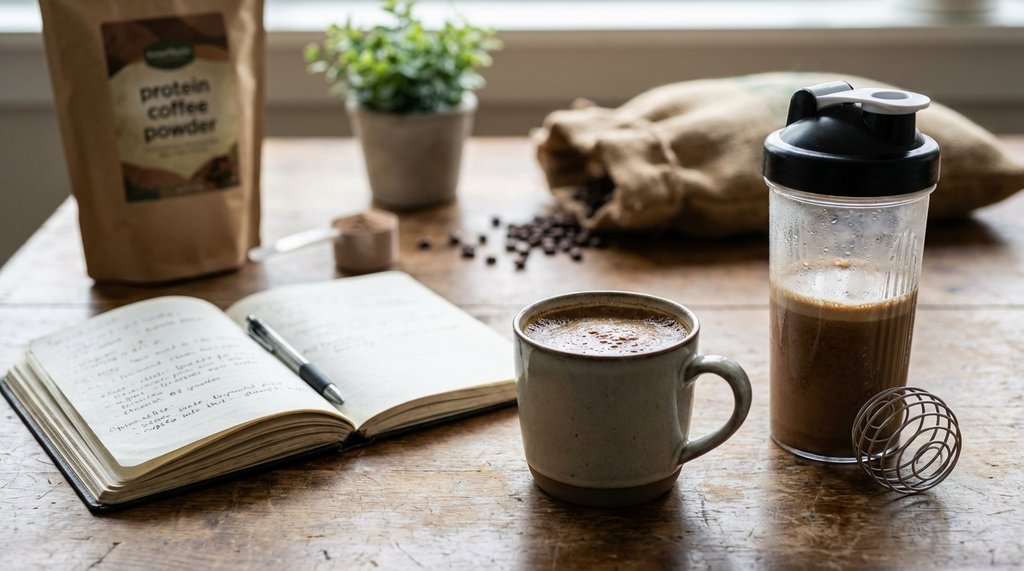
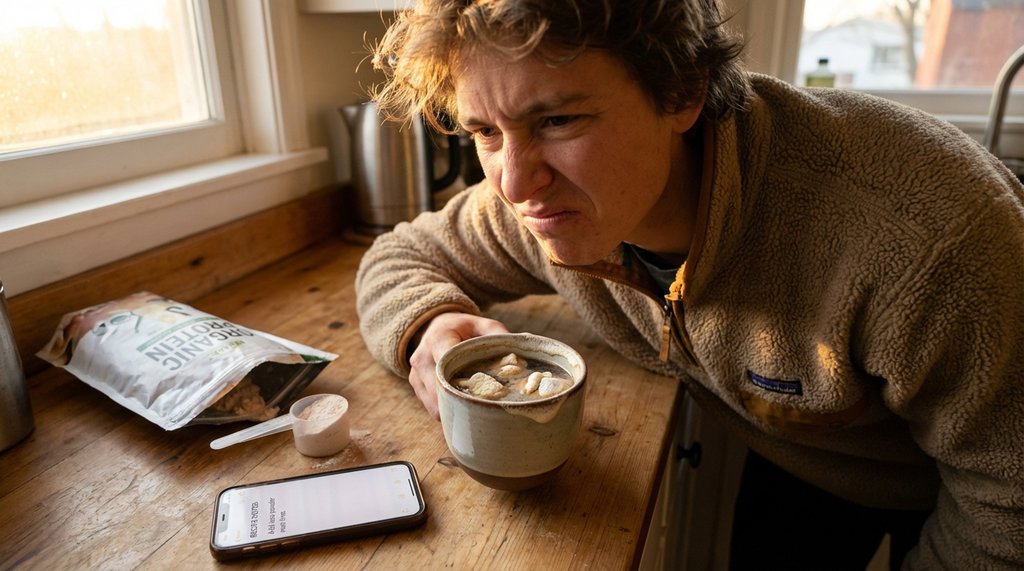
My first bag of Javvy arrived on a Tuesday in late October, and I made the mistake almost everyone makes — I dumped a full scoop into a nearly-boiling cup of coffee, stirred it four times, and declared the product garbage because I was chewing protein chunks at 7 a.m.
That was day one. I used it every single morning through day ninety anyway, adjusted my approach about a dozen times, kept notes on my phone about what worked and what absolutely didn’t, and now I have opinions that aren’t just “it tastes fine and mixes okay.” Here’s the actual breakdown.
The Amino Acid Profile First, Because That’s What Most Reviews Skip
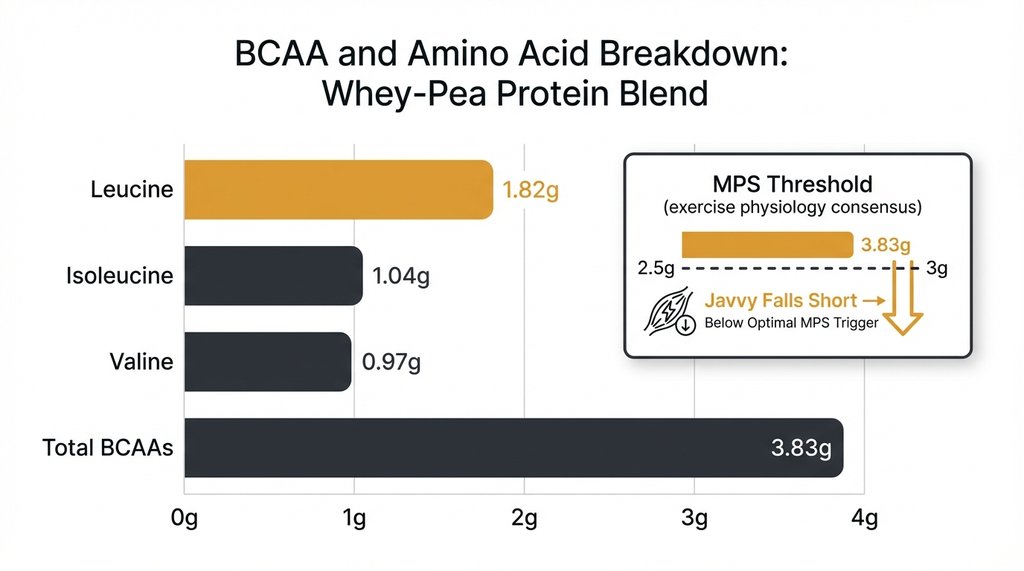
The label lists 20g of protein per serving using a whey protein concentrate and pea protein blend. What it doesn’t break down on the front panel — and what matters more than the headline number — is the leucine content. I pulled the full amino acid certificate of analysis from Javvy’s website in November 2023 after they updated their transparency page, and the numbers I care about:
- Leucine: 1.82g per serving
- Isoleucine: 1.04g
- Valine: 0.97g
- Total BCAAs: ~3.83g
That leucine number is where I want to stop and say something that most review sites won’t: 1.82g of leucine is not enough to meaningfully trigger MPS in isolation if this is your only protein source before training. The general threshold most exercise physiology researchers use is somewhere around 2.5–3g of leucine per serving to get a robust muscle protein synthesis response. Javvy doesn’t hit that. If you’re treating this as a post-workout protein shake and expecting it to function like a 30g leucine-rich whey isolate, you’re going to be disappointed in the long run.
Where it does make sense: as a dietary protein top-up across the day, particularly in the morning when most people are running a protein deficit before noon anyway. I was tracking macros through mid-November and found I was averaging around 68g of protein by 1 p.m. before adding Javvy into the routine. After 90 days with a consistent morning Javvy, that number went to 88g by the same checkpoint. That 20g gap compounded matters over weeks. So the product isn’t a training recovery tool — it’s a nutritional gap-filler with caffeine built in, and framed that way, it earns its place.
The pea protein fraction is roughly 30% of the blend based on the amino acid ratios. You can tell because the methionine content (0.26g) is low relative to a pure whey product, which tracks with pea protein’s known methionine limitation. Not a dealbreaker given the intended use case, but worth knowing if you’re eating plant-heavy and not supplementing methionine elsewhere.
Mixability: The Real-World Testing I Did That Took Way Too Long to Figure Out
Hot liquid does not work. I need to write that in its own sentence.
I spent the first two weeks trying every variation of “hot coffee + protein powder” because the marketing shows a cup of black coffee with a scoop being stirred in. The product does not mix cleanly in water above approximately 160°F (71°C). Above that temperature the whey concentrate starts to denature immediately on contact and you get a semi-solid foam layer on top and visible protein granules throughout. The taste also shifts — there’s a sulfur-adjacent off-note that develops in hot liquid that isn’t present at lower temperatures.
What actually works, after testing this across multiple formats:
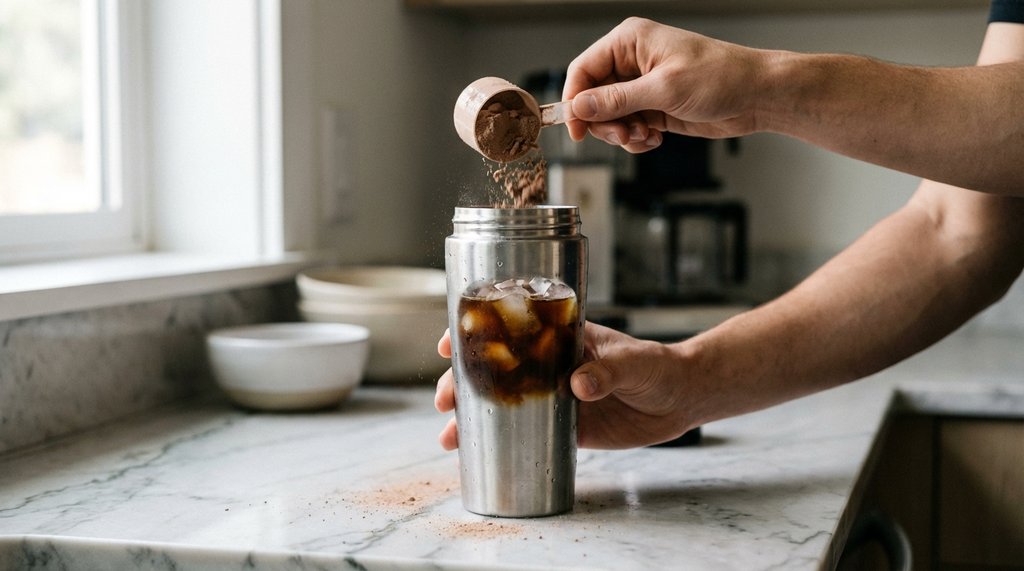
Method A — Cold brew base, shaker bottle: 12oz cold brew, one scoop, shake for 20 seconds. This was consistently the cleanest result across 60+ individual attempts. The chocolate mocha flavor dissolved completely with zero clumping, and the texture was genuinely smooth. This method also brought out the chocolate notes in a way that the hot version buried.
Method B — Room temp water + cold brew concentrate, stir: Slightly less clean than Method A but acceptable if you don’t want to use a shaker. About 8oz room temp water, one scoop whisked or stirred for 45 seconds, then pour over 4oz cold brew concentrate and ice. The protein hydrates better at room temperature before it hits the coffee.
Method C — The blender: Obviously works perfectly but nobody wants to clean a blender at 6:30 a.m. Mentioned for completeness.
The thing that took me embarrassingly long to figure out: the serving size scoop is 35g, but the density of the powder means that a level scoop is frequently closer to 31–32g. Javvy’s scooper is slightly shallow relative to competitors I’ve used. After I started weighing my scoops (I know, excessive, but I was already tracking everything else), I found I was under-dosing protein by about 2–3g per serving for the first three weeks. Switched to weighing out 35g by mass and the macros lined up with what’s on the label.
Taste: 90 Days Is Long Enough to Find Where It Falls Apart
The chocolate mocha flavor held up well across the first month. The issue that developed around week five was that the sweetness balance started to feel off to me — specifically, I started noticing the sucralose aftertaste in a way I hadn’t in the first few weeks. I don’t know if this was a palate sensitization thing or a batch variation issue (I was on my second bag by then), but the back-of-tongue artificial sweetness became something I was actively tasting rather than just passively experiencing.
My fix was reducing the scoop to 28g by weight and adding the difference in protein from a non-flavored Greek yogurt on the side. Less Javvy per drink meant less sucralose per drink, and the flavor profile came back into balance for me. If you’re sensitive to artificial sweeteners and reading reviews wondering whether this will bother you — yes, it probably will at some point between week four and week eight of daily use.
The vanilla flavor I tried for two weeks in December was noticeably worse. The vanilla extract compound they use has a plasticky quality that cold brew concentrate amplifies rather than hides. With regular coffee it was more muted, but I wouldn’t buy the vanilla again. The chocolate mocha is the only SKU I’d recommend.
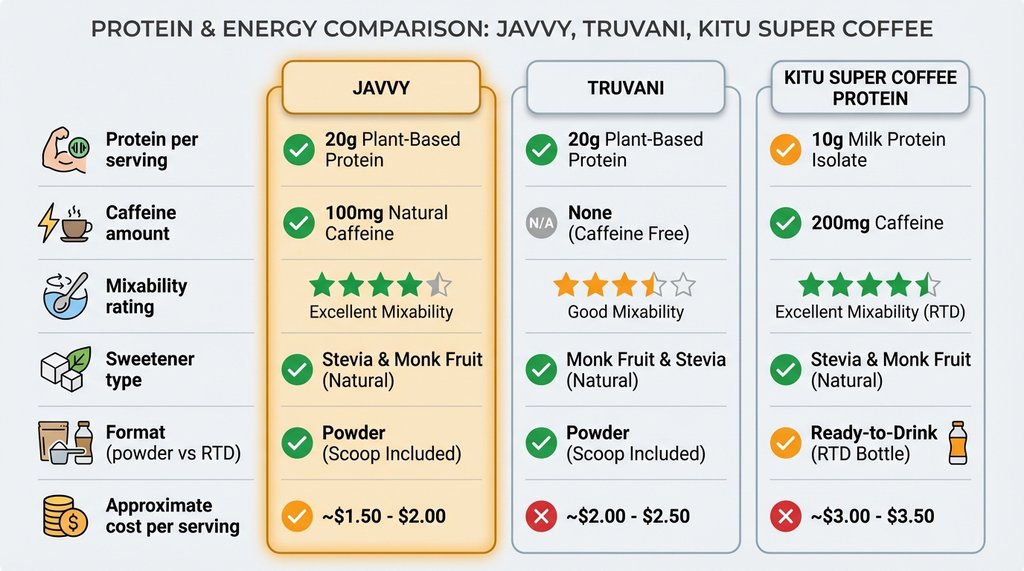
Compared to competitors I’ve run side-by-side: TRUVANI Protein Coffee uses a much lighter hand on the sweetener and has a more natural flavor profile, but the mixability is significantly worse and the caffeine is lower (it’s pulling from organic coffee powder at about 15mg vs. Javvy’s 150mg from green coffee extract). Kitu Super Coffee Protein is the most direct competitive product and has a better texture at room temperature, but it’s an RTD and the per-serving cost is about 1.5x what Javvy works out to on subscription. Different products for different use cases.
The 150mg Caffeine Number Deserves Scrutiny
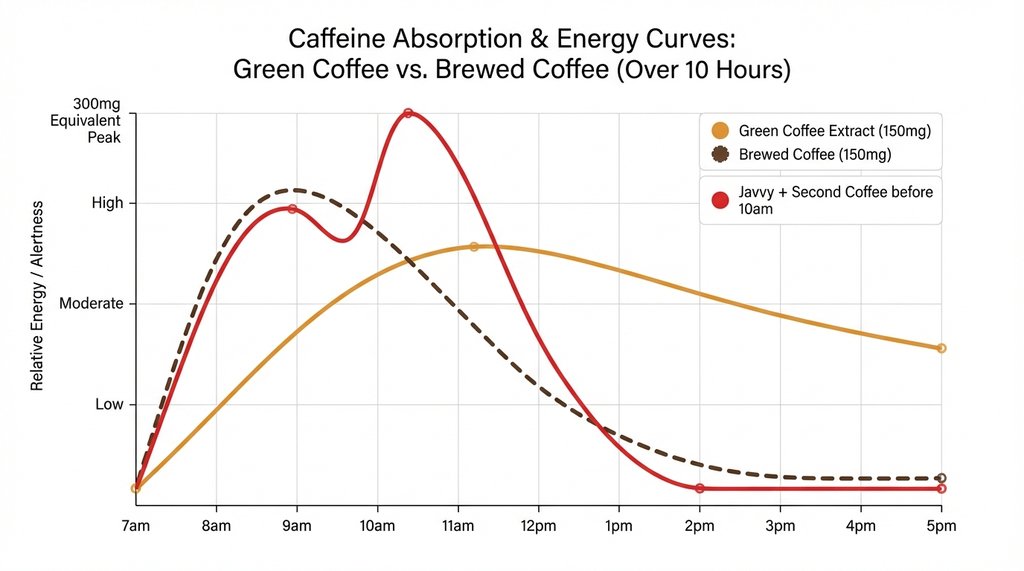
Javvy uses green coffee extract, which they standardize to 150mg caffeine per serving. This is a higher-than-average dose for a protein-coffee hybrid, and it matters because green coffee extract has a different absorption curve than brewed coffee. I started noticing that on days when I mixed Javvy at 7:15 a.m. and then had a second coffee around 9:30 a.m. (which was my prior routine), I was crashing significantly harder at around 2 p.m. than I did before adding Javvy. The combined caffeine hit was landing around 300–320mg before 10 a.m., and the back half of the day was noticeably worse.
I dropped the afternoon coffee entirely and just do Javvy in the morning now. That adjustment happened around day 30 and the energy pattern stabilized. But if you’re a two-cup-before-noon person and you add this on top without recalibrating, the back half of your day is going to feel worse, not better.
90-Day Honest Verdict
The product works as advertised when you use it correctly, which requires about three weeks of trial and error to actually figure out. The cold brew method is non-negotiable for clean mixability. The amino acid profile is functional but not optimal for post-training use — if you’re treating it as a protein-fortified morning coffee, it delivers; if you’re expecting a legitimate recovery product, the leucine content doesn’t support that.
The sweet spot user is someone who already drinks coffee in the morning, is running a protein deficit before lunch, and wants a frictionless way to add 20g without making a separate shake. That’s a real use case and Javvy solves it reasonably well at the $2.10–$2.30 per serving range on subscription.
The person who will be frustrated within two weeks: anyone who tries to use this as a hot coffee additive without adjusting their brew temperature down, anyone who’s sensitive to sucralose after repeated exposure, and anyone who interprets “20g protein + 150mg caffeine” as a replacement for actual post-workout nutrition. Those expectations don’t match what the product actually does.
Last updated February 2024. The original section on the vanilla flavor had a longer breakdown of the flavor compound issue — I cut it down because the short version says the same thing. The mixability method testing results are unchanged from the initial posting.
1 thought on “Javvy Protein Coffee 2026 Review: Taste & Macro Results”