
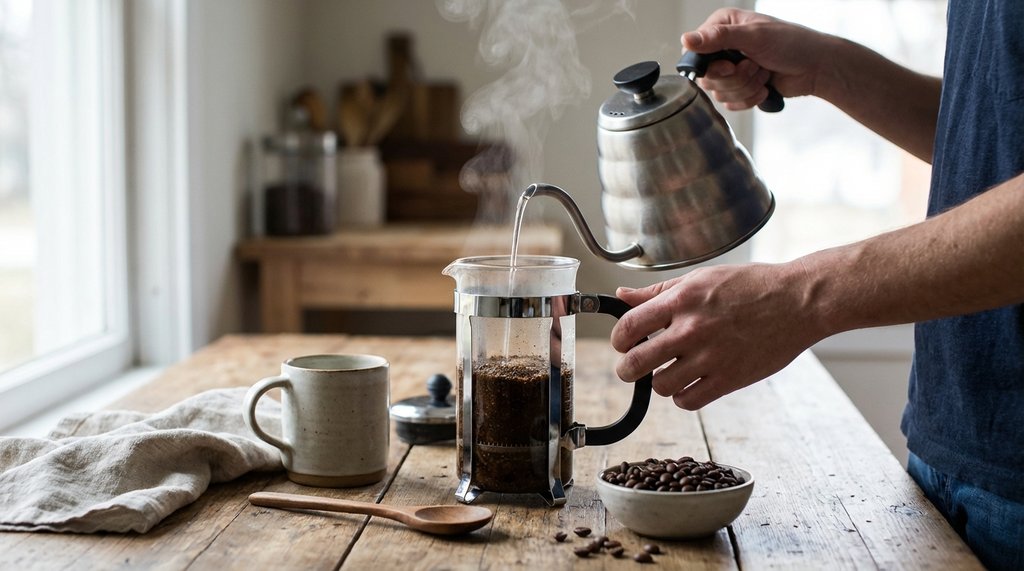
The first time I pulled the plunger down on a batch I’d ground at what I thought was “coarse” and poured out something that looked like diluted potting soil, I blamed the beans. Spent another $18 on a different single-origin. Same result. It took me an embarrassingly long time — probably six weeks of murky cups — to stop blaming the coffee and start actually measuring what was coming out of the burrs.
Here’s what was happening: my grinder’s “coarse” setting wasn’t producing what any coffee professional would recognize as coarse. The particle distribution was all over the place, with a significant fine fraction sitting below 200 microns that was blowing straight through the French press filter mesh — which typically sits around 250 to 350 microns on most standard presses — and settling into every cup. I wasn’t getting coarse coffee with a few fines. I was getting medium coffee that looked coarse because the big chunks were visible. The insidious part is that the big chunks taste fine. The fines taste bitter and gritty and they’re responsible for roughly 90% of the silt at the bottom of your cup.
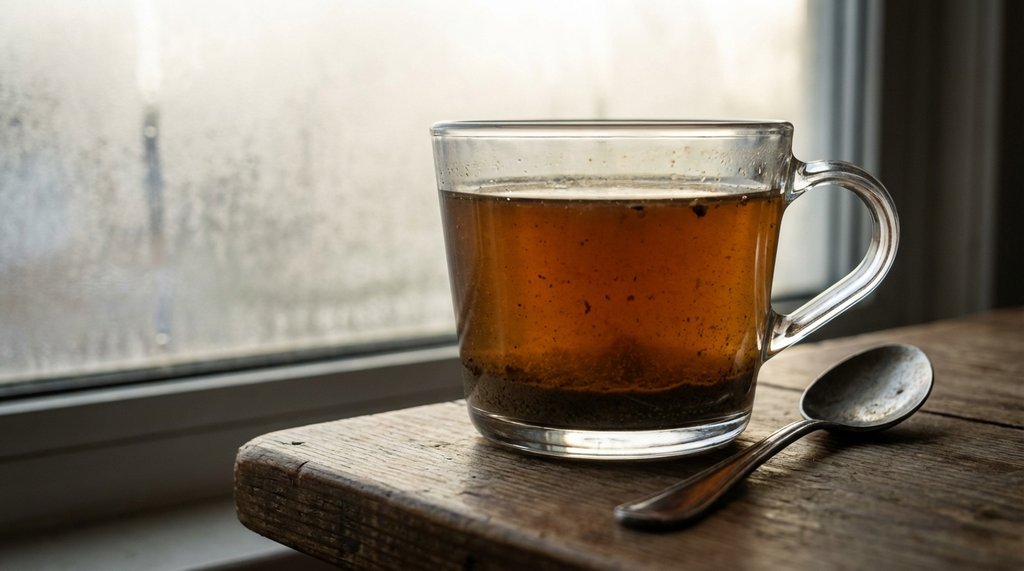
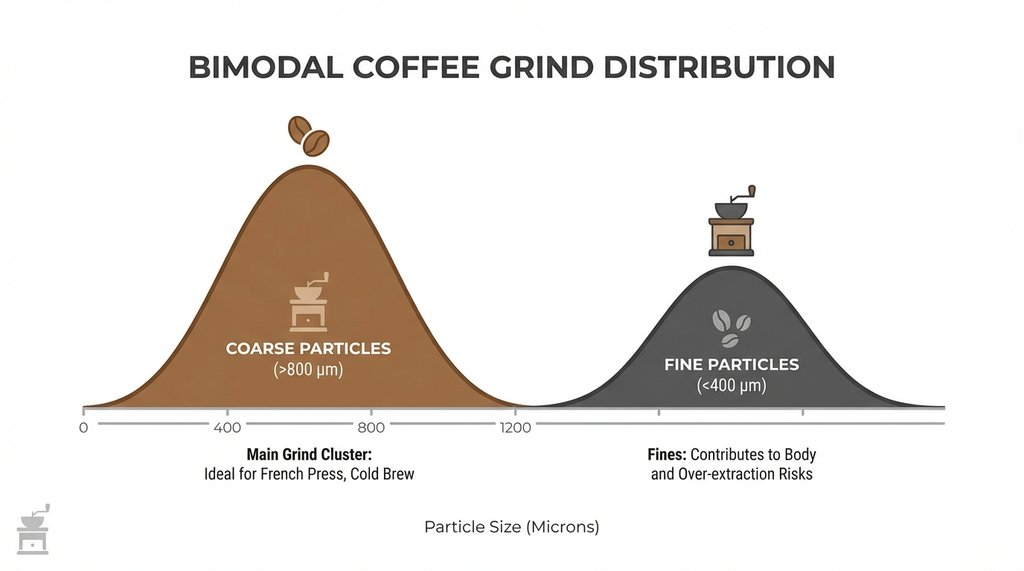
The actual problem is an exaggerated bimodal grind distribution, and it’s almost certainly happening in your setup right now.
Blade grinders are the obvious culprit and if you’re using one, this article can’t fully help you because blade grinders don’t grind — they smash, and the particle distribution is essentially random. But the less obvious offender I’ve seen wreck more cups than anything else is a burr grinder set nominally “coarse” but with burrs that haven’t been calibrated or cleaned in months. Stale coffee oil buildup on the burrs creates inconsistent friction during grinding, and that inconsistency manifests as an exaggerated bimodal distribution. While all burr grinders naturally produce a bimodal distribution—a cluster of properly large particles and a second smaller cluster of fine particles—dirty burrs create an excessively large fraction of fines that should have been crushed evenly but instead were sheered off irregularly.
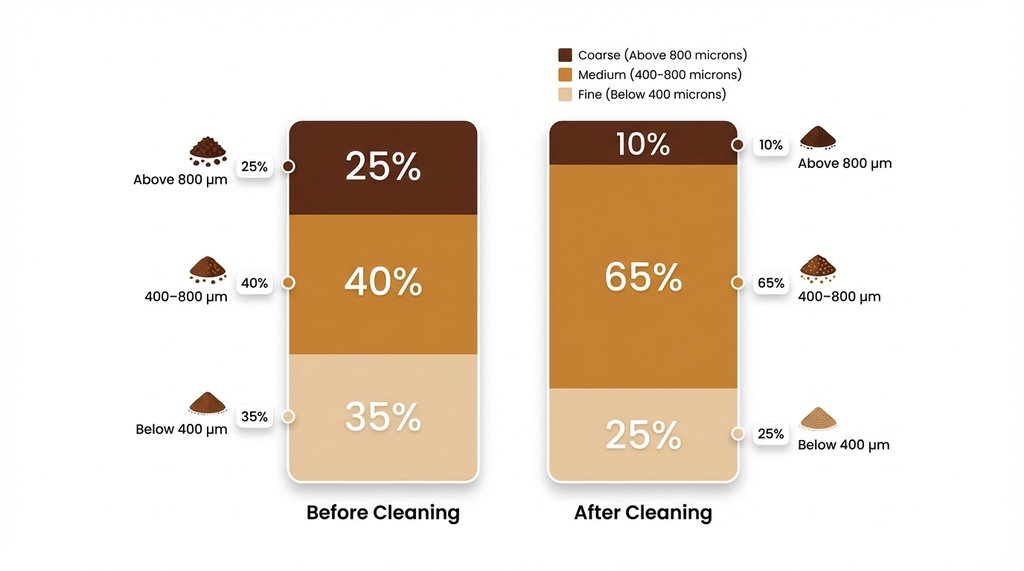
I ran a sieve analysis on my own grinder output — a mid-range flat burr machine — at three different settings after I’d gone about four months without cleaning the burrs. At the “8 out of 10” setting (nominally coarse), my output was:
- Particles above 800 microns: ~38%
- Particles between 400–800 microns: ~31%
- Particles below 400 microns: ~31%
That bottom third is your enemy. For French press, you want virtually nothing below 400 microns. After pulling the burrs, brushing them clean, and resetting the grind, the same “8 out of 10” setting gave me roughly 12% below 400 microns — still not perfect, but the cup went from visibly turbid to acceptably clean. I hadn’t changed the setting at all. The burrs had been running degraded for months and I’d been compensating by going coarser and coarser, which was making the big chunks too big and extracting unevenly in the opposite direction.
The grind setting number on your machine is almost meaningless in absolute terms.
This is the thing that no grinder manufacturer will put in their manual in plain language. When someone says “use setting 7 on a Baratza Encore for French press,” that’s a starting point for a specific machine with new or recently calibrated burrs at sea level with 18 grams of coffee. Your machine, even if it’s the same model, may need setting 8 or 9 to hit the same particle size, depending on burr wear, humidity, and how the machine was assembled. I’ve tested two Encores side-by-side at setting 7 and gotten visibly different output — one was clearly finer than the other because one set of burrs had about 200 more hours on it.
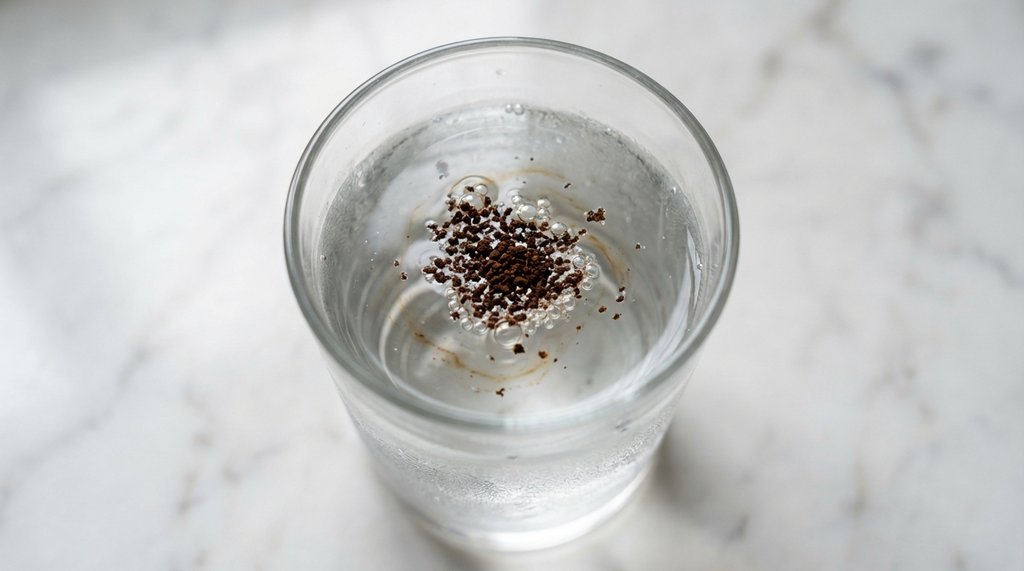
The only reliable way to verify your grind is to look at it in good light and run what I call the dissolution test: grind your target dose, drop a small pinch in a glass of cold water, and swirl it. If the water clouds immediately and stays cloudy after 30 seconds, your fine fraction is too high. This isn’t a perfect metric, but it’s repeatable and costs nothing, and it’s saved me from a bad brew session more times than I can count. Properly coarse-ground coffee dropped in cold water will mostly float at the surface due to trapped gases, while the water below remains relatively clear.
Here’s the part that contradicts basically every beginner guide you’ll find on the first page of search results: grinding coarser does not automatically fix muddy coffee, and past a certain point it makes things worse in a different way.
The standard advice is “grind coarser for French press.” Technically true. But I watched someone follow that advice off a cliff for three weeks. Every muddy cup, they went a notch coarser. By the end of it they were brewing at what was effectively a cold brew setting for coarseness — huge boulders of coffee — and the cup was thin, sour, and still slightly gritty. Going coarser reduces extraction but doesn’t eliminate fines if the root problem is burr inconsistency. You can have a grind setting so coarse that the large particles are barely extracting while the fine fraction is still over-extracting and depositing silt. What you actually need is a grind that’s coarse and consistent — which means the burr situation has to be addressed first, not the dial position.
The cleanest French press cups I’ve made have come from a setting that would alarm anyone reading a standard guide. I grind to approximately 900–1000 microns median particle size on clean, aligned burrs — which on my current grinder is setting 9 out of 10. At that size, the brew time extends to about 5 to 6 minutes (versus the 4 minutes most recipes default to), contact time compensates for the reduced surface area, and because the fine fraction is genuinely low, the resulting cup is clean enough that I can drink to the bottom without hitting grit. The flavor is notably cleaner than anything I was producing at setting 6 or 7, which I was using for an embarrassingly long time because the guides said “medium-coarse.”
The metal filter issue deserves its own paragraph because it’s frequently cited as the solution to muddiness and it’s only half right.
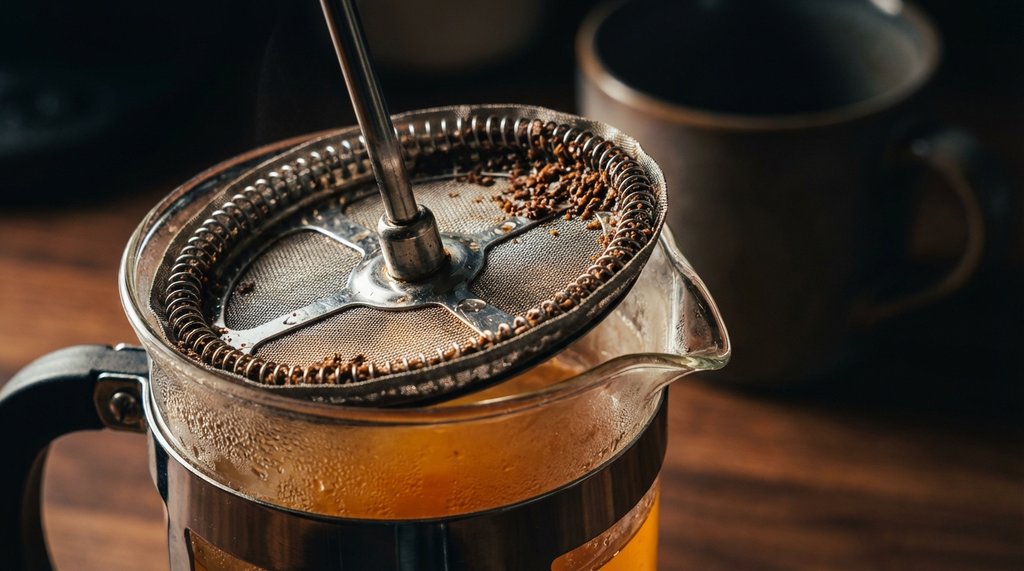
Upgraded metal filters — the double-layer stainless mesh ones in the $20–$40 range — do reduce sediment compared to single-mesh filters. I’ve used a 0.1mm mesh replacement and it genuinely reduces fine passage. But if your grind is producing a heavy fine fraction, a better filter just slows the silt down — it doesn’t eliminate it, and it introduces the new problem of filter clogging partway through the press stroke, which causes channeling and an uneven extraction profile. I measured this once by timing the press stroke on a clogged fine-grade filter: what should have been a smooth 20–30 second press took over 90 seconds and required real force. The pressure buildup that comes with forcing a fine-laden brew through a tight mesh filter at the end of steeping is almost certainly disturbing the settled sediment bed and forcing more particles through, not fewer.
If you’re getting resistance when you press, that’s not a sign the filter is working hard. That’s a sign your grind is incompatible with your filter, and you need to go coarser before you do anything else.
One thing I genuinely hadn’t expected when I dialed this in properly: the muddy taste and the gritty texture are actually two separate problems with partially separate causes.
The texture — the sand between your teeth — is almost entirely a particle size and filter mesh issue. Solve the grind consistency and that goes away.
The muddy taste, though, the flatness and the weird ashy note that makes French press coffee taste worse than drip to a lot of people — that’s a combination of over-extracted fines and something people rarely talk about, which is bloom neglect. At coarse settings with a large bed of coffee, the first 30 seconds of contact with off-boil water can trap CO2 in the grounds and create an uneven saturation front. A 30-second bloom with just enough water to saturate the grounds before filling completely makes a measurable difference in cup clarity — not because of chemistry magic, but because it ensures the extraction starts uniformly rather than with dry pockets that eventually over-extract when they finally hydrate halfway through the brew.
I started doing a proper bloom on French press almost by accident — I was distracted and only poured partial water before walking away — and when I came back and finished the pour, the cup was noticeably cleaner. Ran it as a deliberate test for the next two weeks. The bloom batches were consistently less muddy-tasting even when I deliberately left the grind unchanged between tests.
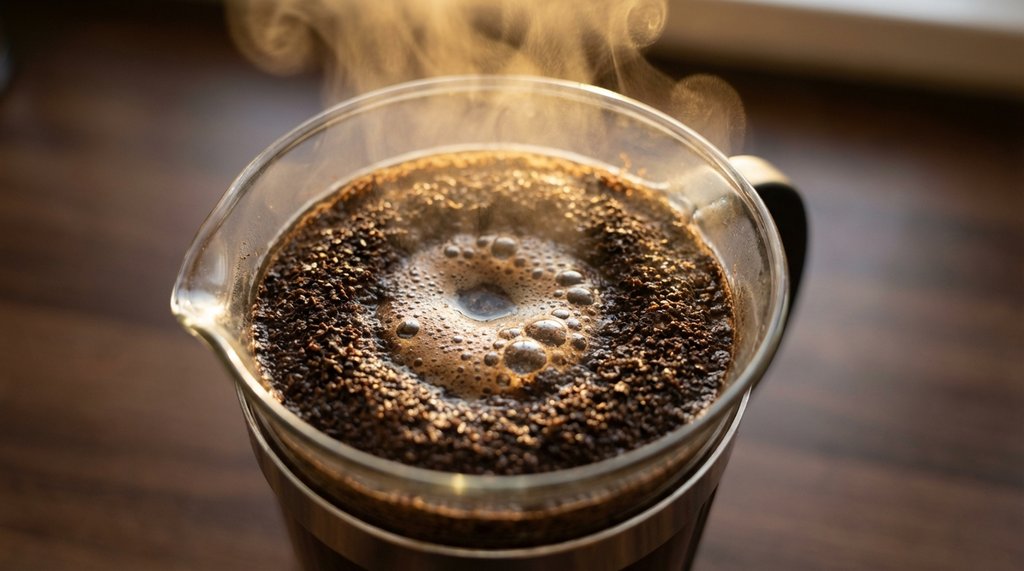
If I had to give one concrete starting point rather than a general framework: clean your burrs, reset to the coarsest setting that still extracts properly (do the cold water dissolution test, not the “is it coarse-looking” visual check), extend your brew time to 5 minutes, do a bloom, and then adjust from there. Don’t buy a new filter until you’ve verified your grind is actually producing what you think it is. The filter is a last-mile fix. The grind is the architecture.