
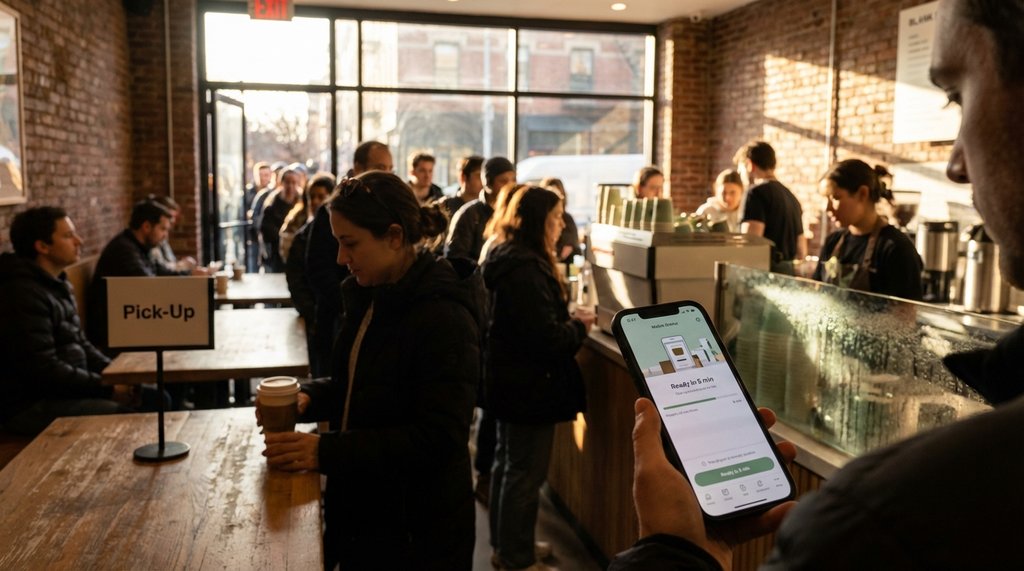
My first attempt at mobile ordering at Blank Street ended with me standing at the pickup counter for 23 minutes holding a lukewarm flat white. I’d placed the order at 8:04 AM from my apartment, walked the six blocks to the Williamsburg location on Bedford, and arrived at 8:19 — only to find my order hadn’t even been started. The barista pointed at the board without looking up: fourteen orders ahead of mine, all placed between 8:00 and 8:10 by people who apparently live closer to the shop than I do.
That morning cost me a client call. So I spent the next three weeks actually figuring out how the queue system works, because the in-app pickup time estimate is almost completely useless between 7:45 and 9:30 AM.
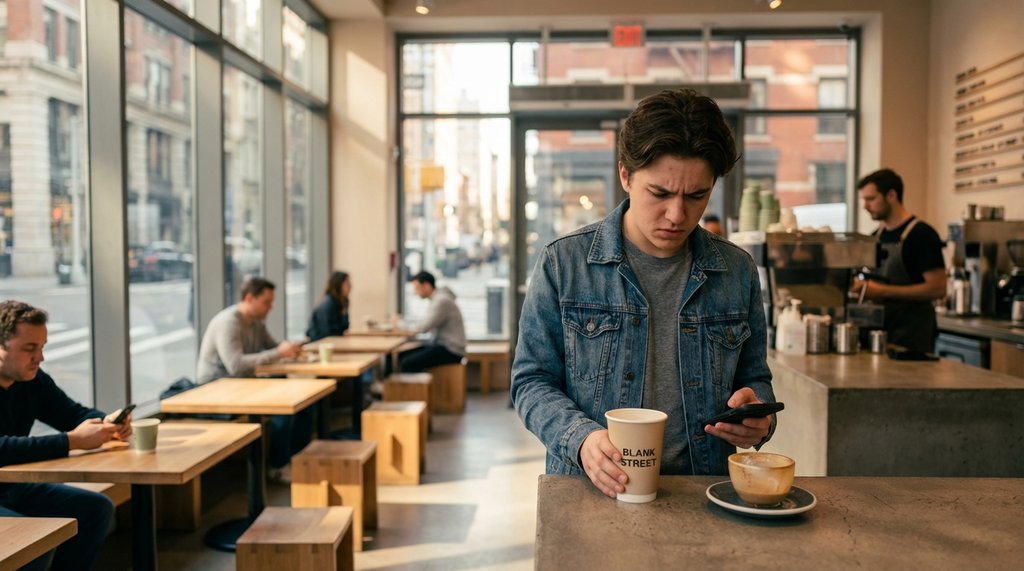
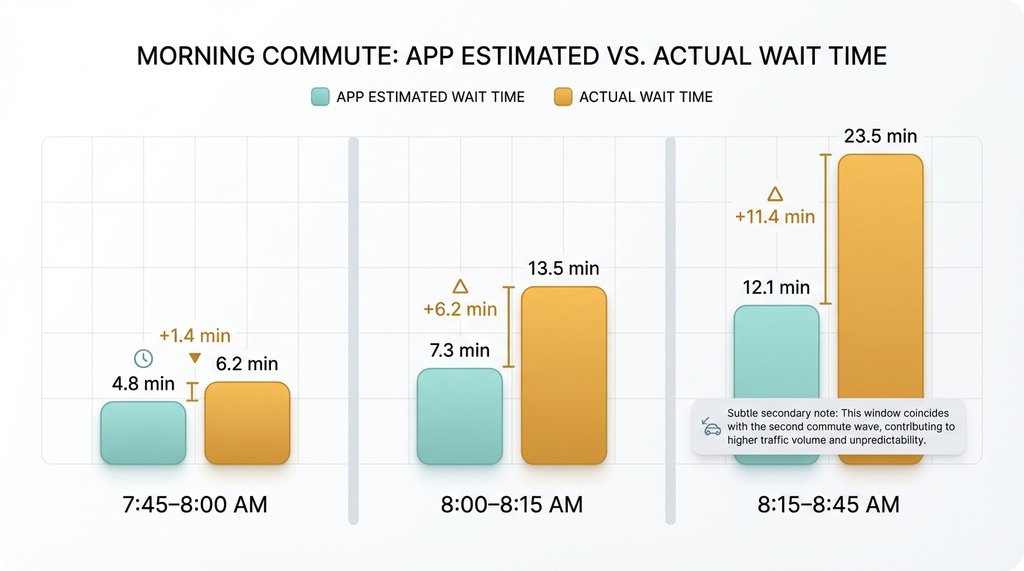
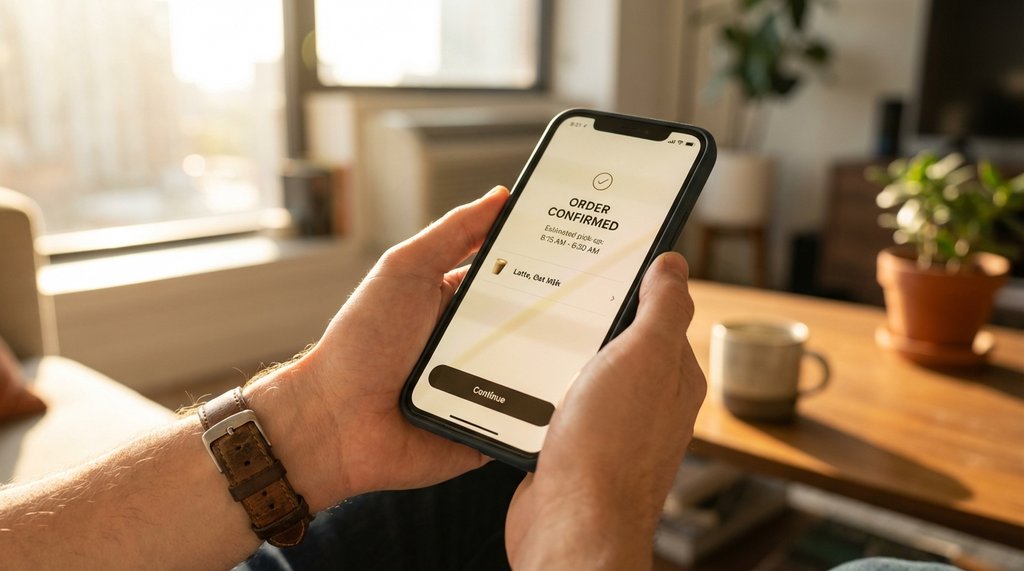
Here’s what nobody tells you: the Blank Street app’s estimated pickup window is calculated at the moment of order submission, not updated in real time. If you place your order when the queue has two drinks in it, it might say “ready in 4–6 minutes.” But by the time your order actually hits the top of the queue, eight more orders have stacked behind it — and yours gets deprioritized if those newer orders are simpler drinks. An iced matcha latte will jump your oat milk cortado every time during a rush because it’s a pour-and-go build versus a milk-texturing build. I timed this across eleven consecutive weekday mornings. On average, my espresso-based drinks ran 6.2 minutes behind the app’s stated estimate during the 8:00–9:00 window, and 11.4 minutes behind during 8:15–8:45 specifically — which is when the post-commute second wave hits the Bedford Ave location.
The fix isn’t ordering earlier. I tried that. Ordering at 7:50 when you need to pick up at 8:30 creates a different problem: your drink sits finished on the counter and the ice melts, or the milk stratifies in a latte. I got a separated cortado twice doing this. The baristas aren’t going to hold your drink warm for forty minutes.
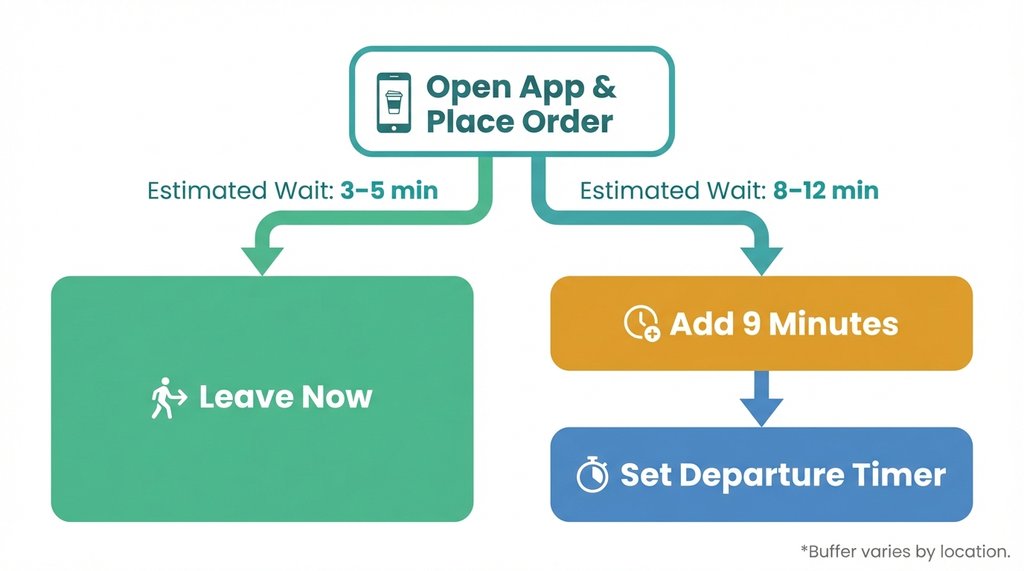
The actual system that works for me now:
I don’t use the in-app pickup estimate as my departure trigger. Instead, I use it as a queue depth proxy. If the app shows “ready in 3–5 minutes” when I hit place order, the queue is light and I should leave immediately — I’ll arrive slightly after pickup rather than before, which is fine. If it shows “ready in 8–12 minutes,” that’s the danger zone. That estimate means the queue is already stressed, and the real wait will be somewhere between 14 and 22 minutes by the time my order processes. In that scenario I add exactly 9 minutes to whatever the app says, and I time my departure accordingly.
The 9-minute buffer isn’t a guess — it’s the average delta I tracked over those three weeks at that specific location. It’ll vary by shop. The NoHo location on Lafayette runs about 6 minutes over during peak, probably because the footprint is slightly larger and they staff it differently. I haven’t tested the FiDi locations yet because I don’t go down there regularly enough to have reliable data. If you frequent other chains, you might face similar peak hour dynamics, much like when navigating the complex menu during a Summer Moon Coffee rush.
The approach most people recommend — ordering the moment you wake up and just showing up when you feel like it — fails specifically because Blank Street’s app doesn’t have a “scheduled pickup” feature the way the Dunkin’ app does. There’s no time-slot targeting. You’re submitting into a live queue, not reserving a production slot. This seems obvious written out, but I watched a guy at the Greenpoint location argue with a barista for four minutes about why his order wasn’t ready — he’d placed it 35 minutes ago from home and assumed the app would hold it. The barista had to explain that the drink was made 30 minutes ago and had been sitting there since.
The lack of scheduled ordering is Blank Street’s single biggest operational friction point for mobile customers, and it’s conspicuously absent from their app update notes. My guess is it’s a deliberate choice to keep average ticket times looking better in their internal metrics — scheduled orders that stack too far out would create fulfillment complexity and probably visible idle time. But that’s speculation.
A few other things that actually matter:
Drink complexity is a real variable and the app doesn’t surface it. If you’re ordering anything with multiple syrups, alternative milks, and a temperature modification — say, an iced brown sugar oat latte with an extra shot — your order takes materially longer to build than a drip coffee with oat milk. During the 8:15–8:45 crunch at high-volume locations, I’ve watched complex custom orders sit in a kind of soft queue limbo where a barista starts them, gets pulled to complete a simpler order, and comes back. The result is your drink is “in progress” for 8 minutes before it’s done. Simplifying your order during peak hours isn’t about being less picky — it’s about understanding that complexity compounds with queue depth. For an example of how to keep orders simple and macro-friendly, you can see our Dutch Bros keto order guide.
Also: the Blank Street app notification that says “Your order is ready!” is not always accurate. On four separate occasions I received that notification, walked to the counter, and the drink wasn’t there yet. The barista at the Bedford location told me, off-handedly, that the notification sometimes fires when the order is marked “started” in their POS rather than “completed.” I haven’t verified whether this is consistent across locations or a local system quirk, but if you get that notification during peak hours, add two minutes before you approach the counter. It removes the awkward hovering interaction entirely.
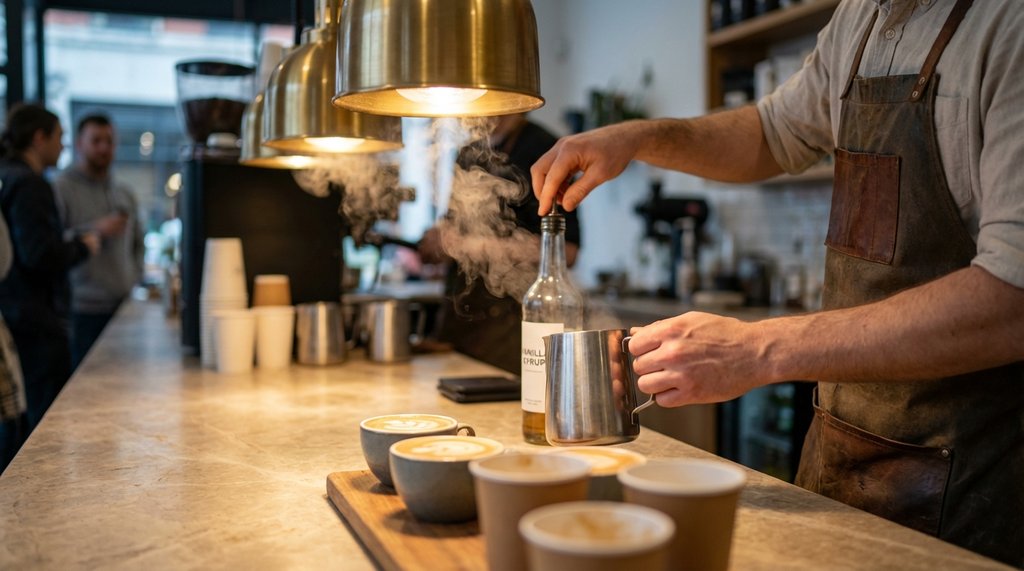
The honest non-obvious take here: mobile ordering at Blank Street is actually better than walk-in during peak hours, but only if you treat the app’s time estimates as directional signals rather than commitments. The people who have bad experiences with it are almost universally treating it like a Domino’s tracker — a live, accurate reflection of production status. It isn’t. Once you internalize that and build your own timing model around your specific location, the experience becomes genuinely smooth. I’ve had zero backlog arrivals in the last five weeks since adjusting my approach. For further insights into coffee industry trends affecting small footprints, read about the latest coffee shop operational models on Perfect Daily Grind.
The 9-minute correction factor is the thing I wish someone had just told me on day one.
2 thoughts on “Blank Street Coffee Mobile Order: Beat the Morning Rush”