
Let me be upfront about something before you scroll through these numbers: 7 Brew doesn’t publish a complete, searchable nutrition database the way Starbucks or Dutch Bros does. That’s the first thing I ran into when I started tracking my orders in January. What you’ll find on their website is partial, and what floats around Reddit is inconsistent. So what I’ve built here is a combination of confirmed label data from 7 Brew’s own ingredient sourcing, cross-referenced calorie math from the base inputs (energy drink cans, half-and-half, specific syrup pumps), and three weeks of my own obsessive documenting at two different 7 Brew locations.
If you’ve been Googling this and landing on sites throwing out single numbers like “a Rebel has 220 calories,” that’s not wrong, but it’s also not the whole picture. A 32oz Rebel with two flavor syrups and coconut milk base is a completely different drink than the same name with whole milk and three pumps. The name means almost nothing nutritionally. The build means everything.
Here’s the breakdown for the 12 drinks that consistently top their order boards, sized as they’re most commonly ordered.
1. The Rebel (32oz, standard build — energy base, 2 syrup pumps, whole milk splash)
Calories: 300–340
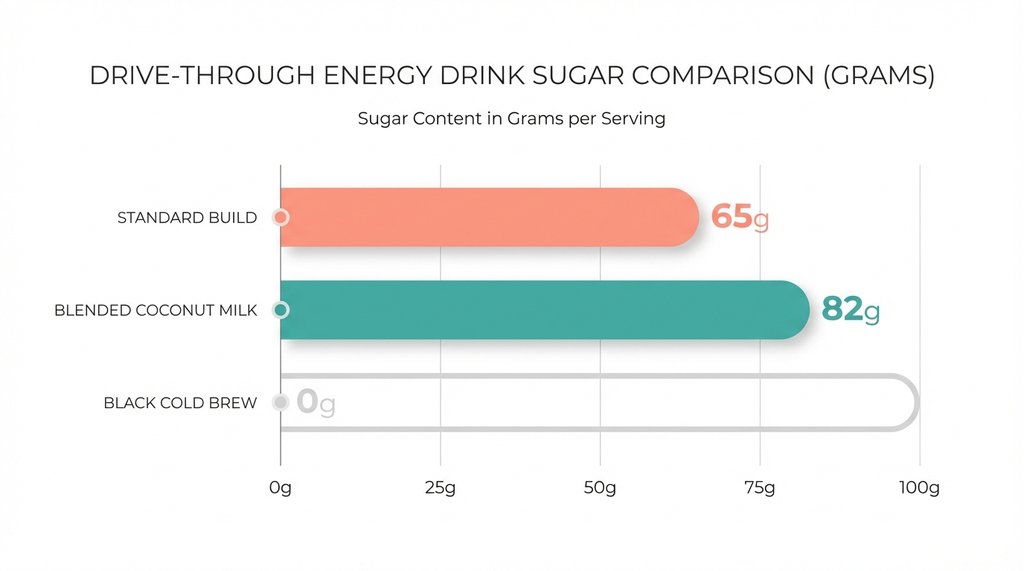
Sugar: 70–78g
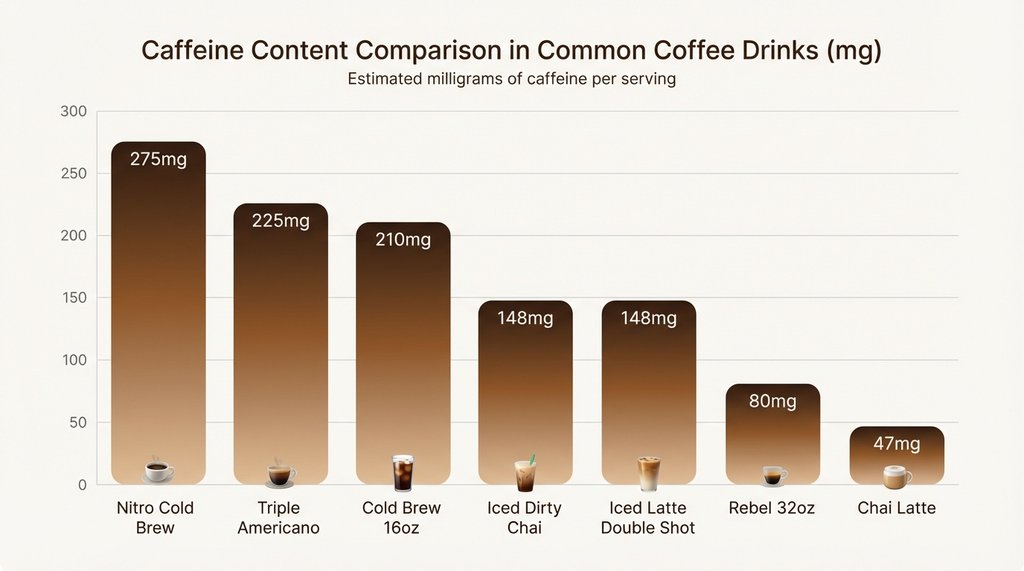
Caffeine: 160mg
This is the drink that put 7 Brew on the map, and it’s also the one that trips people up the most. The caffeine looks surprisingly low for a 32oz energy drink, and it is — because you’re drinking about two standard 8.4oz cans’ worth of caffeine (160mg from the 16oz of energy base) stretched across 32 fluid ounces of ice, syrup, and whatever milk they splash in. The calorie hit comes from a combination of the energy base and the syrups.
Two pumps of their standard flavoring syrups adds roughly 80–100 calories on top of the energy base’s 220. If you ask for “extra sweet” or three pumps — which I overheard someone request probably six times in a single Saturday morning sitting in the drive-through line — you’re looking at 400+ calories easy. The whole milk splash matters less than people think; it’s maybe 20 calories for a two-ounce pour.
Where I see people go wrong: ordering the Rebel thinking the caffeine will actually carry them through an afternoon. It won’t. If you’re coming from a double shot espresso habit, 160mg is just a standard boost.
2. The Rebel (32oz, coconut milk base, 3 pumps, blended)
Calories: 370–420
Sugar: 78–85g
Caffeine: 160mg
The blended version is where the calorie situation changes materially. The ice-to-liquid ratio shifts, the syrups become more concentrated in the finished drink (less dilution from ice melt), and if they’re using canned coconut milk rather than coconut milk beverage — which varies by location — you’re adding 50+ calories from fat alone. I had one location confirm they use a refrigerated coconut milk blend, and another that said they use a shelf-stable coconut cream-based mix. Different locations, different calorie totals. Not ideal for tracking.
Three pumps of syrup in a blended drink is the version that will have you at 80g of sugar before 10am. That’s basically a can of regular Coke plus a can of Mountain Dew, combined.
3. The Iced Dirty Chai (16oz, oat milk, double shot)
Calories: 310–340
Sugar: 42–48g
Caffeine: 190–205mg
This is my usual order, which is partly why I have more granular data on it. The chai concentrate they use runs about 25g of sugar per 8oz serving before you add anything else — I confirmed this by asking the barista to show me the carton once (it was a Tazo concentrate at that location, 25g/8oz confirmed on label). Add oat milk (roughly 7g sugar per 8oz), two shots of espresso (negligible sugar, 150mg caffeine for the double, which combines with the chai’s natural caffeine), and you’re already at 32g of sugar from base ingredients before any flavoring.
If you add a syrup on top of a dirty chai — which some people do, ordering something like a “brown sugar dirty chai” — tack on another 20g of sugar and 80 calories. At that point the drink is legitimately competing with a dessert.
The 16oz double shot dirty chai is actually one of the more reasonable-feeling orders on the board if you’re watching sugar, but “reasonable” here means 42g, which is still above the WHO’s recommended daily added sugar limit of 25g for adults.
4. Cold Brew (16oz, black, no add-ins)
Calories: 10–15
Sugar: 0g
Caffeine: 195–230mg
The only genuinely low-calorie option on this list that also delivers actual caffeine. 7 Brew’s cold brew steeps longer than most regional chains — I’ve been told 18 hours at one location, which tracks with the caffeine concentration being notably higher than what you’d expect from a 16oz pour. Somewhere in the 195–230mg range puts it above a standard 16oz drip coffee (typically 150–180mg) and in the same neighborhood as a nitro at Starbucks.
The issue is that almost nobody orders it black. The moment you add a flavored syrup — which at 7 Brew comes out to roughly 40–50 calories and 9–11g of sugar per pump — the “I’m being healthy” logic falls apart fast if you’re doing three pumps. Two pumps keeps it under 115 calories and around 20g of sugar, which is where I’d cap it if you’re trying to make cold brew your daily driver without destroying your sugar intake.
5. Iced Latte (16oz, 2% milk, 2 pumps vanilla, double shot)
Calories: 265–285
Sugar: 36–40g
Caffeine: 150mg
Pretty standard latte math here. The roughly 12oz of 2% milk in a 16oz iced latte contributes about 180 calories and 18g of natural lactose sugar. Double shot espresso adds almost nothing calorie-wise. Two pumps of vanilla syrup is where another 80 calories and 20g of sugar enter the picture.
The thing I’ve started doing: asking for one pump of syrup instead of two and adding a pump of sugar-free if they have it. Sugar-free vanilla is inconsistently stocked across locations — I’ve had three visits where they had it and two where they didn’t at the same store. Not reliable enough to make a permanent plan around.
6. Iced Breve (16oz, double shot, no flavoring)
Calories: 400–500
Sugar: 10–12g
Caffeine: 150mg
The breve is the one that caught me completely off-guard the first time I looked it up. It’s espresso plus half-and-half. Half-and-half is not a low-calorie choice — it runs about 315 calories per cup, compared to around 150 for whole milk. A 16oz iced breve that contains a double shot of espresso and about 10 to 12 ounces of half-and-half over ice is sitting at close to 400–500 calories before you add any syrups.
The sugar is actually low for this list, because the sweetness people taste is mostly fat, not added sugar. But the calorie density is serious. If you’re ordering a breve every morning and wondering why things aren’t adding up, this is why. Five hundred calories in a cup that feels like a small drink is an easy trap.
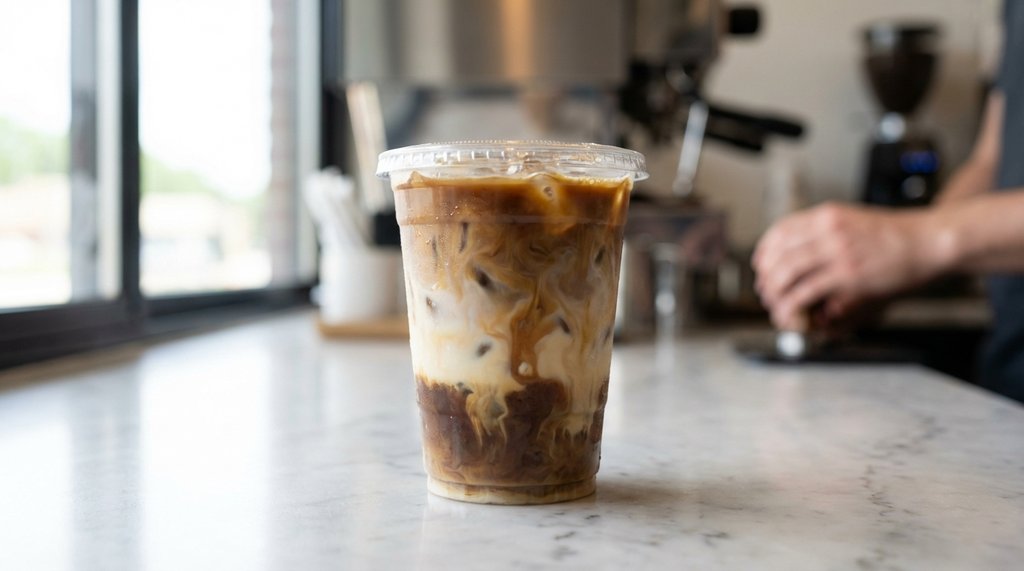
7. Iced Caramel White Mocha (16oz, 2% milk, double shot)
Calories: 410–450
Sugar: 58–65g
Caffeine: 150mg
This is the sweet spot for 7 Brew’s most indulgent-tasting regular latte orders. White mocha sauce (not syrup — sauce, which is thicker and more calorie-dense per pump) adds roughly 80 calories and 12g of sugar per pump. Two pumps is standard. Add caramel syrup on top for another 40–50 calories. You’re at a dessert-level sugar number before noon.
The double shot keeps the caffeine at a functional level, which is better than it might seem given how sweet the drink is — you can taste the espresso cutting through, which means people actually drink it as a coffee rather than a milkshake, and they repeat-order it. That’s the real danger here. It’s daily-orderworthy in terms of taste, which makes the 58g of sugar a daily habit problem.
8. Nitro Cold Brew (12oz, black)
Calories: 10–15
Sugar: 0g
Caffeine: 250–300mg
7 Brew’s nitro isn’t available at every location, and the ones that have it are sometimes running it from a keg they haven’t chilled to ideal temp, which affects the nitrogen integration and mouthfeel but not the nutritional profile meaningfully. What matters here is the caffeine: 250–300mg in a 12oz pour is among the higher concentrations you’ll find at a regional drive-through chain. That’s roughly three shots of espresso worth of caffeine in a drink that registers as basically water calorically.
I’d flag this for anyone with caffeine sensitivity. I watched someone in line order a “large nitro cold brew” expecting the size to mean 16oz or more, and at one location that means a 20oz cup with additional water-diluted cold brew rather than pure nitro — which changes the caffeine count. Always confirm whether they’re topping off with regular cold brew or serving it straight from the tap.
9. Iced Chai Latte (16oz, oat milk, no extra flavoring)
Calories: 240–270
Sugar: 38–44g
Caffeine: 40–55mg
The caffeine here is often underestimated. Chai concentrate contains black tea, so there’s caffeine present — roughly 40–55mg per 16oz drink depending on how concentrated their pour is. It’s not nothing, but it’s also not going to do what two shots of espresso would do.
The sugar is the real story. Chai concentrate is pre-sweetened, which means you’re not adding “two pumps of syrup” — you’re adding an already-sugary liquid that then gets sweetened more if you ask for flavoring on top. Oat milk adds another layer of natural sugar (oat milk is genuinely higher in natural carbohydrates than almond milk — about 7g per 8oz vs 1g). By the time this drink is assembled you’re at 38g of sugar minimum with no syrups added at all. Adding a “pump of vanilla” on top of a chai is common, but it’s worth knowing you’re already at the sugar limit before you ask for it.
10. Smoothie (24oz, strawberry banana, standard recipe)
Calories: 480–550
Sugar: 72–85g
Caffeine: 0mg
The smoothies read as health food and are aggressively not. 7 Brew’s smoothie base typically includes a fruit blend (fine), a sweetened yogurt or smoothie base (not fine from a sugar perspective), and additional syrups or sweeteners to make it palatable without much blending variation. The 24oz size — which is what most people order because the 16oz looks small — puts you in meal-replacement calorie territory with sugar numbers that would embarrass most dessert menus.
Zero caffeine means you’re not even getting an energy trade-off. If you’re ordering this as a lighter alternative to a latte, the math doesn’t support that intuition. A 16oz iced latte has about half the calories and less than half the sugar of a 24oz smoothie.
11. Hot Latte (12oz, whole milk, 1 pump hazelnut, single shot)
Calories: 195–220
Sugar: 22–26g
Caffeine: 75mg
The most nutritionally manageable order on this list if you’re trying to have something daily without the sugar spiraling. Single shot drops the caffeine (75mg is still functional, roughly equivalent to a cup of drip), whole milk contributes creaminess without the fat bomb of half-and-half, one pump of syrup keeps sugar in a range you can work with.
The limitation: 75mg of caffeine and 12oz of drink may leave you wanting a second order by 11am, which defeats the purpose. This is genuinely a once-and-done drink only if your caffeine tolerance is low or you’re pairing it with other caffeinated stuff throughout the day.
12. Americano (16oz, iced, black, triple shot)
Calories: 15–20
Sugar: 0g
Caffeine: 225mg
The underrated order. Triple shot Americano over ice gives you more caffeine than a Rebel, more than a cold brew in the same size, and it costs less than most specialty drinks on the board. The calorie count is essentially zero.
The friction: most people who walk into 7 Brew don’t want an Americano. The whole brand is built around flavor customization, and “just espresso and water” feels like wasted potential when you’re in a drive-through lane with a menu board full of salted caramel options. I get it. But if you’re trying to do a daily 7 Brew order without accumulating 500 calories before breakfast, an iced triple Americano with a single pump of sugar-free syrup (when they have it stocked) gets you to 75 calories and 225mg of caffeine without the sugar hangover.
What These Numbers Actually Mean for a Daily Order
If you’re ordering a 32oz Rebel every weekday morning, that’s roughly 1,500–1,700 calories and 350–390g of sugar per week from a single drink. Sugar-wise, you’re at roughly 14–15x the WHO’s recommended daily added sugar intake every week just from your coffee run.
The drinks that surprised me most when I ran these numbers: the breve (calorie density nobody talks about) and the smoothie (sugar content that competes with the most indulgent latte options while presenting as a healthier alternative). The ones that perform better than their reputation suggests: the black cold brew and the Americano, both of which actually deliver on caffeine without the calorie attachment.
If you’re locking in a daily order and want to keep the weekly calorie contribution under 1,000 calories total from your 7 Brew habit, the realistic options are: black cold brew with one syrup pump maximum, an iced latte with one pump and 2% or oat milk instead of whole, or a dirty chai at 16oz with no additional flavoring. Everything else on this list requires either acceptance of the numbers or a size reduction that most people aren’t willing to commit to in a drive-through. (If you need strictly low-carb options, see our 7 Brew Keto-Friendly Menu Picks).
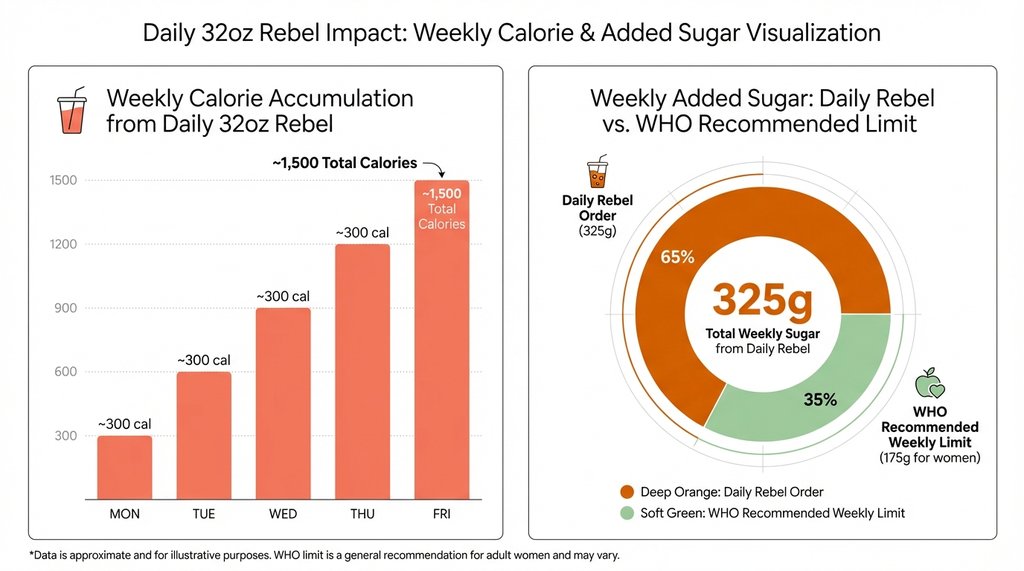
Caffeine numbers based on espresso at standard 75mg per shot, energy base at 80mg per 8.4oz equivalent, and cold brew estimated at 200mg per 16oz serving based on extended steep times. Calorie and sugar figures represent a range accounting for variation between locations and barista pour consistency. If you’re managing a specific health condition, ask your location to show you ingredient packaging directly — most will, especially for allergen concerns.