
The first time I actually pulled apart what was happening inside my Mr. Coffee machine — not metaphorically, literally unscrewed the bottom plate — I realized the “low setting” on most drip brewers isn’t doing what anyone thinks it’s doing.
Here’s the actual problem: Maxwell House’s medium roast blend, specifically the pre-ground version in the blue can, has a grind size that averages somewhere between 650–750 microns. That’s coarser than most people assume. And drip machines with a single heating element — which covers probably 85% of the units sold at Target or Walmart under $60 — don’t brew at a fixed temperature. They cycle. The water that hits your grounds during a typical brew cycle fluctuates between roughly 185°F and 205°F depending on where you are in the cycle and how full the reservoir is.
That temperature swing is the whole problem. And the “low setting,” if your machine even has one, is almost never lowering brew temperature. It’s almost always just slowing the flow rate.
I spent about three weeks last fall systematically testing this after I kept getting that bitter, ashy aftertaste from a fresh can of Maxwell House that I knew wasn’t stale — I’d bought it two days prior and kept it sealed. My first assumption was bloom time, or lack thereof, since drip machines don’t pause. My second assumption was water quality; I’m on Chicago municipal water, which runs around 150–170 ppm of dissolved solids, enough to affect extraction but not dramatically. Neither of those was the actual culprit, though both made it worse.
What I eventually isolated was a phenomenon that doesn’t get discussed outside of home roasting and light-commercial coffee forums: thermal overshoot on the initial pour.
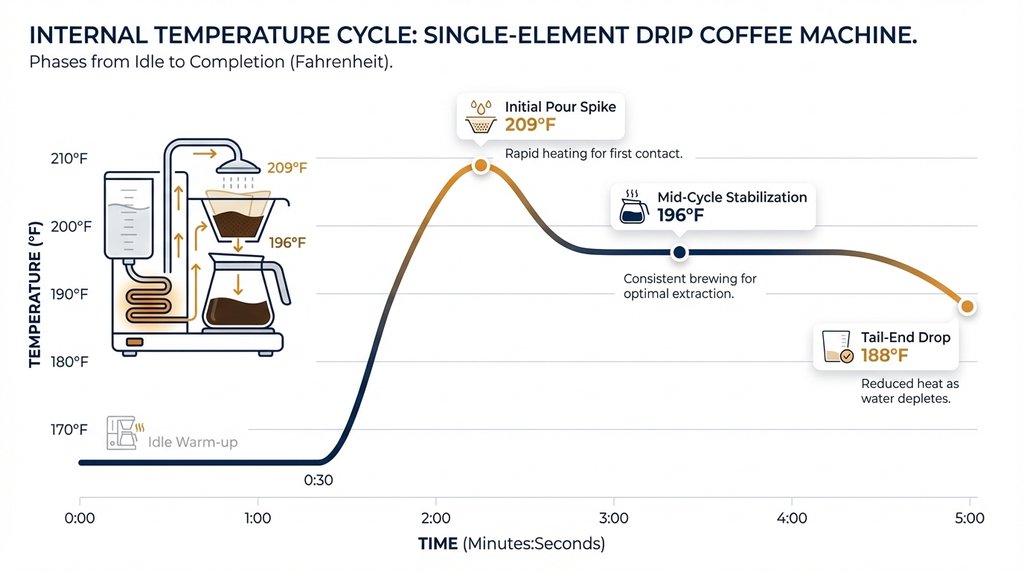
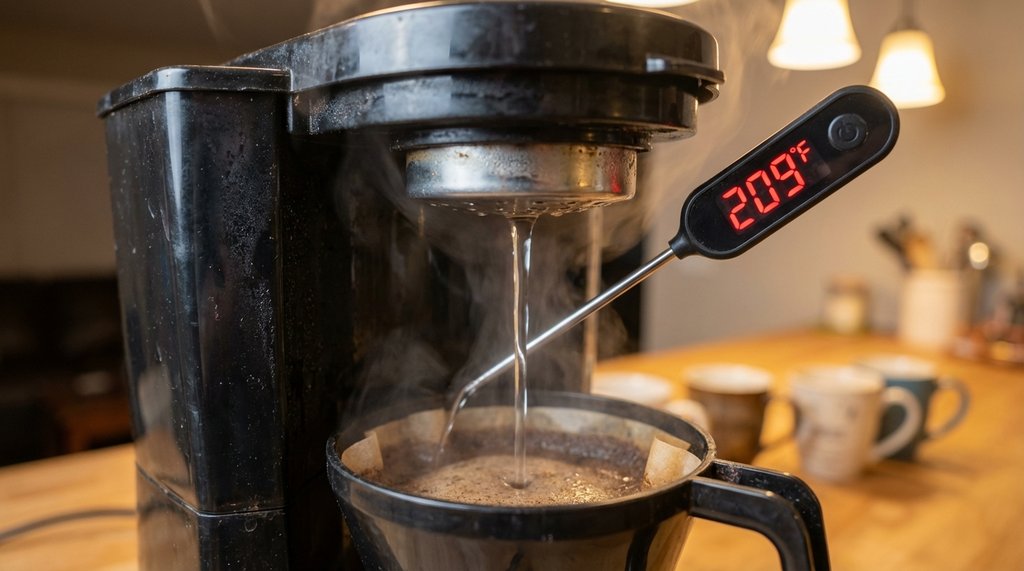
When a drip machine starts a brew cycle after the heating element has been sitting idle and hot — meaning you’ve had the machine on the “keep warm” mode or you brewed a pot two hours ago — the first 3–4 ounces of water that move through the system are significantly hotter than the rest of the cycle. In my testing with a Javelin Pro Duo probe thermometer inserted directly into the water stream above the showerhead, I clocked that initial burst at 209°F on my 5-cup Hamilton Beach. The middle of the cycle settled around 196°F. The tail end dropped to about 188°F as the heating element cycled.
That 209°F initial hit is scorching the top layer of grounds before extraction even begins in earnest.
Maxwell House specifically is more vulnerable to this than a lot of comparable commodity coffees, and the reason isn’t mysterious once you look at it: their blends lean on Robusta as a filler component in the lower-priced SKUs, and Robusta has a much lower threshold for producing harsh, high-chlorogenic-acid extraction byproducts when overheated. The burnt taste isn’t coming from the “low setting” failing — it’s coming from a pre-brew thermal spike that the setting has no control over whatsoever.
The fix that actually worked for me, after I abandoned the approach of just using less coffee (which makes it weaker and still bitter, a terrible combination), was a two-part adjustment:
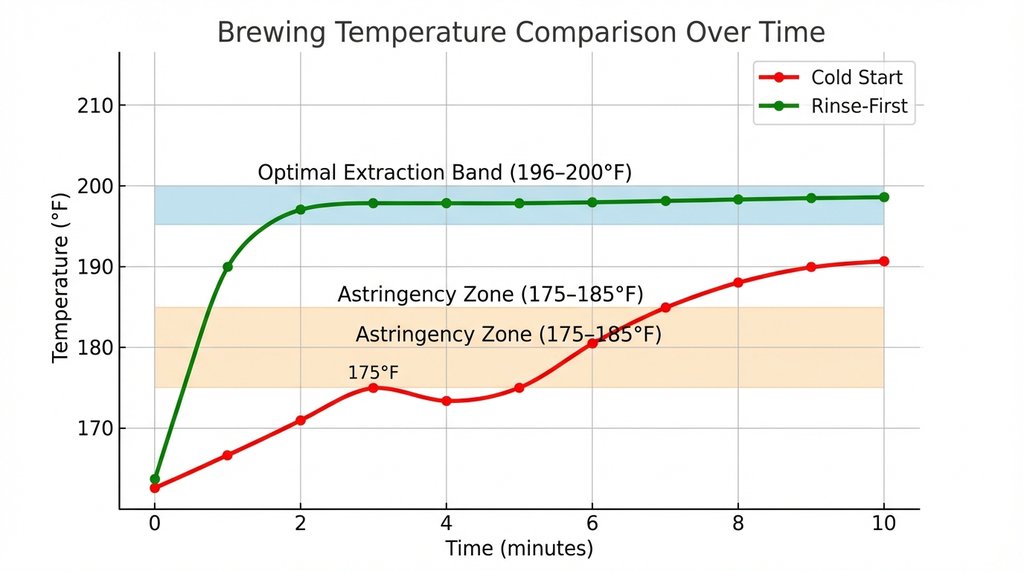
First, run a short 2-ounce “rinse cycle” — just hot water through an empty filter — before adding grounds. This bleeds off that initial thermal overshoot. By the time you add your Maxwell House and start the real brew, the element has stabilized. In my testing, this dropped that first-pour temperature from 209°F to roughly 198°F, which is right in the extraction sweet spot for medium roast commodity blends.
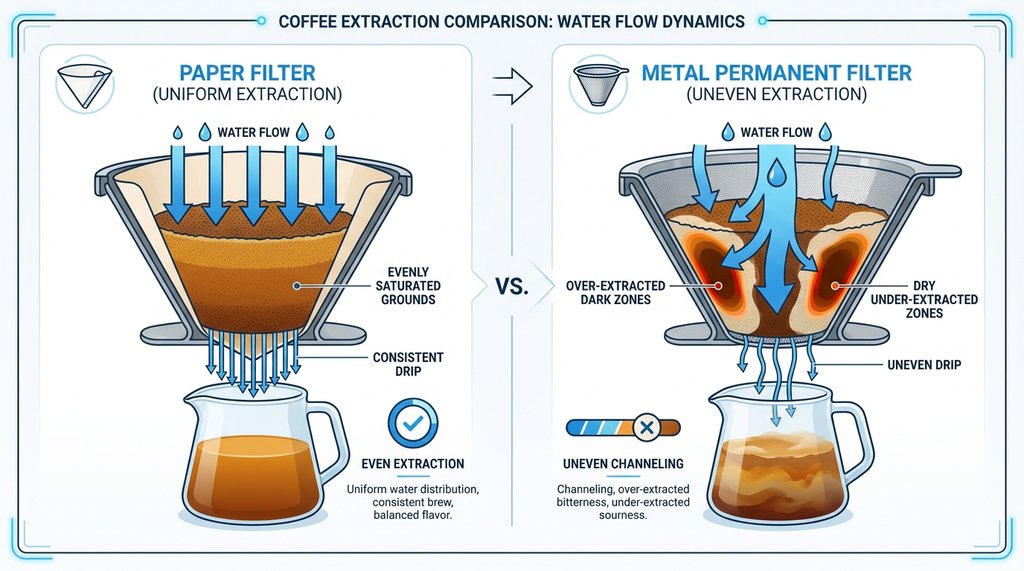
Second, if you use a permanent metal filter instead of paper, stop. The metal filter on most cheap drip machines sits lower in the basket, which changes how the water channels through the bed. With coarser pre-ground coffee like Maxwell House, you get uneven channeling — water finds the path of least resistance, some grounds are over-extracted and some are barely touched — and the over-extracted channels produce exactly the bitter, scorched flavor profile people blame on the heat setting.

The non-obvious part that took me the longest to accept: cold-start brewing makes this worse, not better.
I’d read multiple times that letting your machine warm up before brewing was unnecessary. Whoever wrote that was testing with freshly roasted single-origin that had been ground that morning. For a pre-ground commercial blend sitting at 650+ microns in a 30-year-old-style drip machine? A cold heating element produces a longer, more variable temperature ramp that extends the period your grounds spend in that sub-optimal 175–185°F range at the beginning of the cycle — which pulls more astringent, woody notes from the Robusta component without enough heat to balance them.
The rinse-first approach essentially gives you the benefits of a warm-start without having to waste a full pot.
One more thing that matters specifically for Maxwell House: the ratio. The can recommends 1 tablespoon per 6 ounces of water, which produces a brew that’s chronically under-dosed for drip extraction at home. Under-dosing with a coarse, Robusta-forward grind in a variable-temperature machine means each individual ground particle is being hit with too much water relative to its extractable surface area — you’re pulling more from each gram of coffee, and the last stuff to come out of an over-extracted grind is the harsh, burnt-tasting fraction.
Moving to 1.5 tablespoons per 6 ounces — not quite the specialty coffee ratio, but closer — shortened my extraction window per gram and cut the bitterness noticeably. The pot came out tasting like what Maxwell House is supposed to taste like: not complex, not particularly clean, but solidly roasty without the ashiness.
It’s not a premium coffee and I’m not trying to make it one. But at $8.49 for a 30.6-ounce can, it should at minimum taste like the coffee it is rather than a byproduct of a machine running a process nobody bothered to understand.