

Luckin’s OTC ticker LKNCY underwent a change in market tier classification at several brokerages—I’ll get to that—but first, let me tell you the thing that wasted about 45 minutes of my time the first time I tried to execute this trade.
I had a Fidelity account, clicked “Trade,” typed in LKNCY, got a quote, confirmed the order, and it rejected. No error code on the first attempt, just a silent rejection back to the order entry screen. Tried again. Same thing. Called the trading desk. Turns out Fidelity requires you to enable Penny Stock trading (which includes most OTC Pink Sheet stocks) by agreeing to a specific disclosure—they won’t always tell you this upfront on the website, and the rejection message can be vague. The rep enabled it in about three minutes on the phone, and the next order went through fine. But that’s the kind of friction this trade has that buying, say, AAPL does not.

Why LKNCY Trades Where It Does
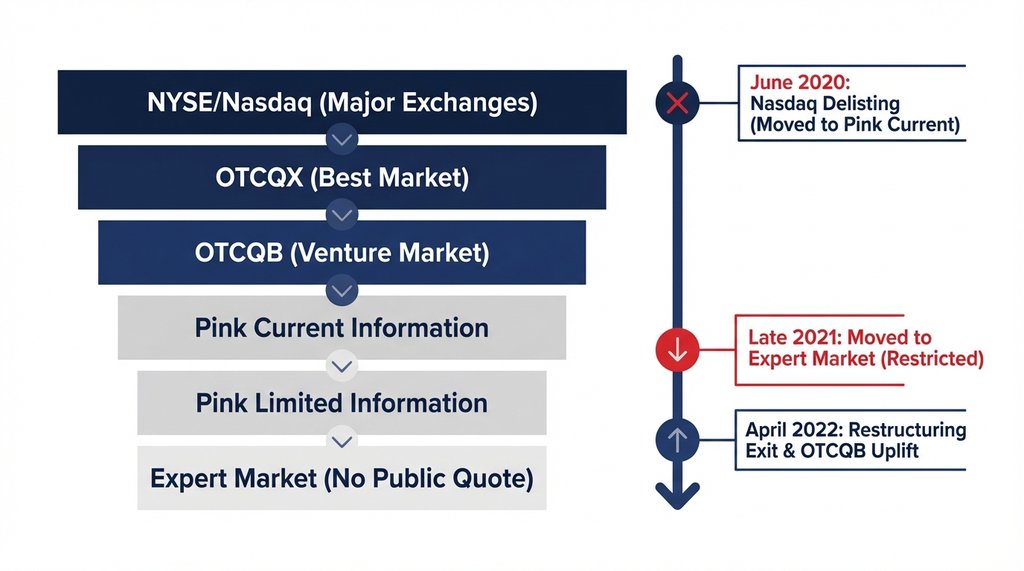
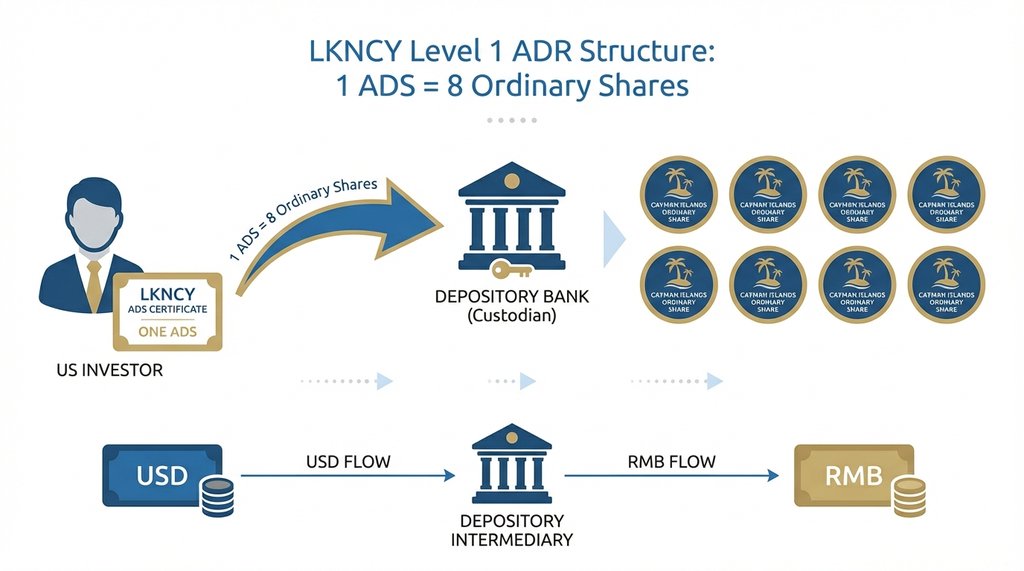
Luckin Coffee got delisted from Nasdaq in June 2020 after admitting to fabricating approximately $310 million (RMB 2.2 billion) in 2019 sales. Post-delisting, the shares migrated to OTC Markets Group’s Pink Open Market tier. It was briefly moved to the “Expert Market” in late 2021 due to SEC Rule 15c2-11, then moved back to Pink Current Information as the company maintained its financial disclosures with OTC Markets. The ticker LKNCY represents a Level 1 ADR structure where each ADS represents 8 ordinary shares of the Cayman Islands-incorporated entity.
The company exited its Chapter 15 restructuring in April 2022. Since then it’s been operationally profitable on a store-level basis, growing aggressively in China, but because it terminated its SEC registration in 2022 and is not exchange-listed, the primary venue for US retail investors is the OTC Pink Sheets.
That matters for execution in ways I’ll get into below.
Which Brokerages Actually Work
Not all of these are equal. Here’s what I’ve found through actual use:
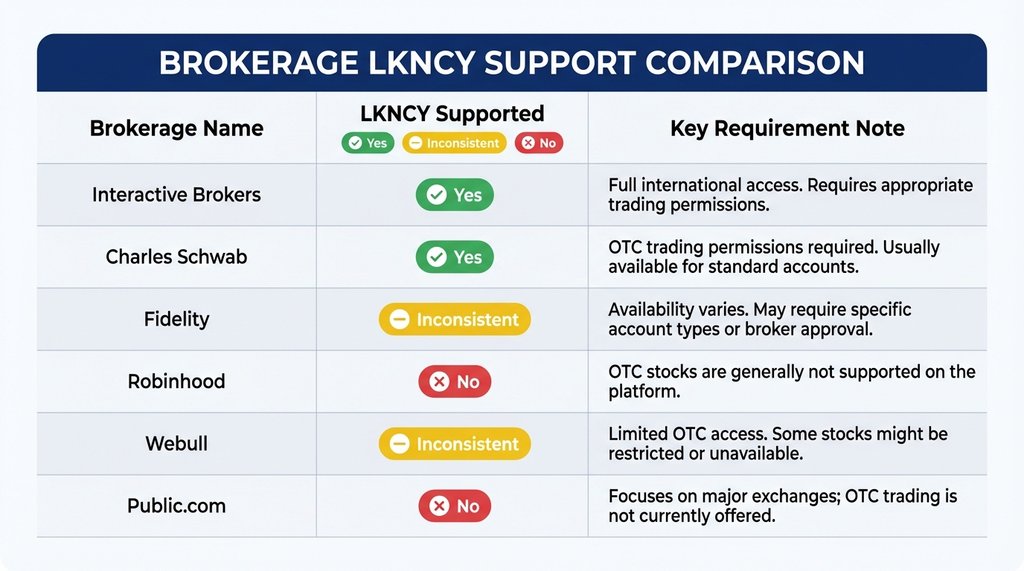
Interactive Brokers — This is where I execute LKNCY trades now. No phone call required to enable OTC Pink Sheet trading, though you must enable the “United States (Penny Stocks)” trading permission in your account settings. The stock shows up in TWS and the mobile app, real-time quotes are included with a market data subscription (specifically the OTC Markets data feed). The margin treatment is where it gets interesting: IBKR classifies LKNCY as a non-marginable security, meaning it requires 100% cash to hold. I confirmed this in the margin requirements lookup tool under Account Management. If you’re trying to use leverage here, you can’t—at least not at IBKR.
Charles Schwab — Works, but you must acknowledge an OTC disclosure. thinkorswim handles the order fine once it’s enabled. The spread on market orders for LKNCY at Schwab can vary based on their routing logic, but generally, it is accessible to retail.
Fidelity — Works after the disclosure/phone call I described. One thing I’ve noticed: Fidelity’s Active Trader Pro shows Level 2 quotes for LKNCY if you have the right subscriptions, which is useful for sizing a limit order given the nature of OTC liquidity.
Robinhood — Does not support OTC Pink Sheet stocks. This has been their long-standing policy. If your brokerage account is Robinhood only, you cannot buy LKNCY there. Full stop.
Webull — Supports a limited selection of OTC stocks, but LKNCY availability has been inconsistent. I’ve seen it work and I’ve seen it show “not available for trading” depending on the clearing firm’s current risk parameters. I wouldn’t rely on Webull for this.
Public.com — Does not provide robust support for OTC Pink Sheet trading; it is generally not a reliable venue for this specific security.
The Step-by-Step at Interactive Brokers (Most Reliable Path)
If you don’t have an IBKR account, the full account approval process takes 1–3 business days. You’ll need to submit proof of identity, SSN, and answer the standard suitability questionnaire. You must specifically request “Penny Stock” trading permissions.
Step 1: Fund your account
ACH takes 1–3 business days to clear for trading. Wire transfer is often same-day if sent before the cutoff. The minimum deposit IBKR requires for a cash account is $0, but OTC trades require settled funds, so make sure your cash is fully settled before you try to execute.
Step 2: Search for LKNCY
In TWS desktop: use the “+” button to add a new ticker row. Type LKNCY. It will prompt you to select the exchange—choose “PINK” (OTC Pink Sheets). If you type it in the mobile app, same deal, select OTC/Pink as the market.
Confirm you’re looking at the correct security by checking that the CUSIP matches what’s listed on OTC Markets Group’s website. The CUSIP for LKNCY is 54951L109. Verify it once before you execute a real order.
Step 3: Check the bid-ask spread before you do anything
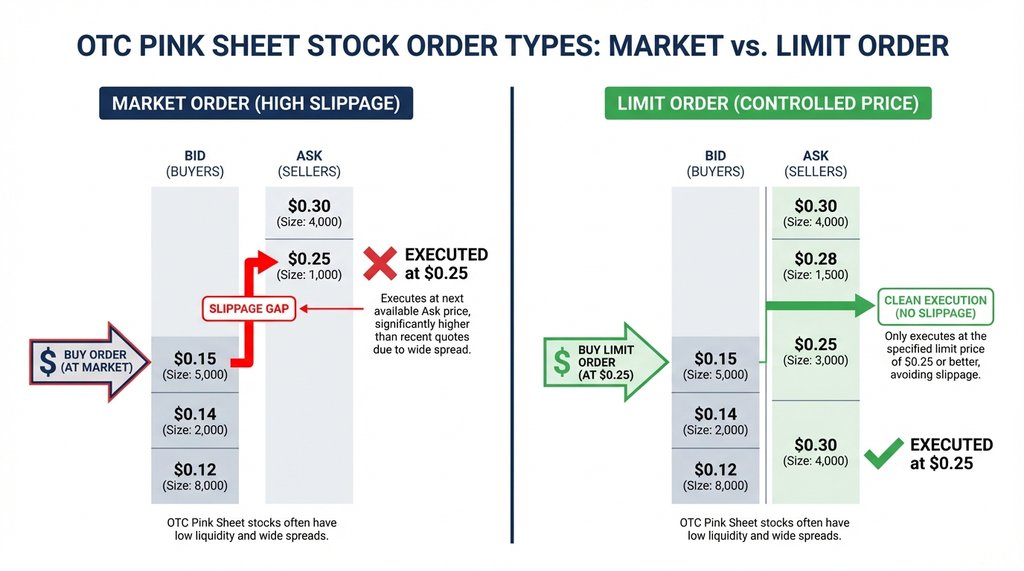
LKNCY’s daily volume is relatively high for an OTC stock, often exceeding 1,000,000 shares, but it can be inconsistent. The bid-ask spread can widen significantly during periods of low volatility or at market open. Even on a stock trading around $20–$30, the spread can represent a meaningful percentage of the trade cost.
The non-consensus view here that I’ll just say directly: do not use market orders for LKNCY. Conventional advice for liquid stocks is that market orders are fine for small retail sizes. That advice does not apply to OTC Pink Sheets. Market orders in the OTC market can result in significant slippage. Use limit orders, set your limit at the ask or slightly above if you want an immediate fill.
Step 4: Place your limit order
Order type: Limit
Time in force: Day
Price: Set at or slightly above the current ask
Quantity: Whatever your position size is
IBKR routes OTC orders through various market makers. Settlement is T+1, following the SEC’s transition to a one-day settlement cycle in May 2024.
Step 5: Confirm execution and check your position
After fill, the position appears under “Portfolio” in TWS. Your cost basis is recorded automatically. For tax purposes, IBKR generates a 1099-B at year-end that includes the OTC trades—this is handled the same as any other equity trade from a US tax reporting standpoint.
The Account Approval Complication Nobody Talks About
Most brokerages require customers to sign an OTC/Penny Stock disclosure/acknowledgment form before allowing trades in Pink market securities. IBKR does this electronically as part of the account setup or permissioning. Fidelity and Schwab have similar electronic acknowledgments.
The disclosure essentially says: you understand these securities have less regulatory oversight than exchange-listed stocks, prices may be volatile, and the company may not file audited financials with the SEC. For LKNCY specifically, Luckin files financial results through OTC Markets’ disclosure system rather than SEC EDGAR, as they are no longer an SEC-reporting company. Their financials are available at otcmarkets.com under the LKNCY page.
Currency and ADR Mechanics
LKNCY is priced in US dollars, you pay in US dollars, and you receive dividends (if any) in US dollars. The underlying operations are in RMB, so there is implicit currency exposure, but the ADR structure handles the conversion.
The ratio here: 1 LKNCY ADS = 8 ordinary Luckin shares. If you ever compare the US price against the price of ordinary shares, apply that 8x conversion factor.
Tax Considerations for US Investors
Short-term capital gains on LKNCY (held one year or less) are taxed as ordinary income. Long-term (held more than one year) get the preferential rate. Standard rules apply.
Regarding PFIC (Passive Foreign Investment Company) rules: Luckin is an active operating company (coffee retail). Generally, active businesses do not meet the income or asset tests to be classified as a PFIC. However, because the legal structure involves a Cayman Islands holding company, investors with very large positions should consult a tax professional to confirm the current status and any specific reporting requirements (such as Form 8621).
What “OTC Pink” Means for Your Brokerage’s Risk Systems
Some brokerages will flag LKNCY for additional margin requirements or restrictions during periods of high volatility. Because it is an OTC security, many brokers set the maintenance margin at 100%, meaning you cannot borrow against the position. If you are in a cash account, these margin fluctuations do not affect your ability to hold the shares.
The stock is also difficult to short at most retail brokerages. IBKR’s short availability system occasionally shows shares available to borrow, but the “fee” or interest rate is often high and availability is highly inconsistent. OTC is not a practical venue for shorting for most retail traders.
Monitoring the Position After You’ve Bought
OTC Markets Group (otcmarkets.com) is a primary source for company disclosures since Luckin does not file with the SEC. Luckin also posts financials and press releases on their investor relations site.
Price alerts: set them in your brokerage app. LKNCY can move significantly on China macro headlines or competitive news (like developments regarding Cotti Coffee), often with more volatility than exchange-listed peers due to the different liquidity profile of the OTC market.
One practical thing I do: I check the Level 2 quote on TWS before any planned trade to see the depth of the market. If the bid and ask are thin, I’ll wait for higher volume periods (typically mid-morning) to ensure better execution.

The Honest Part About Why This Is More Work Than It Should Be
The friction here—the disclosures, the limit order discipline, the specific trading permissions—exists because the regulatory infrastructure around OTC Pink Sheets is different than that of exchange-listed equities. This is the reality of trading any stock in this tier.
Whether the underlying business justifies that friction is a separate analysis. But the mechanics of actually getting the shares into your account are straightforward once the initial hurdles are cleared. The first time takes longer than you’d expect; subsequent trades are as simple as any other ticker.