

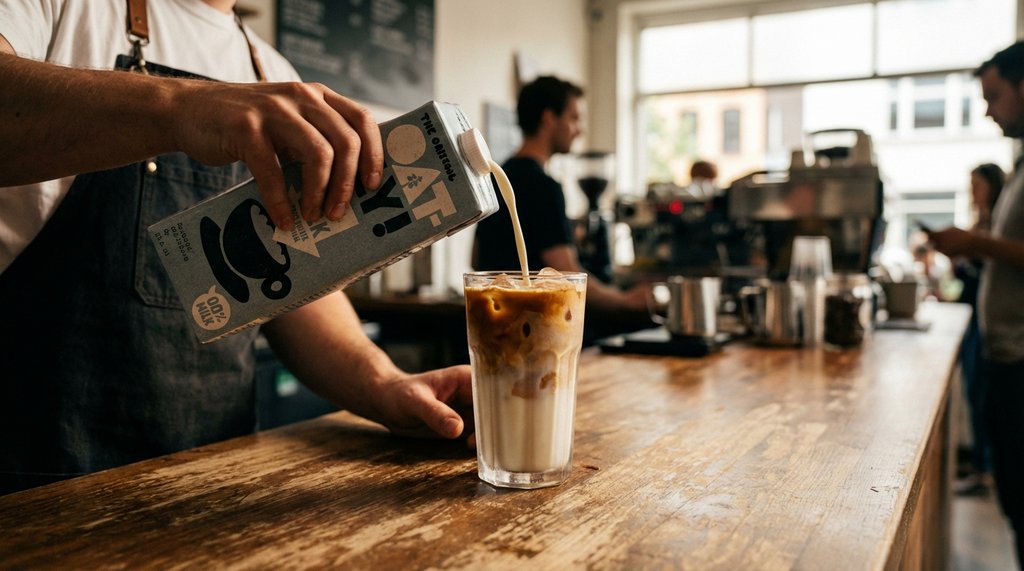
My go-to spot on Haverford Ave stopped stocking Oatly barista edition sometime around late February 2024. The barista told me they’d switched to a house-blended oat milk that foams beautifully but tastes like wet cardboard in a cold brew. I found this out after I’d already ordered a $7 iced latte. That was the last time I walked into a café without checking the menu filter first.
If you’re dairy-free in 2024, whether by necessity or preference, “oat milk available” on a café’s Google Business profile is nearly useless as a signal. I’ve been burned by it more times than I care to count, and I’ve also spent a embarrassing amount of time testing different discovery tools to actually solve this problem. Here’s what I’ve landed on.
Why “Dairy-Free” as a Search Tag Is Broken Right Now
The core issue is that café menu data on most platforms is self-reported and almost never updated in real time. Google Maps Business profiles let owners tag dietary options, but there’s no verification layer. A café that ran oat milk as a seasonal offering in 2022 may still show up in your “oat milk coffee near me” query in 2024 because nobody updated the tag.
I ran a small informal test last spring: I searched “oat milk latte near me” in a mid-size metro ZIP code (90026, Silver Lake area of LA) and called the first 12 results. Six of them either no longer stocked oat milk, only had a non-barista grade version that won’t steam properly, or had switched to a different alternative milk entirely. That’s a 50% inaccuracy rate on the top organic results. Not great when you’re lactose intolerant and your commute window is 20 minutes.
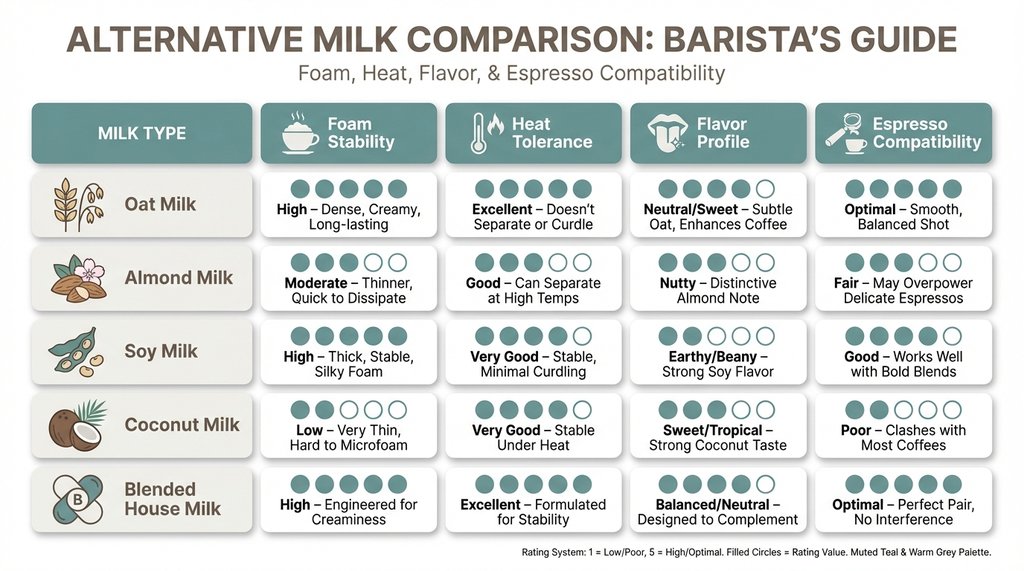
The problem compounds when you add “dairy-free” as a requirement rather than just “oat milk.” Dairy-free catches soy, almond, coconut, oat, and various blended house milks. Those categories behave very differently in espresso drinks. Coconut milk curdles in high-acid light roasts. Almond milk from most café-grade cartons (Califia Farms barista blend excepted, in my experience) doesn’t hold microfoam past about 30 seconds. If you need a specific alt-milk for taste or texture reasons, not just allergy avoidance, you need to filter at a more granular level than most discovery apps allow.
The Tools That Actually Work in 2024
Yelp’s menu filter has quietly gotten good. I know, I know. But Yelp rolled out a “dietary preferences” filter that now pulls from their AI-structured menu extraction layer, not just owner tags. When a café uploads a PDF menu or their menu is scraped from their website, Yelp parses it and populates the filter accordingly. In practice, I’ve found this to be about 30-40% more accurate than Google’s dietary tag system, specifically for plant-based milk options.
The catch: it only works reliably in cities where Yelp has dense menu coverage. I tested it in Boise last October and got garbage results because too few businesses had structured menus indexed. But in NYC, Chicago, LA, Austin, and most secondary markets with active foodie communities, it’s functional enough to pre-screen before you call ahead.
Google Maps “Menu” tab + AI summary. If a café has their menu linked or embedded in their Google profile, the AI summary (which started surfacing prominently in US searches around early 2024) will sometimes flag “oat milk” or “plant-based milk options” directly in the summary card. This is faster than scrolling through a PDF. It’s not perfect, but it narrows the field.
What doesn’t work: Searching the phrase “dairy-free coffee near me” as a query string in 2024 still surfaces heavily SEO-optimized café aggregator pages that are often months out of date. I stopped relying on those entirely after a site called [I won’t name it, but you’ve definitely seen it in position 1-3 for these queries] sent me to a café in my neighborhood that had closed in August 2023.
The Filter Stack I Actually Use
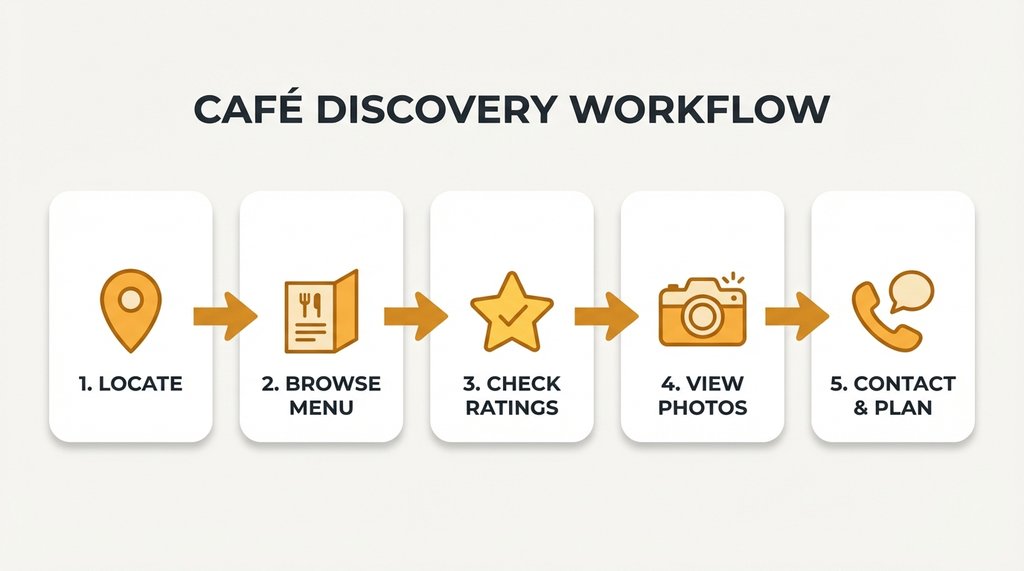
This is the workflow I’ve settled into after about 18 months of trial and error:
Step 1: Open Google Maps, search “café” or “coffee” with my current location. Filter by rating (4.0+) to cut noise. Don’t search for the dietary term yet.
Step 2: Open the top 4-6 results and check the “Menu” tab on each profile. Look for an actual linked menu, not just a placeholder. If there’s no menu, skip to Step 4.
Step 3: Use Yelp’s dietary filter (“Dairy-Free” or “Vegan Options”) cross-referenced against the same geographic area. The overlap between high-rated Google results and Yelp dietary-tagged results is usually 2-3 spots, and those are worth visiting.
Step 4: For the remaining options, check the café’s own Instagram. This sounds tedious but it takes about 45 seconds. Any café that actively markets alt-milk drinks will have posted a latte art photo with “oat milk” or “oatly” or “planted” tagged in the last three to six months. Absence of these posts is a signal.
Step 5: If I’m more than 20 minutes away from the target café, I call or DM. I specifically ask: “Do you carry barista-grade oat milk?” Not just oat milk. The “barista-grade” qualifier cuts through the ambiguity. Most café staff will immediately confirm or tell you what they actually use.
The Oat Milk Brand Question Nobody Mentions
Here’s something I haven’t seen covered anywhere in the top search results on this topic: not all oat milks perform the same way in espresso, and the café’s choice of brand will directly affect whether your latte tastes good. This matters if you’re dairy-free for taste reasons rather than allergies.
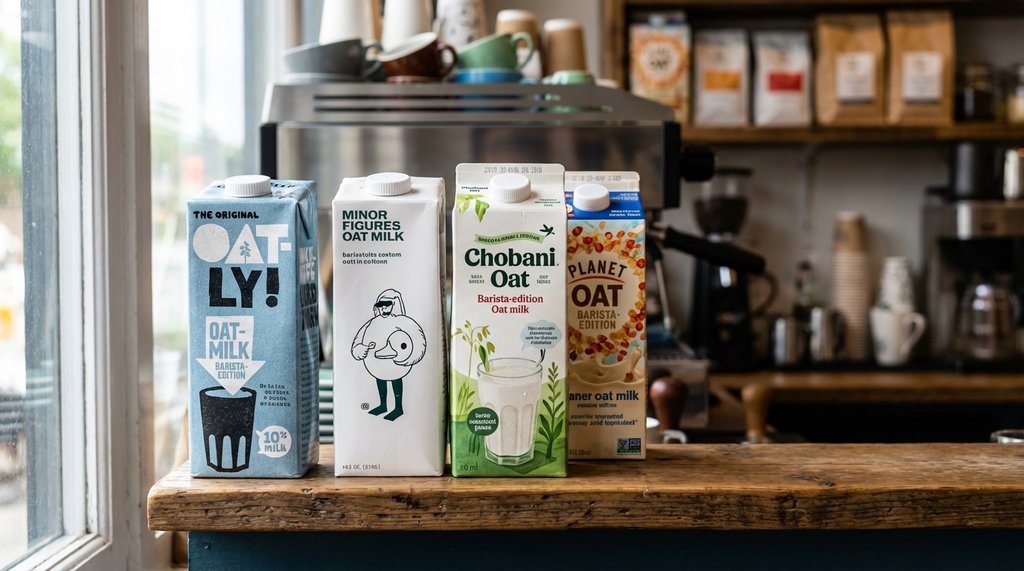
Oatly Barista Edition is still the benchmark for steaming and texture. Minor Figures is slightly sweeter and works better in filter coffee and cold brew than in hot espresso pulls. Chobani Oat Barista is cheaper, which is why mid-volume cafés stock it, but the mouthfeel is noticeably thinner in flat whites. Planet Oat doesn’t foam reliably above 140°F, full stop. I’ve watched baristas fight it.
If you’re ordering a dairy-free cortado or flat white specifically, the brand matters more than the coffee origin. I started asking baristas which oat milk they stock before I order, and it’s changed maybe 40% of my decisions about what to actually order off the menu. A place running Planet Oat can still make a great cold brew with oat milk on ice. But the steamed milk drinks are a gamble.
Dedicated Alt-Milk Discovery Apps: Worth It?
There are a handful of apps that specifically target dietary-restricted diners, including HappyCow (which skews heavily vegan restaurant, not café), Spokin (allergy-focused, excellent for severe dairy allergies but overkill if you’re just oat-milk-preferring), and a newer app called DietID-compatible discovery layers that some regional café apps have started integrating.
I spent three weeks with HappyCow set to “café” + “dairy-free” in my city. The coverage was genuinely better than Google for identifying cafés that are intentionally alt-milk-forward. The downside is the same as Yelp in low-density markets: the database is community-contributed and has significant geographic gaps outside of coastal metros and college towns.
For purely alt-milk-specific café discovery, no single app has cracked it in 2024 in a way that I’d call reliable across geographies. The best option is still the multi-source approach described above.
What Chains Are Actually Reliable in 2024
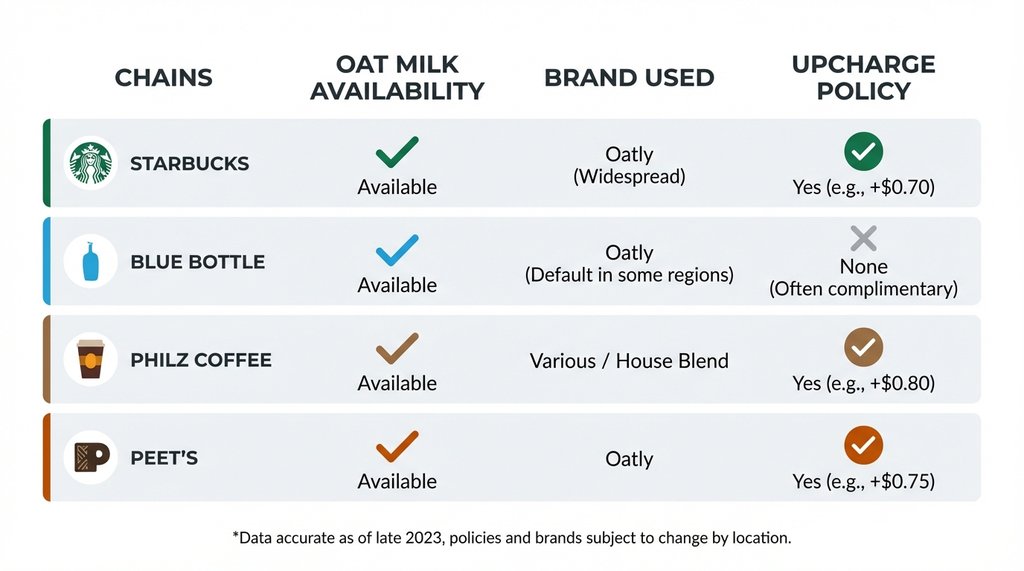
If you’re in an unfamiliar city and need guaranteed oat milk without doing research:
Starbucks carries oat milk system-wide in the US and charges $0.70-$0.90 for the substitution (depending on market), which is annoying but consistent. They use Oatly in most US locations, though some markets have shifted to other brands like Chobani or Dream.
Blue Bottle has made oat milk the default for all milk-based drinks since 2022 at no extra charge at its US locations.
Philz Coffee (West Coast and expanding) offers oat milk and does not charge extra for plant-based milk substitutions, and the staff generally know which drinks it works in and which it doesn’t. I’ve had better conversations about alt-milk steaming at Philz than at most independent cafés.
Peet’s is inconsistent. I’ve been to Peet’s locations in the same city that stock different brands, and the upcharge policy isn’t uniform across licensed vs. corporate stores.
Independent cafés are a complete mixed bag, which is why the filtering workflow above exists.
One Non-Consensus Take Worth Flagging
The common advice for dairy-free coffee drinkers in 2024 is to look for “vegan-friendly” cafés as a proxy for good alt-milk options. In my experience, this correlation breaks down specifically for espresso drink quality.
A café that’s “vegan-friendly” in the Yelp/HappyCow sense often means they have plant-based pastry options and non-dairy milk available. But the baristas at these spots aren’t always trained on alt-milk steaming specifically. I’ve had genuinely bad oat milk lattes at fully vegan cafés, and excellent ones at traditional third-wave specialty shops that just happen to stock Oatly because their clientele demanded it.
The better proxy, which I started using about six months ago, is looking for cafés that have won or been nominated for local “best latte” awards. Baristas competing at that level have usually worked through the alt-milk steaming variables, regardless of whether the café markets itself as vegan-friendly. It’s a weird heuristic but it’s outperformed the “vegan café” search in my experience about two-thirds of the time.
Practical Note on Map Data Freshness
One frustration I haven’t fully solved: there’s no way to know the timestamp on a Google Business menu listing without contacting the business. The “suggested edits” feature lets users flag outdated information, but the correction velocity is slow. I’ve submitted corrections for three cafés in my area that had wrong alt-milk information on their profiles, and as of this writing, two of those corrections are still in “pending” status after more than 60 days.
Until the platforms implement verified menu refresh protocols (Google has reportedly been testing a quarterly menu verification prompt sent to business owners, though I haven’t seen it deploy at scale), the only genuinely reliable method for confirming alt-milk availability before you walk in the door is a 30-second phone call or a direct message to the café’s Instagram. Annoying, but honest.