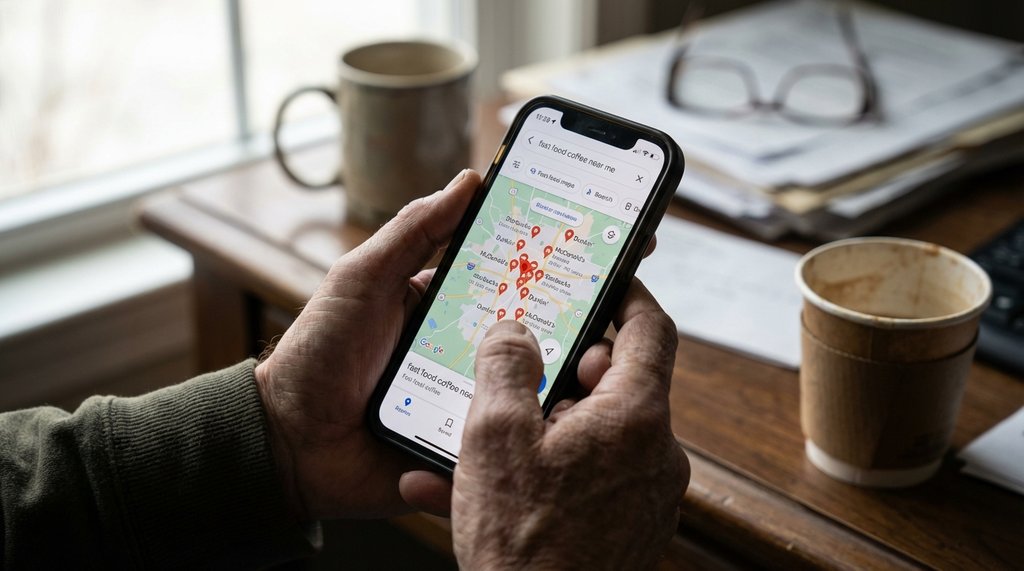
Typed “coffee bean shop near me” into Google Maps last October when I moved to a new zip code in the mid-Atlantic. Got 14 results. Twelve were Dunkin’ locations and one Starbucks drive-through. The fourteenth was a café that brews good espresso but sources from a distributor and doesn’t sell retail bags. Not a single one of those results was what I actually needed — a place where I could buy freshly roasted whole beans by the pound, ideally with roast dates printed on the bag.
The search query itself is the problem. Google’s local algorithm treats “coffee bean shop” as functionally synonymous with “place where coffee is consumed,” because that’s what the vast majority of people typing that phrase actually want. Those of us looking for green bean importers, micro-roasters, or specialty wholesale-adjacent retailers get buried under a pile of café pins.
Here’s what actually works.
Stop Using Google Maps as Your Primary Search Vector
Google Maps is optimized for foot traffic and reviews. A roaster operating out of a warehouse with no walk-in counter will either have zero reviews or have never claimed their listing, which pushes them off the visible results entirely. I’ve found roasters operating within four miles of my house that didn’t appear until page three of a Maps search — because they had eleven reviews and no photos uploaded.
The databases that actually index roasters by geography are specialty trade directories, not general search engines. Start with industry resources to find confirmed production roasters, rather than a café that throws the word “roastery” in its name because it looks good on Instagram. Coffee Review’s roaster index is a useful source, though it skews heavily toward operations that submit beans for scoring — which means it over-represents premium tiers and misses a lot of solid mid-market local roasters.
Another approach is looking for SCA (Specialty Coffee Association) membership. If a roaster has any serious infrastructure investment — a Probat, a Loring, a rebuilt Diedrich — there’s a reasonable chance they’re at least aware of SCA membership even if they’re not active. Cross-reference a straight Google search for “[your city] coffee roaster” (not “shop,” not “café”) with SCA affiliation and you’ll start getting useful signals.
The Query Construction That Actually Returns Roasters
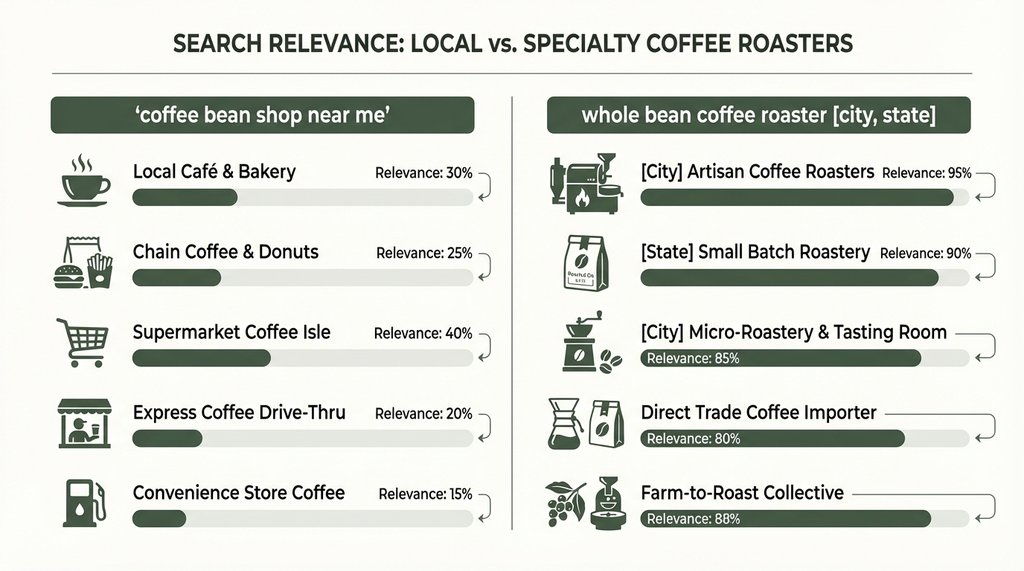
The difference between “coffee bean shop near me” and “whole bean coffee roaster [city, state]” in search results is not subtle. I tested this across three different cities while traveling for work in Q1 this year. In each case, swapping “shop” for “roaster” and adding the city name instead of relying on location services surfaced at least two to four results that didn’t appear in the original query — including one operation in Pittsburgh that roasts on a 15kg Probat out of a shared commercial kitchen space and does zero retail, only pickup orders placed through a Google Form.
That Pittsburgh place would never show up for “coffee bean shop near me.” It doesn’t have a storefront, it doesn’t have signage, and its website was last updated in 2021. But it ships within a three-county radius and sells 12oz bags with roast dates handwritten on the label. I found it through a local food subreddit thread from 2022 — which brings me to the next point.
Reddit and Facebook Groups Are Doing More Useful Local Discovery Work Than Google Is
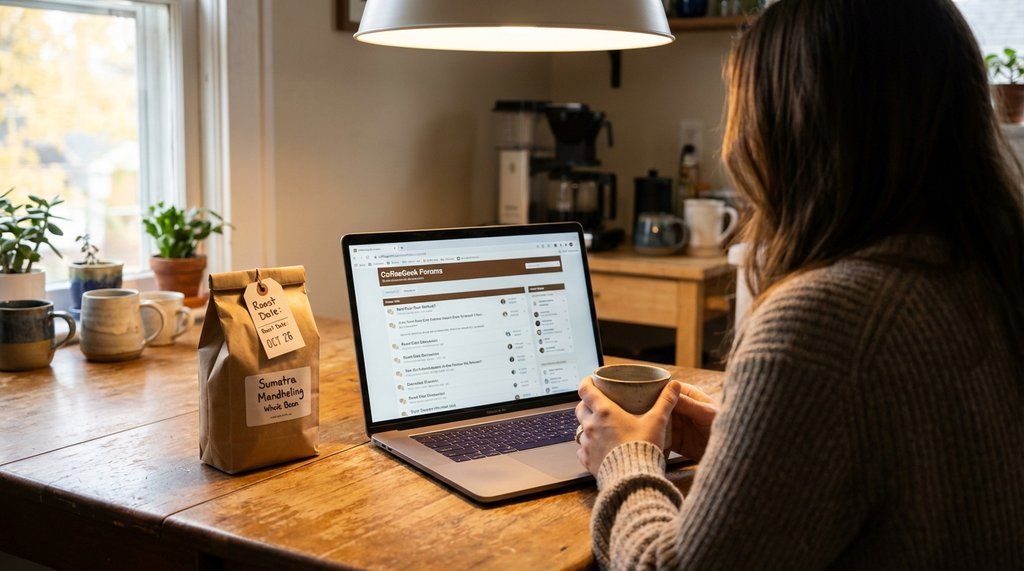
This is the part that people who’ve spent time in specialty coffee communities already know, but it’s genuinely underappreciated: local subreddits and regional coffee Facebook groups have a higher concentration of accurate, maintained local roaster knowledge than any aggregator directory.
r/coffee has a wiki with roaster recommendations broken down by region. The Coffee Roasters & Enthusiasts type Facebook groups that exist in most metro areas are moderated by people who take the question seriously. When I posted “looking for whole bean sources in [specific zip code area]” in a regional food Facebook group, I got five responses within six hours, two of which were from people who actually worked at roasting operations or bought green beans themselves.
The asymmetry here is real: a Google search returns results ranked by SEO and advertising budget. A question asked in a community of actual buyers returns answers ranked by what people have actually purchased and tasted.
Farmers Markets Are Underrated as a Roaster Discovery Channel — With a Catch
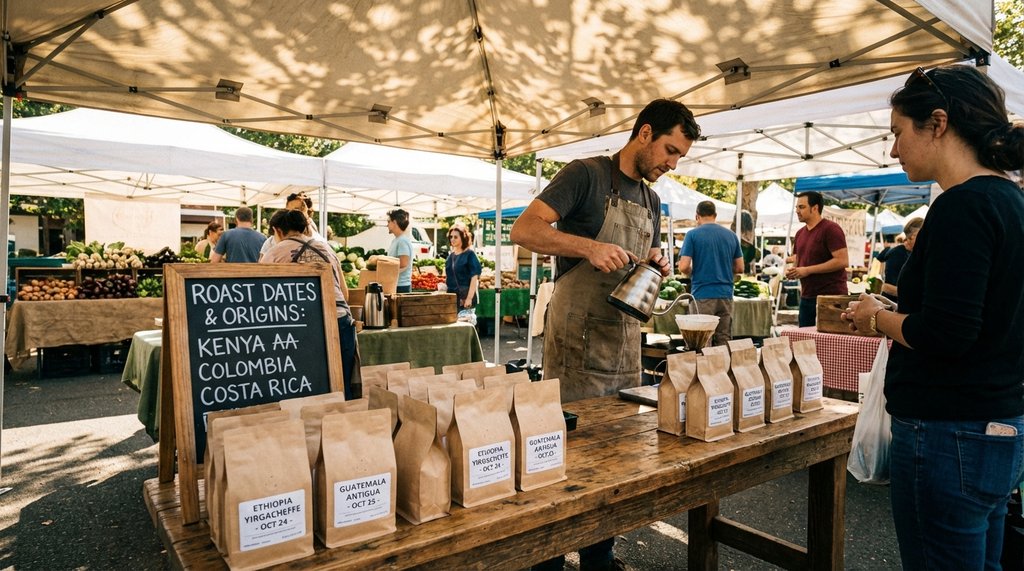
Most Saturday farmers markets in a city with any specialty food culture have at least one roaster table. This sounds obvious, but the catch is that the roaster at the farmers market is often not the same as the roaster who has the largest local wholesale footprint or the most variety available. Farmers market tables select for portability and customer-facing energy, not necessarily product depth.
What I do: I buy something from the farmers market roaster, get their card, and then ask if they know of other local roasters operating in the area. The specialty coffee community in any given metro area is small enough that competitors know each other. I’ve gotten better referrals from roasters at farmers markets than from any directory I’ve used. This also works with the barista at any independent café that takes its sourcing seriously — ask where they source their beans, and then ask if they know of other local roasters they respect. The network is usually two hops from wherever you’re standing.
The “Roastery” Label Problem and How to Quickly Filter It
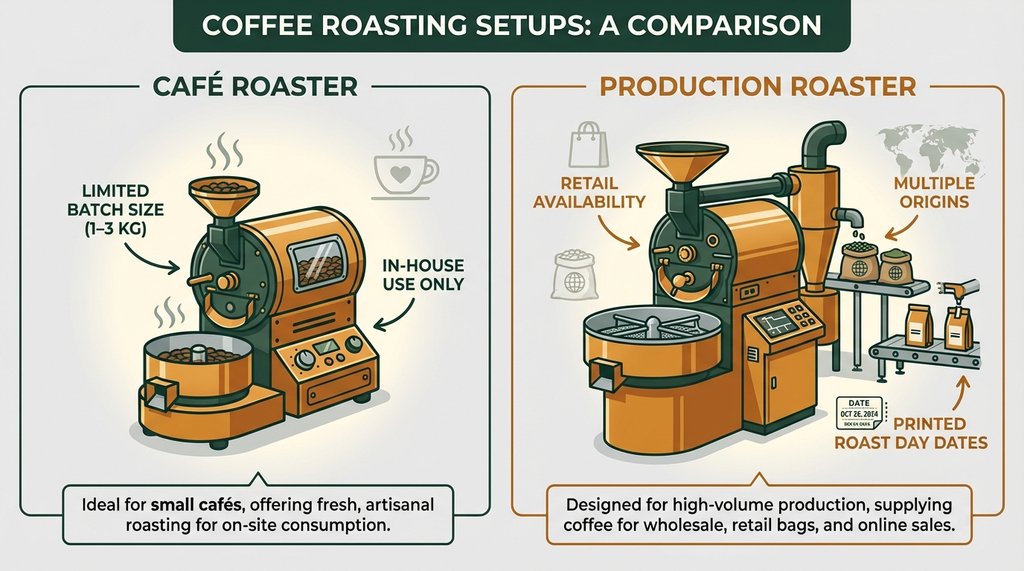
Many of the businesses that show up when you search “roastery” within a zip code are cafés that own a small drum roaster — a 1kg or 3kg home-adjacent machine — and use it to roast one or two single-origins for menu differentiation. That’s not a criticism of the practice; some of those operations produce excellent coffee. But if you’re looking for consistent retail availability of multiple origins, or the ability to buy green beans directly, those operations won’t serve your needs.
The quick filter: look at their online shop or menu. If they’re a true production roaster selling retail, they’ll have at minimum five to eight different offerings with explicit roast dates and origin notes. If the website shows three options listed as “house blend,” “dark roast,” and “seasonal espresso” without roast dates, you’re looking at a café that roasts incidentally, not a roaster that operates primarily as a production facility.
I got burned on this twice before I built the filter. Drove twenty minutes to what a directory listed as a “local roaster” and found a café with a 1kg Aillio Bullet behind the counter that they use to roast beans for their own espresso program, no retail bags available, no plans to add any. Completely my fault for not checking the website more carefully.
For Specific Green Bean Access, the Search Logic Changes Entirely
If you’re home roasting and looking for green bean sources by zip code, the “near me” query is almost completely useless. Green bean importers — Genuine Origin, Sweet Maria’s, Bodhi Leaf, Red Fox Coffee Merchants — are not operating storefronts in your zip code. They’re warehouses that ship nationally, and the search logic that works for roasted retail doesn’t translate.
What does work for local green access: contact the production roasters you’ve already identified in your area and ask directly if they sell green. Some do. I currently buy green beans from a roaster in my city who doesn’t advertise it anywhere — they sell 10lb minimums at roughly 20–30% below what I’d pay Sweet Maria’s after shipping, because they’re already importing container lots and the green has to go somewhere. This arrangement took one email to set up. The roaster I’m buying from told me they’ve had this arrangement with four or five home roasters in the area for years and have never publicized it because they don’t need the volume — the home roasters find them by asking around.
That’s the meta-answer to the original search problem: the people who know where local whole bean sources actually are don’t rely on Google to maintain that knowledge. They’ve asked other people in the community and built relationships with the operations directly. The search query is only useful for getting you the first two or three degrees of proximity. After that, you’re working a network, not a search engine.