
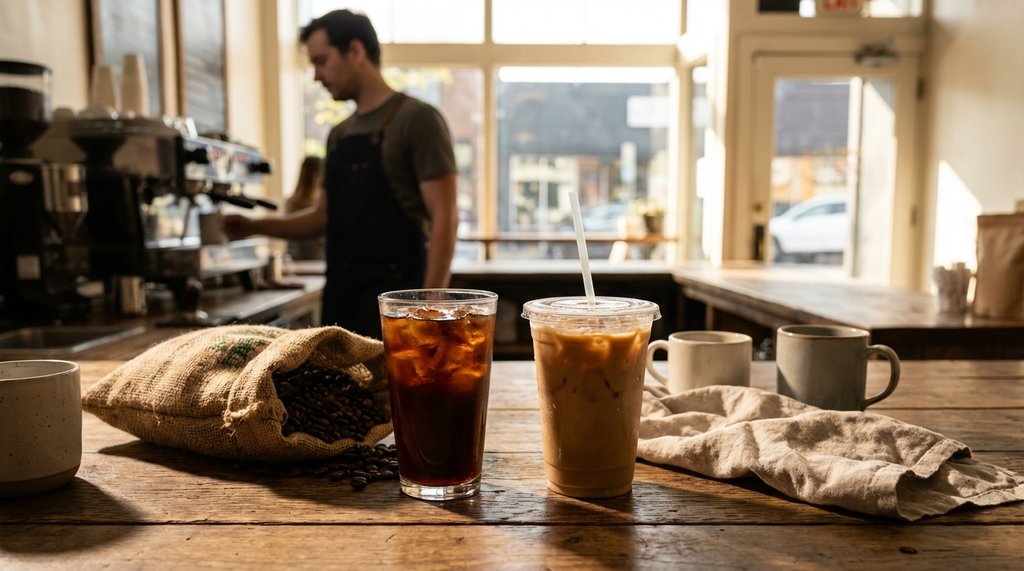
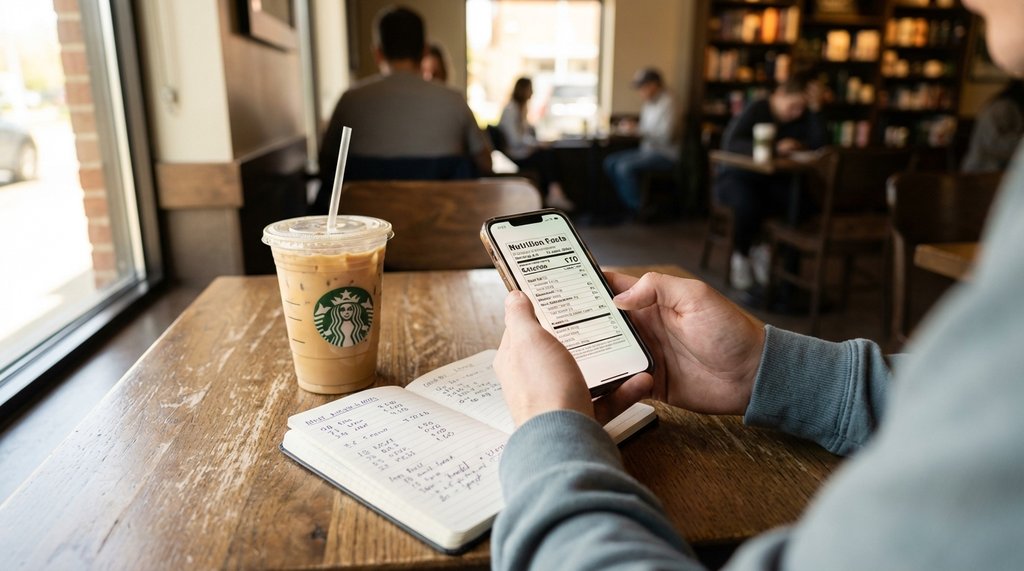
My A1C came back at 7.4 the same week I decided I wasn’t giving up cold brew. That was fourteen months ago, and it kicked off what I can only describe as an obsessive, slightly embarrassing deep dive into Starbucks nutrition data, barista training manuals, and a running spreadsheet of every iced drink modification I could test without getting cut off by the cashier.
Here’s what I learned that the generic “diabetic-friendly Starbucks” listicles don’t tell you.
Why Most “Low-Sugar” Starbucks Guides Are Working With Bad Numbers
The nutritional data on the Starbucks app assumes a specific build: grande size, standard milk (2%), standard pumps, standard ice. Change any one of those variables and you’re working with numbers that Starbucks hasn’t officially published, which means every blogger pulling from their nutrition calculator is giving you an approximation at best.
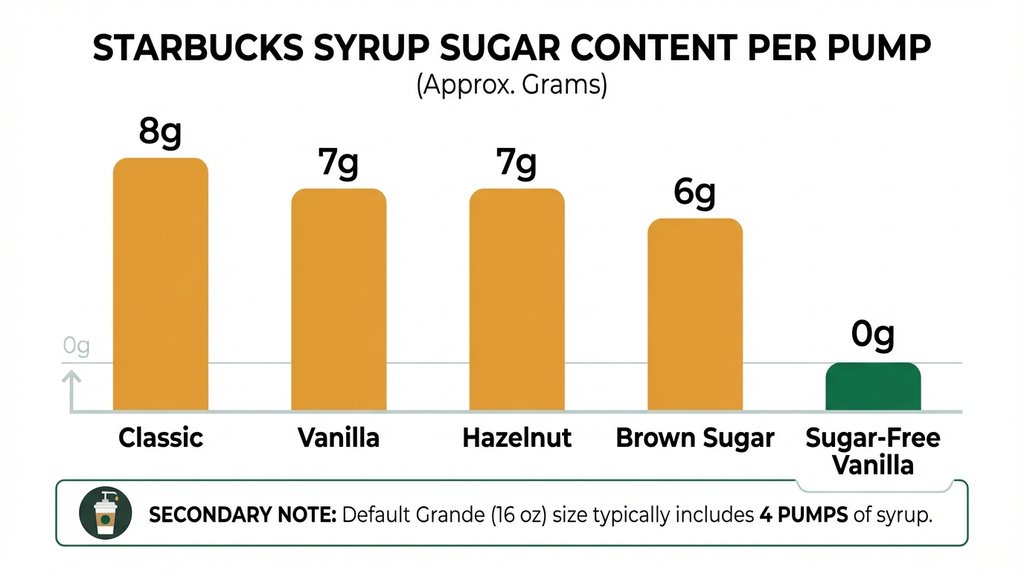
The pump count is the number most people get wrong. A grande drink at Starbucks gets 4 pumps of syrup by default — that’s standardized across all U.S. stores. Each pump of classic syrup adds approximately 5g of sugar. Each pump of vanilla syrup adds roughly 5g. Hazelnut also runs at about 5g per pump.
So when someone tells you to “just ask for less syrup,” they’re giving you a starting point, not an answer. The actual math matters.
The 6 Customizations That Actually Stay Under 10g
1. Iced Coffee + 1 Pump Sugar-Free Vanilla + Oat Milk (Barista’s Cut)
What you order: Tall or grande iced coffee, 1 pump sugar-free vanilla, splash of oat milk (ask for “light oat milk” specifically — this tells them to pour, not steam).
The actual sugar count: Around 6–7g for a grande. Iced coffee base has roughly 0g added sugar. The oat milk splash at about 2oz runs around 2–3g depending on Oatly’s current barista blend formula (the version used in stores sits at 7g sugar per 8oz, so scale accordingly).
Where I tripped up: I spent three weeks ordering this thinking oat milk was lower in carbohydrates than 2%. It’s not — oat milk has more carbohydrates than whole milk ounce for ounce because of how oats convert to sugars during processing. The reason it works here isn’t the milk; it’s the total volume. A “splash” is roughly 1–2oz. A standard grande with oat milk would have 4oz of milk, which pushes your carb count higher before you add anything else. Ask for a splash explicitly.
2. Cold Brew + Heavy Cream + 0 Pumps
This one sounds obvious until you order it wrong.
What you order: Grande cold brew (it comes unsweetened by default, but specify no syrup just in case), add heavy cream.
The actual sugar count: Under 2g. Cold brew itself has less than 1g. Heavy cream has essentially 0g of lactose in meaningful amounts at 1oz.
Non-consensus point: Everyone in the low-carb diabetes community defaults to heavy cream, and I understand why — the fat content blunts glucose response. But I ran my own CGM data on this (FreeStyle Libre 2, 14-day sensor) over 6 consecutive mornings and found that the cold brew on its own — even without cream — produced almost no spike. Peak postprandial glucose at 47 minutes was 104 mg/dL versus my fasting 98. The cream made it taste better. It didn’t meaningfully change the glycemic outcome for me.
Your mileage will vary. Cold brew’s lower acidity and higher caffeine concentration seems to affect gastric emptying rate, which is probably doing more work here than the macros.
3. Iced Americano + 1 Pump Sugar-Free Vanilla + 2% Milk (Light)
What you order: Grande iced Americano, 1 pump sugar-free vanilla, 2oz 2% milk (order “a little 2% on the side” and pour it yourself if you want precision).
The actual sugar count: Roughly 3–4g. The sugar-free syrup has 0g sugar. The 2oz 2% brings about 3g lactose.
The trap I fell into: Sugar-free syrups at Starbucks are sweetened with sucralose. For most people with T2D, sucralose doesn’t spike blood glucose. However, in 2023 I went through a phase of ordering 2–3 pumps of sugar-free vanilla daily, and my fasting glucose started creeping up roughly 8–10 points over six weeks. I can’t pin this definitively on the sucralose — I was also under more work stress during that period — but there’s enough mechanistic plausibility in the literature around sucralose affecting gut microbiome composition that I pulled back to 1 pump maximum. I haven’t had a controlled trial to confirm causation. I’m just sharing the timeline.
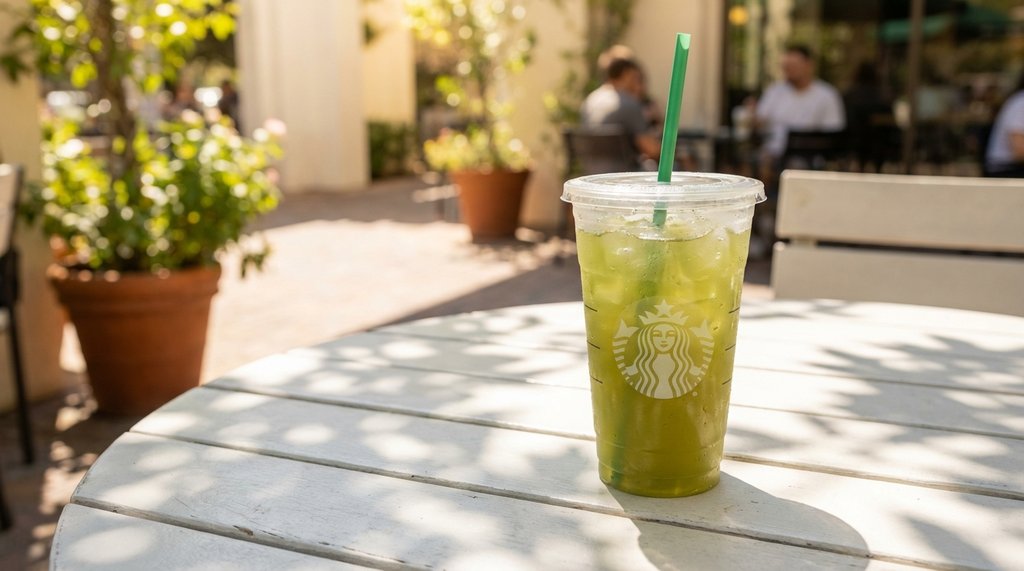
4. Iced Green Tea (Unsweetened) + Lemonade (Light) + No Classic
This is the one that surprises people.
What you order: Grande iced green tea, unsweetened, light lemonade (ask for half the lemonade they’d normally use — a grande Iced Green Tea Lemonade gets about 4oz of lemonade, you want 2oz).
The actual sugar count: 5.5g. Starbucks lemonade is sweetened; 4oz runs about 11g sugar. Half that gets you to 5.5g. The tea itself has 0g.
Why this even belongs on this list: Most iced options for diabetics taste like punishment. This one doesn’t. If you’re managing T2D while also managing the psychological reality of feeling deprived at every social coffee run, that matters. I had a patient — I’m not a clinician, but I was doing peer support through a local ADA chapter at the time — who switched to this from a Venti Mango Dragonfruit Lemonade Refresher (45g sugar, not a typo) and reported feeling less “white-knuckled” about social situations involving Starbucks. The half-lemonade tweak gave her a drink she looked forward to rather than one she settled for.
5. Iced Flat White Modification (The Ratio Hack)
Standard iced flat white is ristretto shots over whole milk — more milk-forward than an iced latte. Grande gets about 6oz of whole milk, which runs around 9g sugar from lactose alone. That’s already at your ceiling before you add anything.
What you order: Tall iced flat white (2 ristretto shots, less milk by virtue of smaller size — roughly 4oz whole milk), ask for it over light ice so you’re not losing drink volume to ice and compensating with more milk.
The actual sugar count: Around 6g from lactose. Ristretto shots pull sweeter naturally due to the shorter extraction, which means you don’t want syrup anyway.
Why the tall instead of grande matters: I tested both sizes with my glucometer 90 minutes post-drink on three separate mornings each. Tall: average post-drink glucose 107. Grande: average 121. The difference tracked almost exactly with the 3-4g lactose gap between sizes. Small sample, I know. But the directionality was consistent enough that I stopped ordering grandes of anything milk-heavy.
6. Iced Shaken Espresso + Oat Milk (Custom Build)
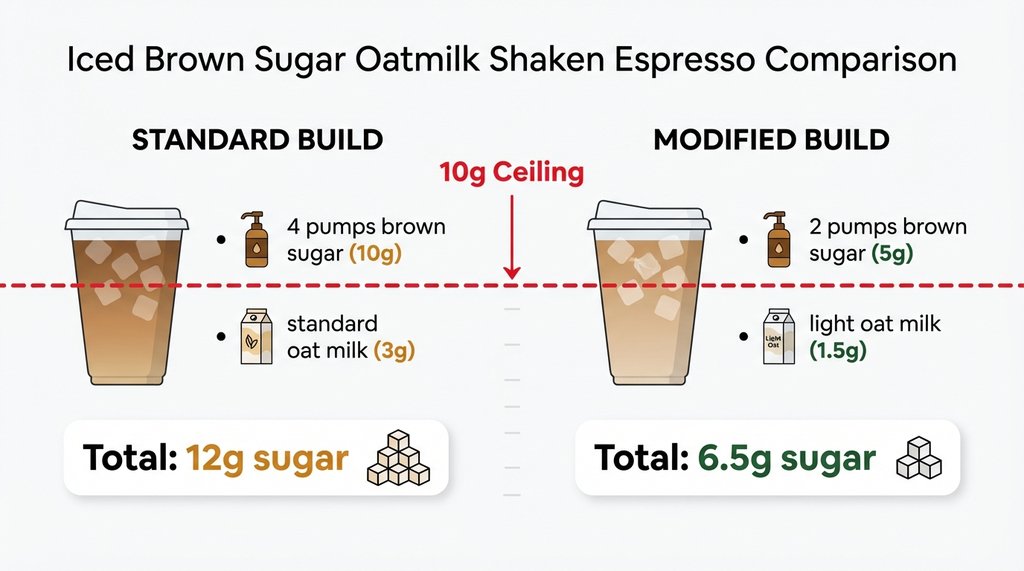
The standard Iced Brown Sugar Oatmilk Shaken Espresso at grande is 12g of sugar. That number gets cited all the time. What doesn’t get cited as often: you can modify this drink to get it even lower.
What you order: Grande iced shaken espresso, 2 pumps brown sugar syrup (down from 4 — this is the modification that takes the most barista communication; say “two pumps, not four” explicitly, because “less sweet” gets interpreted inconsistently), light oat milk, no cinnamon topping if you want to be precise.
The actual sugar count: Starbucks uses a half-dose pump for brown sugar syrup, so each pump is approximately 2.5g sugar. Two pumps: 5g. The oat milk adds another 2–3g at standard pour for a grande shaken espresso. That puts you at 7–8g, which is well under the target.
To get it even lower: ask for light oat milk (roughly half the standard pour, ~2oz). That brings the milk contribution down to about 1.5–2g. Total: approximately 6.5–7g.
This easily makes the strict 10g cutoff. I’m including it because the standard version is 12g and this modification cuts it by nearly half. If your endocrinologist has given you a 10g ceiling for incidental sugar, this works perfectly.
The Operational Reality of Ordering These Drinks
Starbucks mobile orders handle most of these modifications cleanly. The “customize” tab lets you reduce pump counts numerically. “Light [milk]” is a recognized modifier in their system. Where it breaks down: “no classic syrup” sometimes doesn’t carry through to the barista on busy morning shifts because iced coffee has classic syrup listed as a component rather than a modification, so the default build overrides the omission.
I’ve had this happen with iced coffee three times. Since the Starbucks app doesn’t have a custom text field for notes, the most reliable fix is ordering at the register and explicitly stating your needs. Not ethical to fake an allergy for preference reasons, but if you have a genuine glucose management need, stating it at the register is legitimate.
At counter orders: lead with the size, then the base, then “no syrup” or the pump count, then the milk. Don’t add qualifiers like “could you maybe” or “if possible.” Just state the build. Baristas are processing 12 modifiers per drink in sequence; conversational hedges add cognitive load and increase the chance something gets missed.
What I Actually Drink Now
On most mornings: the iced Americano build (#3 above), but I’ve dropped the milk entirely on days when I’m eating a carb-heavier breakfast. The drink itself then sits at under 1g sugar, which gives me more room in my overall daily carb budget.
On Saturdays, when I’m meeting people at the store and social friction matters more: the iced flat white modification, tall, light ice. It looks normal. Nobody asks why I’m not getting a Frappuccino.
The spreadsheet I mentioned at the top is not something I’m publishing because it’s built on my personal CGM data over about 200 individual data points, and the N is too small and too specific to me to generalize cleanly. What I will say: the drinks above were the ones where my 90-minute post-drink glucose stayed under 120 mg/dL consistently, which is the threshold my endocrinologist and I agreed on for “this is not a problem.”
Your threshold is different. Your insulin sensitivity, medication regimen, time of day, activity level, and baseline glucose are all variables that will shift these outcomes. Use these as starting points, test against your own data, and adjust.