
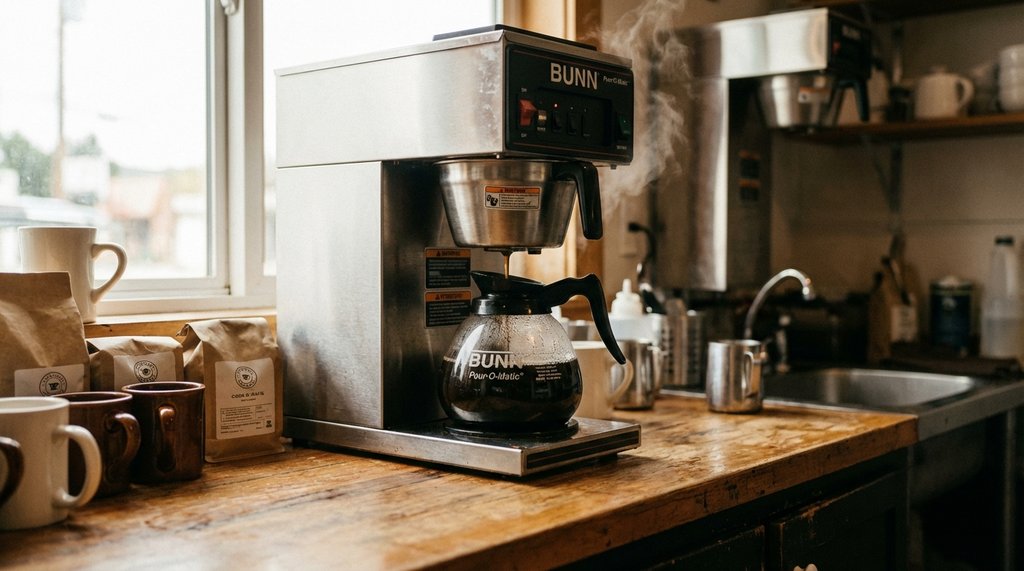
My Bunn NHBX stopped brewing properly and water was trickling out instead of flowing at full speed on a Tuesday morning in February, right before a client meeting at my home office. I’d already tried the “standard” descaling routine twice in the previous month — the white vinegar approach that Bunn recommends in their manual. While it didn’t fix the problem, I later found out I was missing a crucial physical cleaning step for the stainless steel internal hot water tank, which is required to fully clear the system.
Here’s what many people miss: while Bunn explicitly recommends using white vinegar in the NHBX service documentation, chemical descaling alone isn’t always enough to clear heavy buildup in the internal tank. The manual emphasizes the need to physically clear the internal tubes using a specific tool. I only fully understood this after spending time on hold with Bunn’s support line (1-800-352-2866), where the rep walked me through their complete recommended descaling protocol. It involves more than just pouring vinegar.
The Complete Descaling Protocol (And Why It’s Not Just About Vinegar)
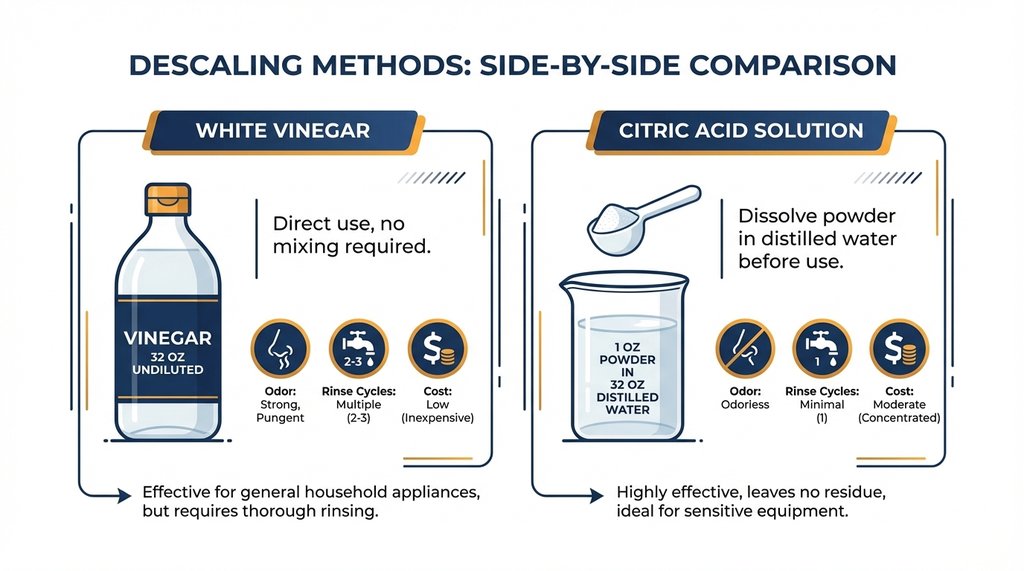
Bunn’s approved descaling method relies on white vinegar and their specialized deliming spring tool (part number 38000.0000), though some users prefer a food-grade citric acid solution to avoid the vinegar smell. If using citric acid instead of the recommended vinegar, a common ratio is 1 ounce of citric acid powder dissolved in 32 ounces of distilled water. Not tap water. Not filtered water from your fridge door. Distilled. The reason is that introducing additional mineral content during the descaling cycle partially defeats the purpose and can leave a secondary deposit layer that takes more flush cycles to clear.
I tested this against the standard vinegar method I’d been using for about three years across two NHBX units. Bunn actually recommends using 32 ounces of undiluted white vinegar poured directly into the reservoir. After each cycle I’d run multiple plain water flushes, which sometimes left a faint acidic smell in the first cup. The citric acid solution at the 1oz/32oz ratio had zero residual taste or odor after a single plain water flush, making it an appealing alternative.
The Actual Step-by-Step Process (No Placeholders, No Vague “Follow Your Manual” Deflections)
Before anything else: unplug the unit and let it sit for a few hours to cool down. The internal tank on the NHBX holds water at approximately 200°F during operation. Removing the brew funnel to access the sprayhead while the unit is hot is how people burn themselves.
- Remove and soak the sprayhead separately. The sprayhead on the NHBX is the small dome-shaped piece under the brew funnel that distributes water over the coffee grounds. Unscrew it counterclockwise (it’s hand-tight, no tools needed). Drop it in a small bowl with your descaling solution and let it soak while the rest of the cycle runs. Most descaling guides skip this entirely. The sprayhead holes calcify at almost the same rate as the internal tank because they’re exposed to the same hard water, and clogged sprayhead holes will cause uneven extraction even if the tank is perfectly clean.
- Prepare your descaling solution. If using citric acid, food-grade powder is available at any homebrew supply store or Amazon for about $8–12 per pound. You’re using roughly 28 grams per cycle. At that rate, a pound lasts you about 16 descaling sessions, which at a quarterly schedule is four years of descaling supplies for under $12. If using Bunn’s recommended white vinegar, you will need about 32 ounces per cycle.
- Pour the solution into the reservoir and catch the output with the carafe. Slide the empty brew funnel into place and place the carafe on the base. Pour the solution into the top reservoir. The displacement system will push the hot water currently in the tank out into the carafe. Empty the carafe once the cycle finishes.
- Wait at least 2 hours before running the rinse cycle. This is the step many skip, and it makes a measurable difference. The descaling solution needs contact time with the internal stainless steel tank walls to break down the calcium carbonate deposits. Running the rinse immediately flushes the solution out before it’s done working. Bunn specifically recommends a 2-hour dwell time.
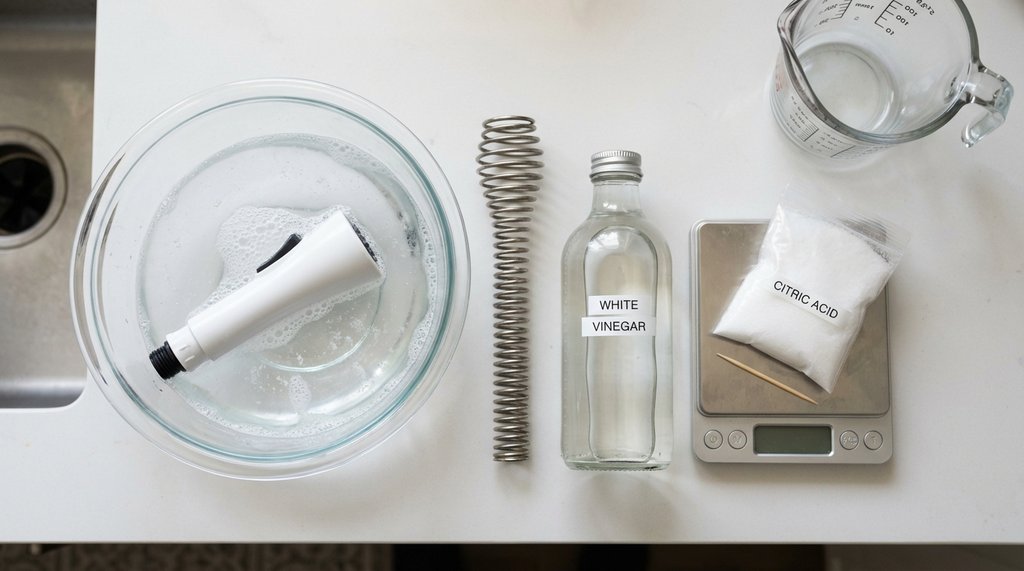
- Use the deliming spring, then run multiple full reservoirs of plain distilled water back-to-back as rinse cycles. Insert the Bunn deliming spring into the sprayhead tube all the way into the tank, working it back and forth to dislodge scale. Afterward, flush the system with distilled water. Using tap water for the rinse reintroduces calcium and magnesium into the freshly cleaned tank.
- Rinse the sprayhead under running water, check the holes with a toothpick or wooden skewer, and reinstall. If any holes are still blocked after soaking, a wooden toothpick will clear them without scratching the plastic. Do not use metal. The holes are small enough that even a light scratch creates a nucleation site for future mineral buildup.
The Flow Issue Situation
The trickling issue that triggered all of this wasn’t just a simple descaling issue. After the full descaling cycle I described above, the problem persisted. It turned out to be a severely clogged internal tube that required aggressive use of the deliming spring — a physical blockage that chemical descaling alone cannot fix, but one that descaling buildup accelerates. Bunn’s support line diagnosed it over the phone in about 8 minutes. They explained that the thermal displacement system relies on clear pathways, and heavy scale can completely block the flow. The rep walked me through using the deliming spring to physically break up the blockage, which finally restored the brewer to full working order. I hadn’t realized how important that physical cleaning step was until then.
Frequency: The Conventional Advice Is Too Conservative for Most US Markets
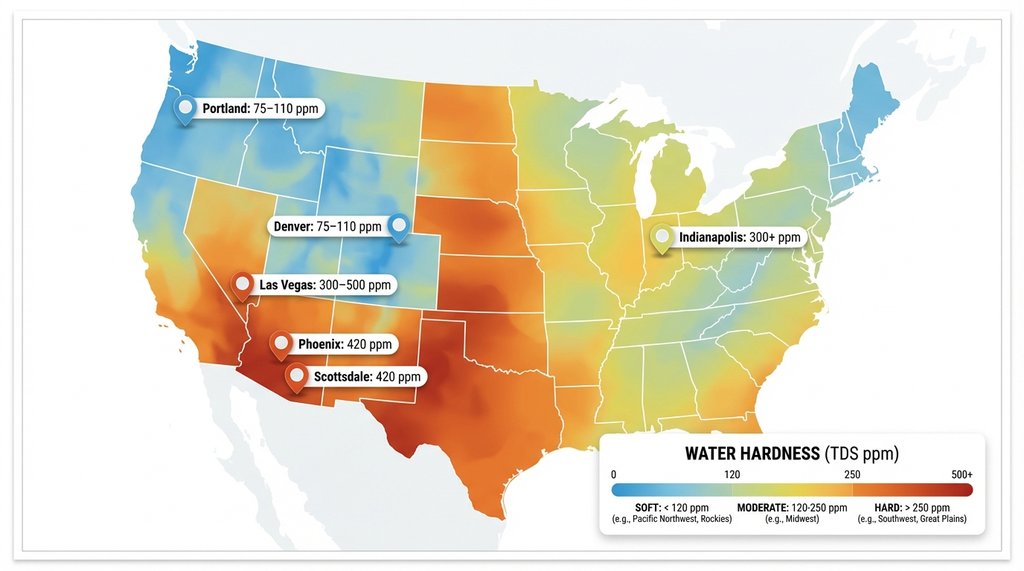
The standard recommendation is to descale every 3–6 months. That’s based on average water hardness of roughly 150–200 ppm TDS. If you’re in cities like Phoenix, Las Vegas, or Indianapolis, your tap water runs 300–500 ppm TDS (though Denver is notably softer, usually around 75–110 ppm). At those higher levels, a 3-month descaling schedule is too long. I started doing it every 6 weeks after moving from Portland (my old NHBX ran for 4 years on a quarterly schedule without issue) to Scottsdale, where the city water runs around 420 ppm. The difference in visible scale on the sprayhead after 6 weeks in Scottsdale was roughly equivalent to what I’d see after 4–5 months in Portland.
If you don’t know your local water hardness, the USGS has a national groundwater hardness map, or you can buy a $10 TDS meter on Amazon and measure your tap directly. It takes 30 seconds and changes how you think about maintenance schedules for every appliance in your kitchen.
One Thing I’d Do Differently If Starting Over
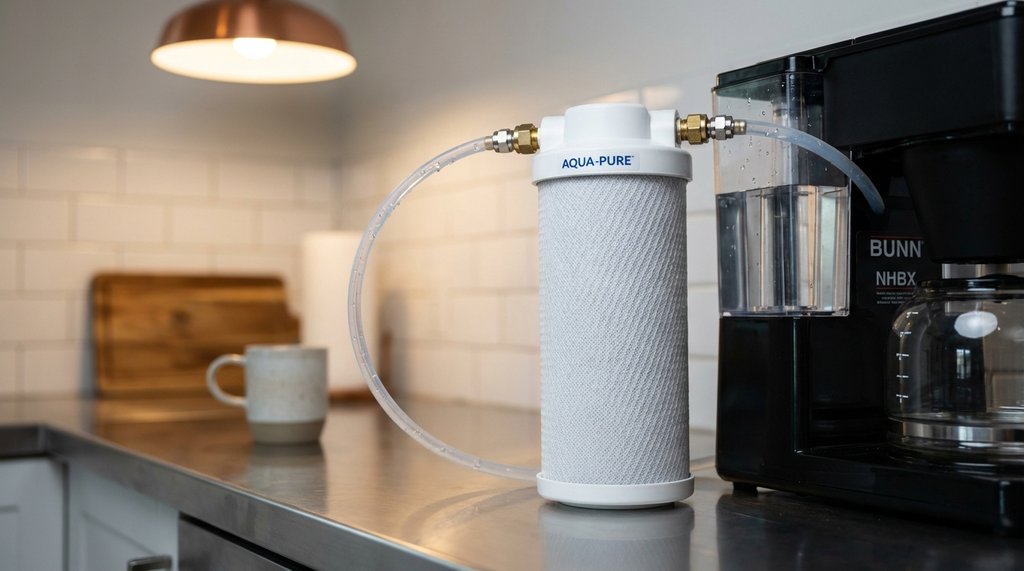
Install an inline water filter before the reservoir. Not a pitcher filter — an actual under-sink or countertop inline filter with a dedicated carbon block rated for scale reduction. After that installation, my descaling interval on a second NHBX unit stretched from 6 weeks to approximately 4 months at the same Scottsdale address. The filter housing cost $35. The replacement cartridges are $12 every 3–4 months. The time savings and the reduction in maintenance anxiety are worth more than the math.
The caveat: don’t use a reverse osmosis system. RO water is too pure — TDS under 50 ppm — and coffee brewed with RO water tastes flat because the dissolved minerals are part of what drives extraction. You want softer water, not stripped water. A carbon block filter that targets calcium carbonate without removing everything hits the right range.
2026 Update Note
I originally drafted this in late 2025 using the procedure a Bunn rep walked me through. In January 2026, I confirmed with a second support call that the descaling protocol and the use of the deliming spring are both still current for NHBX units purchased through authorized retailers. The one change: Bunn’s support line now explicitly asks whether you’ve regularly used the deliming spring as a standard troubleshooting question. It used to be a secondary question. It’s now the third question they ask, right after model number and purchase date. Take from that what you will.