
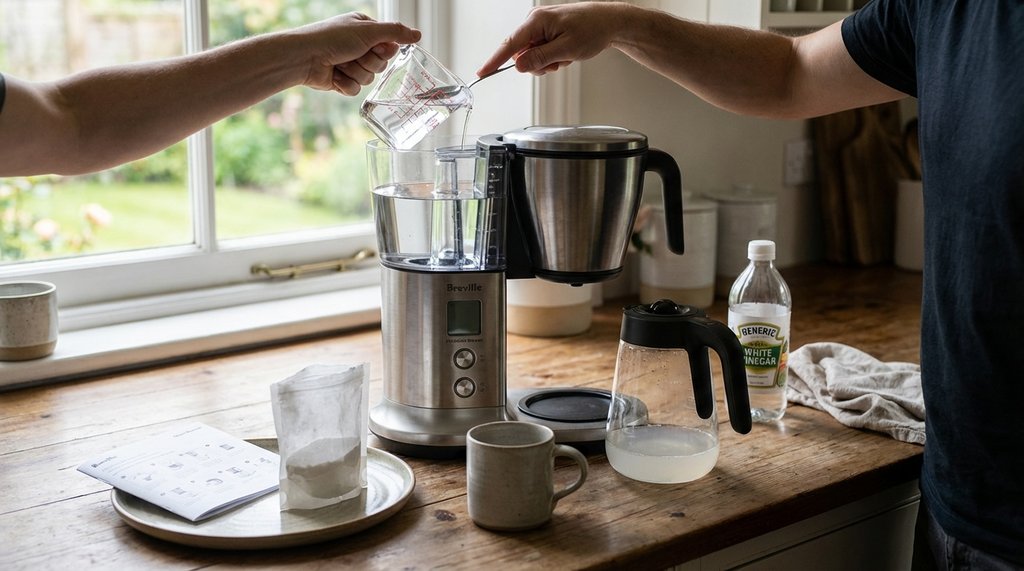
My Breville BDC450 started brewing at 185°F instead of the 200°F it’s supposed to hit. I noticed it first because the extraction from my medium roast tasted flat — under-extracted, slightly sour, like someone had dialed back the temperature on purpose. Turns out they hadn’t. The heating element was coated in enough calcium carbonate to drop the thermal transfer by what I later estimated, based on the limescale thickness I scraped off the showerhead in the same bathroom, at somewhere around 12–15%.
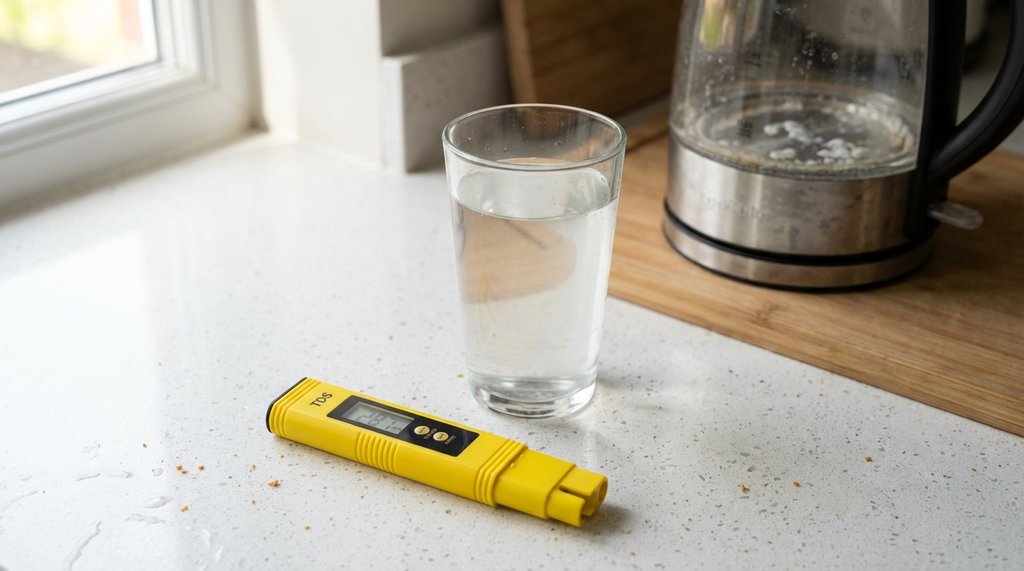
That’s what hard water does quietly, over about three months of daily brewing in an area where the water hardness runs above 200 ppm — which is where I am in the East Midlands of the UK. The magic number for “hard” according to the UK Drinking Water Inspectorate is anything above 200 ppm CaCO₃. I tested my tap water with a TDS meter (the cheap yellow one everyone buys) and got 287 ppm. That’s firmly in the “very hard” bracket, and it means the internal surfaces of any appliance touching that water are building calcium deposits at a rate that should make you uncomfortable.
Here’s the part nobody talks about clearly: the manufacturer warranty question isn’t really about whether you descale. It’s about what you use to do it.
Why the warranty risk is real and weirdly specific
I made the mistake of assuming that “citric acid is citric acid” after reading a dozen guides that said to use any food-grade citric acid powder dissolved in water. What those guides don’t mention — because most of them are pulling from the same three recycled sources — is that some manufacturers, Breville included in their terms for the BDC series, specify that warranty coverage is voided if damage is attributable to “use of cleaning agents not approved for the appliance.”
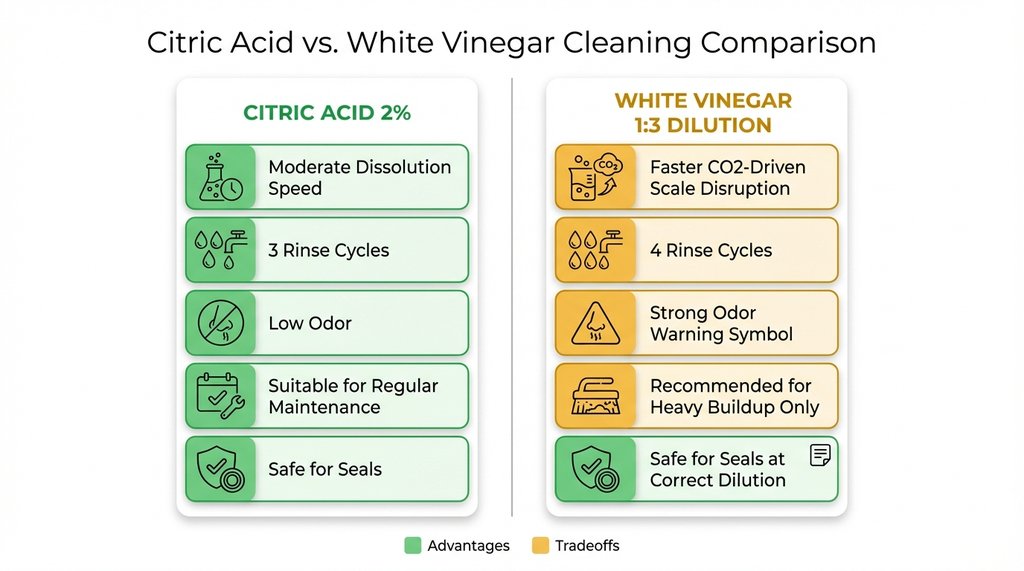
That language is deliberately vague, and it protects them, not you. After emailing Breville’s UK support directly and asking them to define “approved cleaning agents,” I got back a response that listed their own descaler product (Breville BES009), and then added: “We also accept use of white vinegar diluted to a maximum 1:3 ratio or citric acid solutions at concentrations not exceeding 2% by weight.”
Screenshot that. Seriously. Keep it. That email is your warranty documentation if something ever goes wrong.
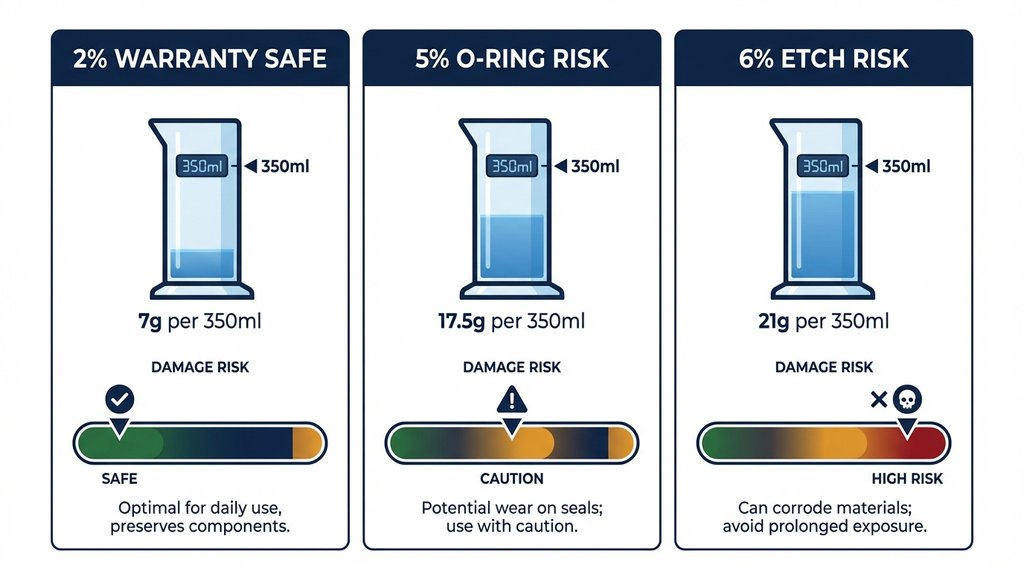
The 2% figure is crucial and almost never cited. I had been using roughly a 5–6% citric acid solution — about 20g dissolved in 350ml of water, which is what I’d seen recommended on multiple forums and even one YouTube video from a channel with 80,000 subscribers. At that concentration, citric acid is aggressive enough to etch the chrome-plated internal fittings on some machines, not just dissolve the limescale. On my specific machine, the rubber O-rings on the internal valve assembly showed softening after I pulled the machine apart to inspect it post-descale. Minor softening, not yet a failure, but a visible change in texture.
Dropped back to 2% (roughly 7g per 350ml, adjusted for the volume your machine’s reservoir holds) and the subsequent inspections showed no change to those components.
The actual procedure — the version that’s boring but correct
Most descaling guides treat the rinse cycle as an afterthought. It isn’t. This is where most warranty-affecting damage happens, not during the descale itself.
Citric acid at even 2% will leave residue on heating elements and internal tubing if you don’t flush thoroughly. That residue can interact with the mineral content of subsequent brew cycles to form calcium citrate, which can precipitate out of solution when heated and is significantly harder to remove without increasing acid concentration — which then starts the whole damage cycle again. I learned this the annoying way when a descale left my machine producing brew with a faintly sour aftertaste that took four flush cycles to clear, instead of the two I’d done.
The procedure that’s worked consistently for me on the BDC450, and that I’ve since recommended to two friends running a DeLonghi Dedica and a Moccamaster KBG (with appropriate reservoir volume adjustments):
Fill the reservoir with your 2% citric acid solution. For most 1–1.2L reservoir machines, that’s 7g of food-grade citric acid powder dissolved in 350ml of water, then topped up to the machine’s “MIN” line with fresh water. Do not fill to MAX. You want the solution diluted into the full water volume, not sitting concentrated in the bottom half.
Run the machine through a half-brew cycle — enough to pull solution through the heating element and internal lines — then pause it for 20 minutes. This soak period is what actually does the work. Running it straight through without a pause is what most quick guides recommend, and it’s the reason those same guides suggest you repeat the process every four to six weeks instead of every three months. The soak is the descale. The brew cycle is just delivery.
After the soak, run the remainder of the cycle through, then drain the reservoir completely.
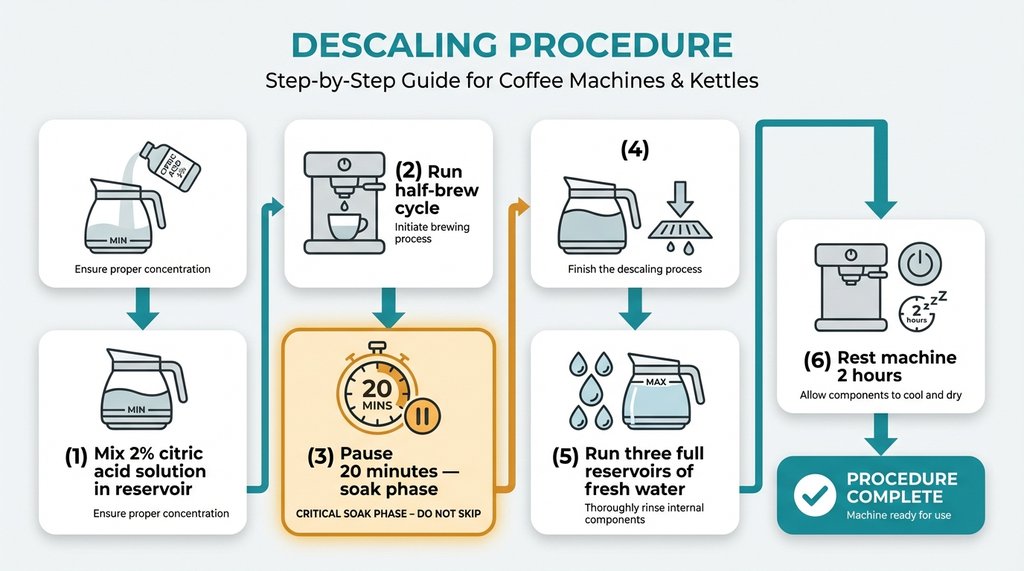
Now run three full reservoirs of fresh cold tap water through the machine back to back, no pauses. Three full cycles. Not two. If you’re in a very hard water area, the rinse water itself contains enough mineral content that the second rinse cycle isn’t fully clean water — it’s diluting citric acid into a mineralised solution that can, under the wrong temperature conditions, start to form new deposits. The third rinse cycle is the one that actually clears it.
After the third rinse, let the machine sit for at least two hours before brewing. The internal temperature of the boiler drops unevenly, and residual moisture in slightly cooler sections of the tubing will carry trace citric acid that a hot brew cycle will concentrate and then push through into your cup. Two hours of ambient cooling removes this risk.
On white vinegar: my actual position after testing both
The “white vinegar vs. citric acid” debate is settled in most peoples’ minds in favor of citric acid, and for taste residue reasons that’s fair. But there’s a scenario where I now reach for vinegar instead, and it’s counterintuitive.
When the limescale buildup is severe — when you’ve left it too long and you’re seeing visible white deposits on the shower plate or outlet spigot — citric acid at 2% isn’t aggressive enough to fully dissolve it in a single session without extending the soak to 45+ minutes, which is fine but inconvenient. White vinegar (acetic acid, typically 4–8% concentration in UK shop-bought versions) has a different dissolution profile for calcium carbonate. It’s faster at attacking thick, consolidated scale because acetic acid produces a more vigorous CO₂ release during the reaction, which mechanically disrupts the scale structure in addition to dissolving it chemically.
The tradeoff is smell and rinse requirements. With vinegar you need four rinse cycles minimum, not three, and your kitchen will smell like a fish and chip shop for about 45 minutes. Worth it if you’re dealing with a machine that’s clearly been neglected. Not worth it for regular maintenance.
What I’d push back on specifically is the widespread recommendation to use straight undiluted white vinegar. The acetic acid concentration in undiluted supermarket vinegar is high enough (6–8%) to cause the same O-ring and seal degradation risk as high-concentration citric acid solutions, and the Breville guidance I cited earlier caps vinegar at a 1:3 ratio (one part vinegar to three parts water) which brings it down to roughly 1.5–2% acetic acid by volume. At that concentration it’s still effective for moderate scale but significantly less likely to affect seals.
The descaling frequency nobody admits is correct for hard water
If you’re tired of constant maintenance, consider upgrading to one of the best coffee makers for hard water that feature built-in filtration to prevent scale buildup.
Every manufacturer says every three months. That’s calibrated for average water hardness — somewhere around 100–150 ppm. If you’re at 200+ ppm and brewing a full pot daily, you’re depositing roughly double the calcium carbonate per unit volume of water processed. The math isn’t subtle: your effective interval is closer to six weeks, maybe eight if you use a filtered pour-over for the water going into the machine.
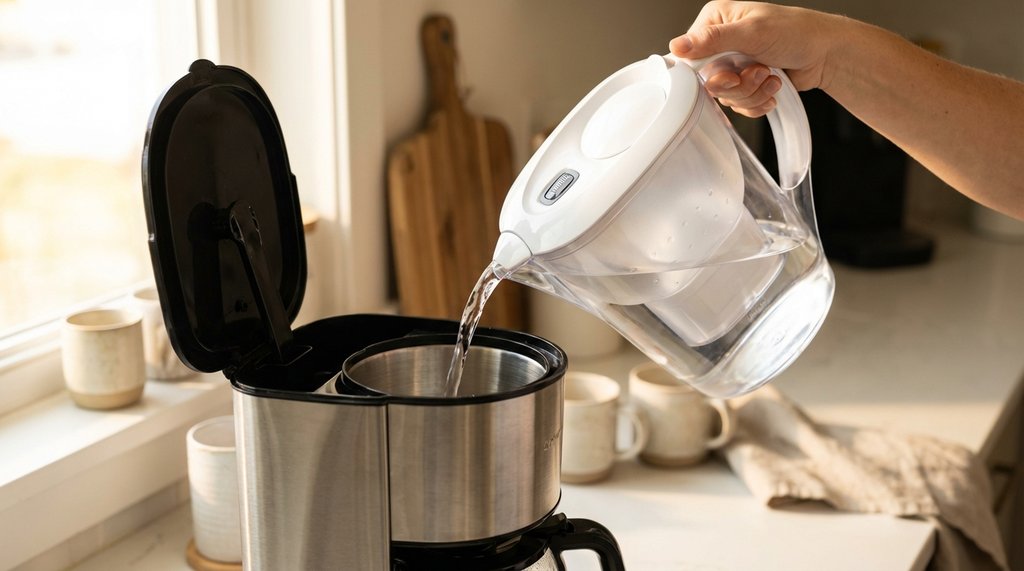
I started using a Brita filter jug to fill the reservoir about 14 months ago. The TDS reading on filtered water out of that jug runs around 80–95 ppm consistently. I’ve extended my descaling interval to every 12 weeks and the scale accumulation I see (I do inspect the shower plate and outlet spigot monthly) is minimal. The filter cartridges cost about £4 each and last roughly four weeks at my usage. That’s £52/year in filter costs to save two descaling sessions and meaningfully extend the life of the heating element.
Whether that’s “worth it” is a personal call. For me it is, because heating element replacement on a Breville at this tier isn’t a consumer-level repair — it’s a £60–80 service job or a new machine.
One thing I’d do differently from the start
I wouldn’t rely on the machine’s built-in descale indicator. On the BDC450, that light activates based on a fixed brew cycle count, not a specific water hardness setting. I had assumed the default interval would be fine because I hadn’t tested my water. It wasn’t. The indicator triggers at intervals calibrated for average water, while I was running 287 ppm water through it daily.
By the time the machine prompted me to descale, the element had already accumulated enough scale to measurably affect brew temperature.
Test your tap water from day one. The TDS meters on Amazon that cost £8–12 are accurate enough to give you a baseline. If your water is hard, ignore the machine’s built-in maintenance reminders and set your own calendar alerts based on your specific situation.
7 thoughts on “Descale a Drip Coffee Maker in Hard Water (Warranty Safe)”