
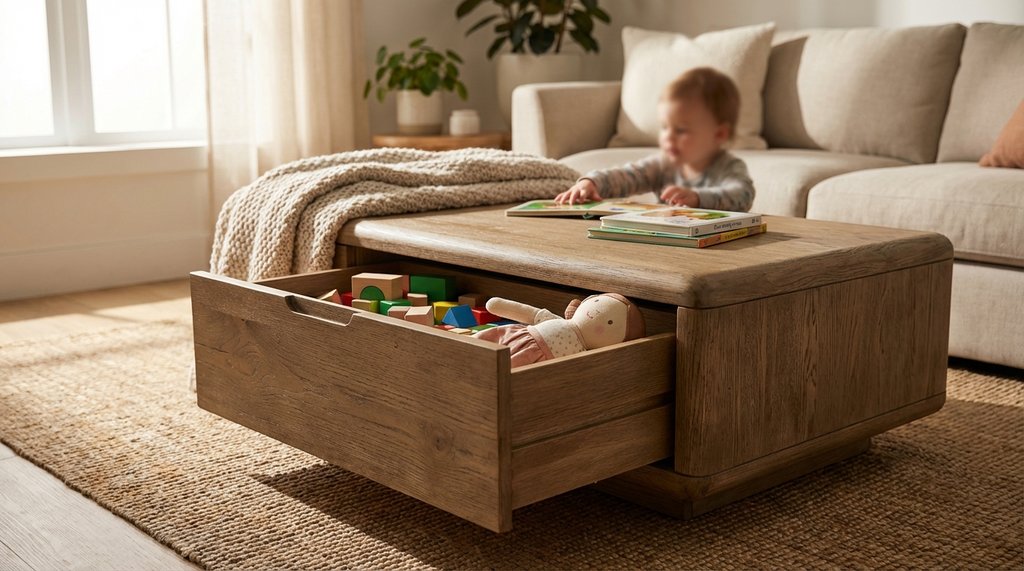
My daughter pinched three fingers in a coffee table drawer the Tuesday before Thanksgiving last year. Not badly — no ER trip, just a lot of crying and a bruise that lasted a week — but it was enough to make me actually sit down and figure out what “toddler-safe” means when it’s stamped on furniture marketing copy versus what it means when a 28-pound two-year-old is treating your living room like a CrossFit gym.
I spent the next four months going through seven different coffee tables. Some I bought, tested, and returned. Two I kept long enough to see how they held up past the honeymoon period. One I still have. Here’s what I actually learned.
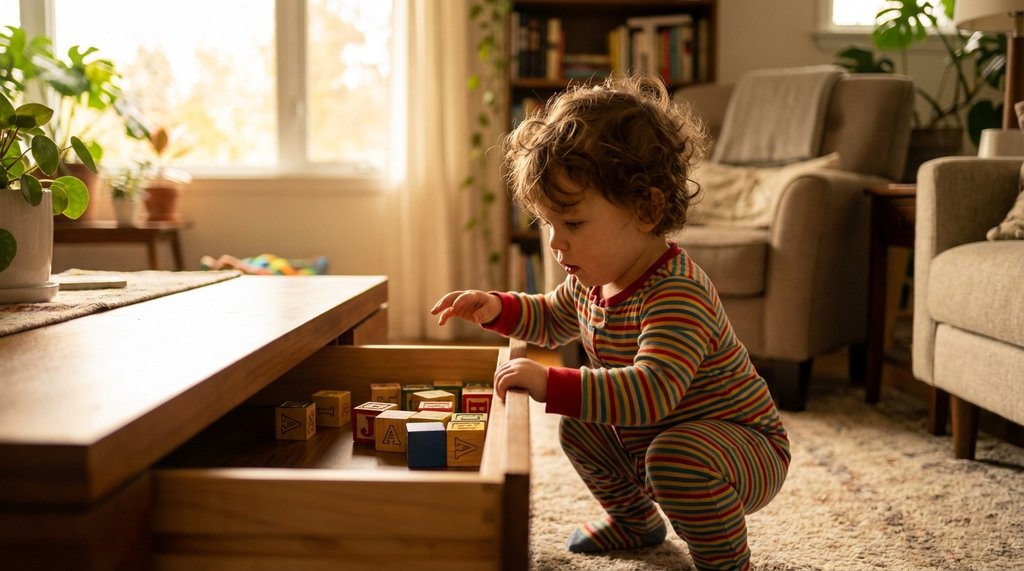
The “Soft-Close” Problem Nobody Talks About
Every table in this category claims soft-close drawers. Almost none of them have what I’d actually call soft-close.
Real soft-close uses a hydraulic damper integrated into the drawer slide — the kind you see on Blum Tandem Plus or Grass Nova Pro mechanisms. The drawer decelerates smoothly over the last 50–60mm of travel and closes with almost no sound. You can push it hard and it still catches.
What most furniture in the $150–$400 range actually uses is a small plastic piston damper glued or clipped onto a basic side-mount slide. It works fine when the drawer is empty and the furniture is new. Add a pile of Duplo blocks and a toddler who’s learned that slamming drawers is hilarious, and that plastic damper is gone in three to five months. I watched it happen on the South Shore Fynn I tested — by month four, the “soft-close” drawer was closing with a sound you could hear from the kitchen.
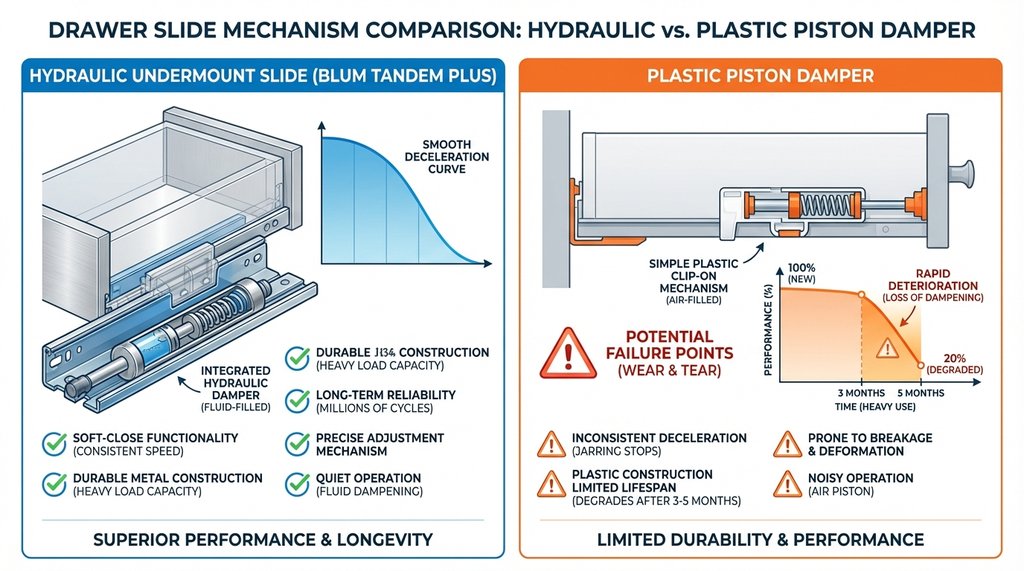
The tell is in the spec sheet, if the brand even publishes one. Look for the slide brand name. If it’s not listed, assume it’s a no-name plastic mechanism. If the listing says “soft-close” but doesn’t specify the slide type, that’s almost always the cheap piston version.
The one table I kept — a Pottery Barn Benchwright Coffee Table I found secondhand — uses metal undermount slides with actual hydraulic dampers. I’ve had it for eight months now. The drawers still close the same way they did on day one, even after my daughter has used them as a step stool to reach the remote approximately 400 times.
Edge Radius: The Number That Actually Matters
“Rounded edges” is another phrase that means almost nothing without a measurement attached to it.
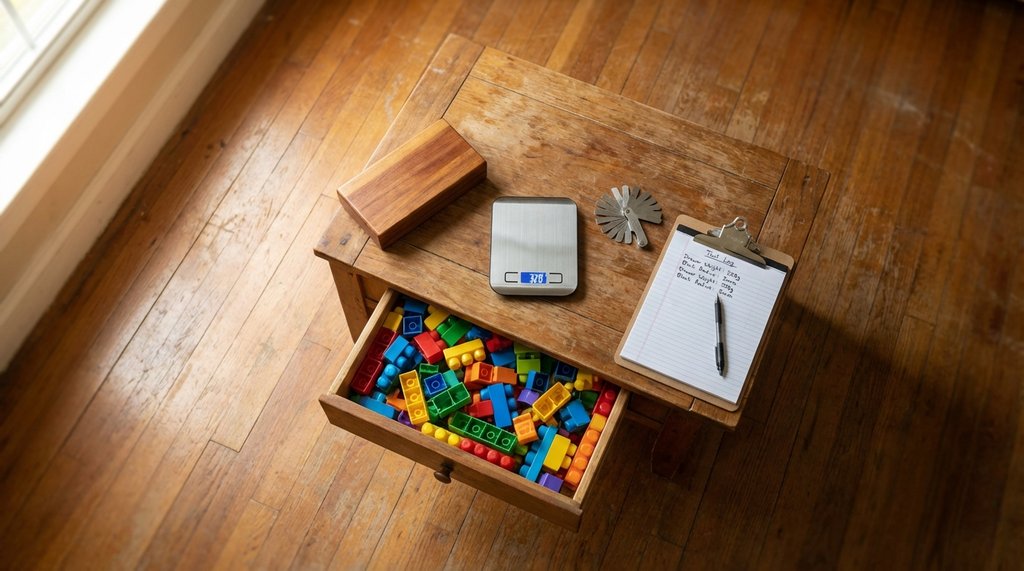
A 2–3mm chamfer is technically a rounded edge. It will still split a toddler’s forehead open if they fall into it at the right angle. I know this because I measured the edge radius on six tables with a radius gauge I borrowed from a woodworker friend, and the results were genuinely surprising.
The IKEA HEMNES coffee table — which gets recommended constantly in parenting forums — has a 4mm edge radius on the top corners. That’s better than nothing, but it’s not what I’d call toddler-safe. The table that actually had the most aggressive rounding was the Threshold Windham from Target, which runs around $180 and has a consistent 12–14mm radius on all top edges and corners. That’s the kind of rounding where a fall still hurts but you’re not looking at a laceration.
The Babyletto Hudson dresser, which is marketed heavily toward nursery-adjacent spaces, has beautiful soft curves but the drawer edges themselves — the front face of the drawer — are only chamfered about 3mm. Kids grab drawers by the edge to pull them open. That’s the contact point that matters, and it’s the one most manufacturers ignore.
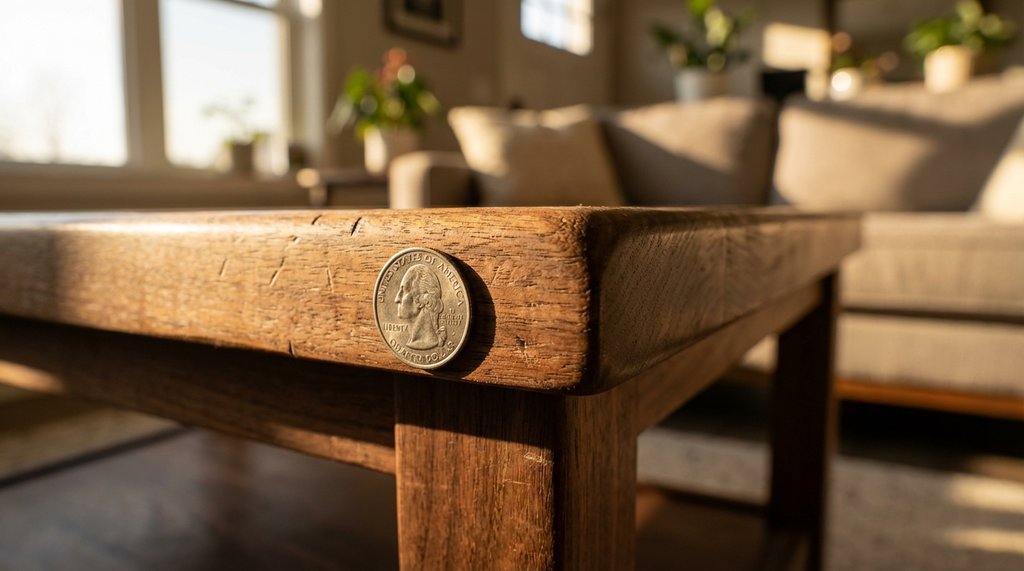
If you’re buying in person, bring a coin. A US quarter has a radius of about 12mm. Hold it against the table edge. If the edge is noticeably sharper than the coin, it’s not what I’d call genuinely rounded.
What I Actually Tested and How
I set up a rough protocol after the first two tables disappointed me. For each table I kept for more than two weeks, I ran:
- A drawer slam test: 50 consecutive hard closes with a 3kg load in the drawer (roughly equivalent to a full set of Mega Bloks). Counted how many times the soft-close mechanism actually caught.
- A tip-over simulation: Opened the heaviest drawer fully and applied 15kg of downward force to the drawer front. This simulates a toddler hanging off an open drawer, which mine does constantly.
- A surface impact test: Dropped a 500g wooden block from 60cm onto the table surface 20 times and checked for denting. MDF dents. Solid wood dents less. Veneer over MDF is the worst of both worlds.
- A six-week daily use observation: Just let my daughter use it normally and noted what broke, scratched, or stopped working.
The tip-over test eliminated two tables immediately. The Yaheetech Espresso Coffee Table — popular on Amazon, around $120 — tipped forward with only 8kg of force on an open drawer. That’s less than the weight of most two-year-olds. I returned it the same day.
Planning your living room layout along with baby-proofing? Check out our guide on choosing a coffee table for an L-shaped sectional or measuring round coffee tables for U-shaped sectionals.
The Tables That Actually Held Up
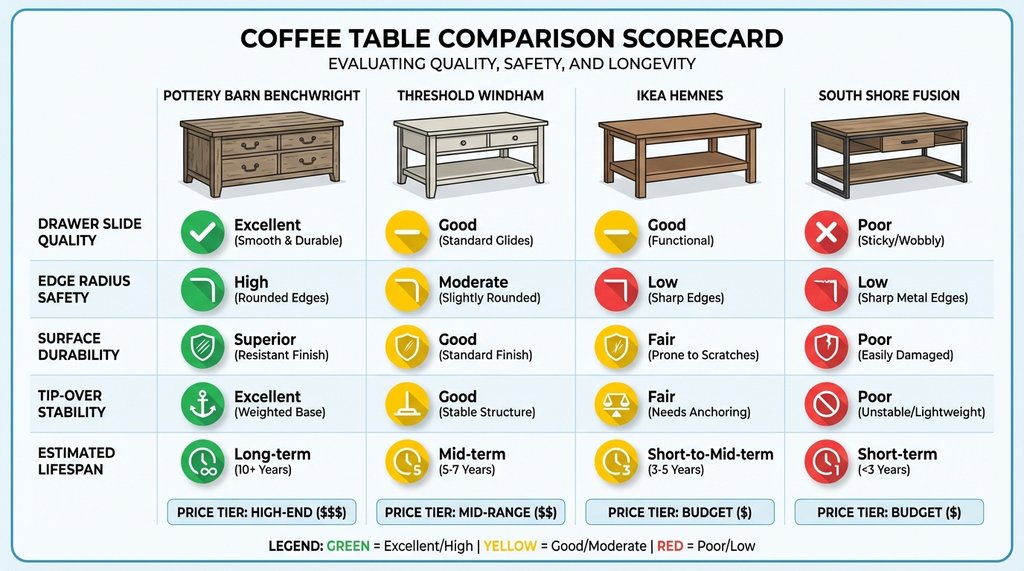
Pottery Barn Benchwright (secondhand, ~$280 used)
This is the one I kept. Solid pine construction, not MDF. The surface dents if you really try, but normal toddler abuse — toy cars, board books, the occasional thrown sippy cup — hasn’t left a mark in eight months. The drawers use real undermount slides. The edge radius on the top is around 10mm, which isn’t perfect but is acceptable. The main downside is weight: it’s 68 lbs, which means it doesn’t move easily for vacuuming. Also, the drawer depth is only 4.5 inches, which limits what you can store — no large stuffed animals, no bulky toy sets.
Threshold Windham (Target, ~$180 new)
Better edge rounding than anything else in this price range. The drawer slides are the cheap plastic type, and they showed wear by month three in my testing — not broken, but noticeably less smooth. The MDF surface got a visible dent from a dropped wooden puzzle piece at about the two-month mark. If you’re prioritizing edge safety on a budget and you’re okay with replacing it in two to three years, this is a reasonable choice. If you want something that lasts five years of toddler use, it won’t get there.
IKEA HEMNES
I know this is going to be unpopular because it’s the default recommendation in every parenting subreddit, but the HEMNES underperforms for this specific use case. The open lower shelf is genuinely useful — large capacity, easy for toddlers to access — but it lacks enclosed storage, meaning toys are always visible and accessible. The edges are also sharper than the marketing photos suggest. It’s a good table for adults. It’s a mediocre table for a living room that’s also a playroom.
South Shore Fynn
The soft-close failure I mentioned earlier happened here. Beyond that, the table itself is fine — decent storage capacity, acceptable edge rounding, stable enough to pass my tip-over test. But the MDF surface is thin and the veneer started peeling at one corner after about four months. South Shore’s warranty process was slow; it took six weeks to get a replacement panel shipped. Not a dealbreaker, but worth knowing.
The Non-Consensus Take on “Toddler-Proof” Furniture
Most of the buying guides in this space tell you to prioritize soft-close drawers and rounded edges, which is correct, but they treat those as binary features — either a table has them or it doesn’t. The more useful frame is: how long will those features hold up under actual toddler use?
A table with Blum undermount slides and 12mm edge radius that costs $350 is a better value than a table with cheap plastic dampers and 4mm chamfers that costs $150, even if you’re replacing the cheap one every two years. The math works out to roughly the same cost over five years.
1 thought on “Toddler-Safe Coffee Tables With Hidden Toy Storage”