
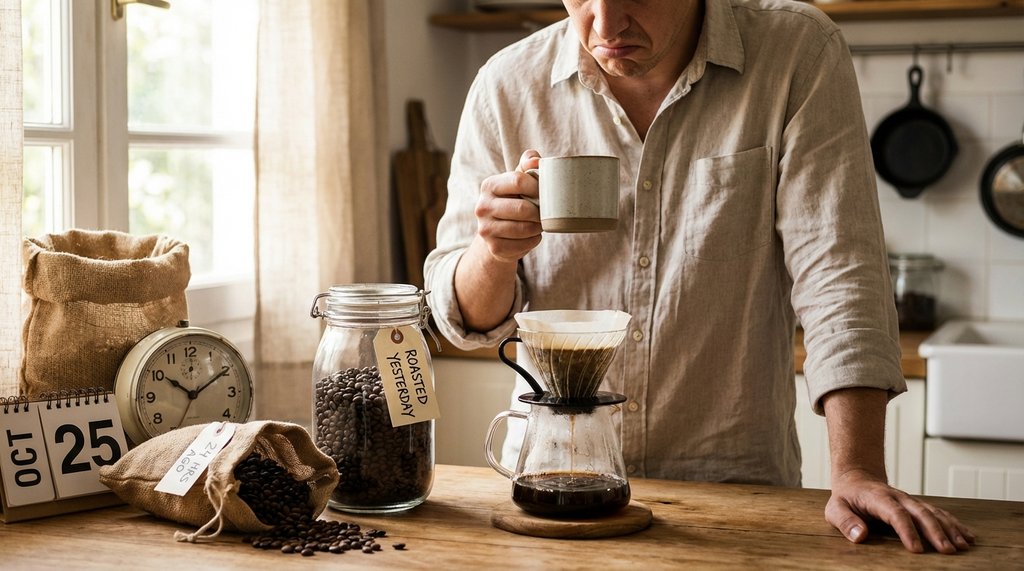
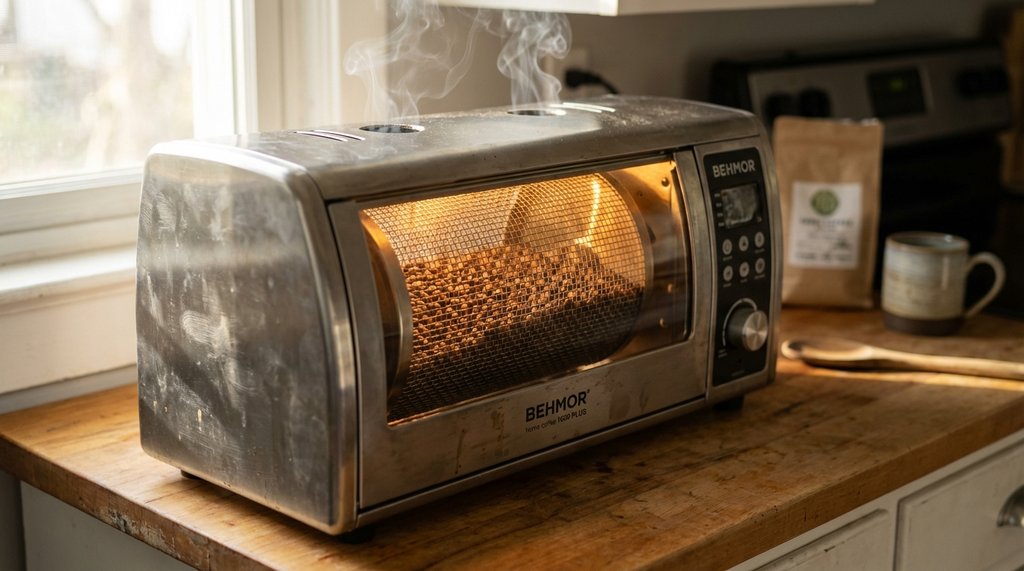
The first bag I roasted on my Behmor 1600 tasted like a campfire had an argument with a lemon. I pulled it off at City+ on an Ethiopian Yirgacheffe — hit my target color, right drop temperature, everything looked correct — and then made a cup two hours later because I couldn’t wait. It was aggressive, almost medicinal. I assumed I’d scorched it. Dropped the charge temp on the next batch. Same result.
It took me another four batches and a lot of wasted green beans before I stopped blaming my technique and started actually reading the chemistry.
The bitterness you’re tasting isn’t from heat damage — or at least, not only from heat damage. It’s from CO₂.
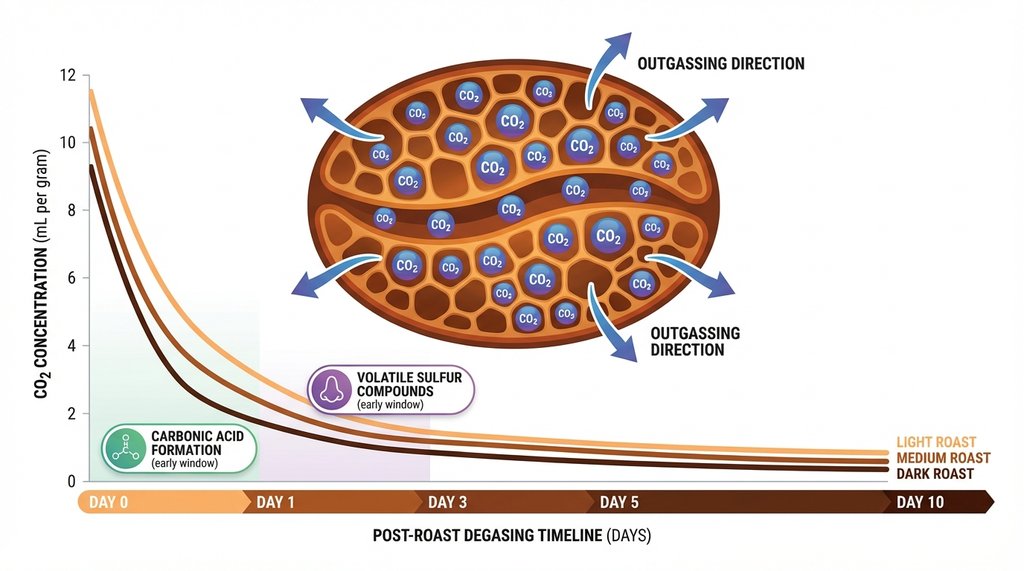
During roasting, the Maillard reaction and pyrolysis break down the cell structure of the bean and produce significant amounts of carbon dioxide, which gets trapped inside the bean’s porous matrix. Right after roast, that CO₂ concentration is around 10–12 milliliters per gram of bean — depending on roast level, moisture content of your green, and how fast you drove through first crack. Dark roasts actually produce more CO₂ than light roasts, but light roasts release it much slower because the cellular structure is less disrupted, which counterintuitively makes them harder to brew well in the immediate post-roast window, not easier.
When you grind and brew a bean that’s still saturated with CO₂, a few things go wrong simultaneously. The outgassing creates a physical barrier between the water and the coffee solids — extraction is uneven, channeled, and under-extracted in patches (similar to issues caused by poor grinder burr alignment). But the CO₂ itself also dissolves into your brew as carbonic acid, which registers on the palate as a sharp, biting sourness that’s different from the roasty bitterness of a dark roast or the tannic astringency of over-extraction. It’s prickling and thin at the same time. Your tongue reads it as harsh before your brain can process why.
The campfire-lemon cup I mentioned? That was carbonic acid plus the volatile sulfur compounds that are most concentrated in the first 12 hours post-roast. Both of those are symptoms of the same root problem: I brewed too early.
Here’s where most beginner advice falls apart: the standard recommendation is “wait 24–48 hours.” I followed that religiously for months. Still got inconsistent cups.
The issue is that 24–48 hours is the floor for espresso, not a universal target — and it’s useless guidance for filter brewing without knowing your roast level or your bean density. I was treating it as a fixed timer rather than understanding what I was actually waiting for.
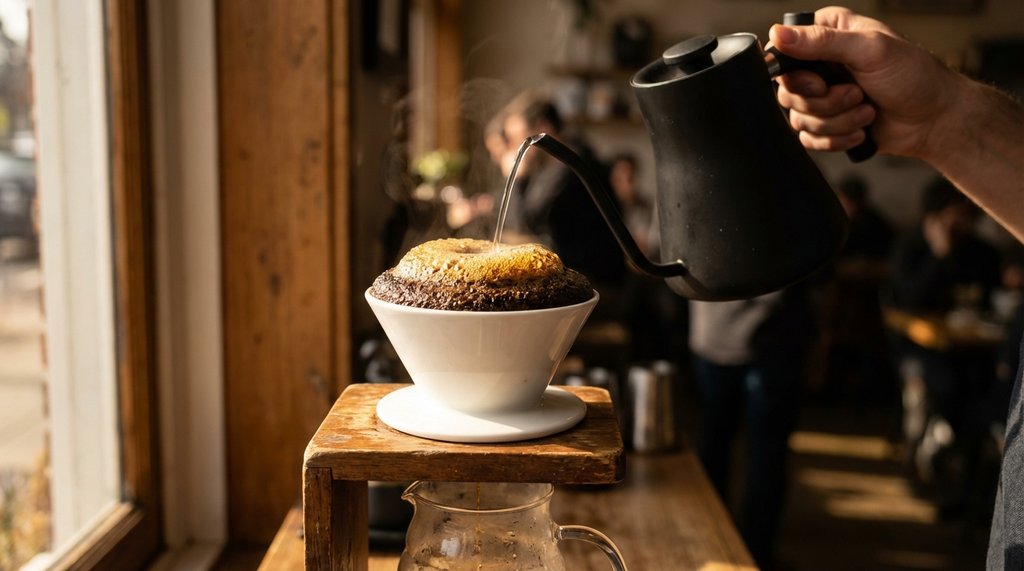
What I eventually learned to do is use the bloom behavior as a diagnostic. When you pour a 30–40g bloom dose over your grounds in a V60, you’re watching CO₂ evacuate in real time. If the bloom is still doming aggressively and releasing visibly for 35–40 seconds at the 24-hour mark, the bean isn’t ready. A bloom that domes and then stabilizes within 20–25 seconds usually indicates the degassing is far enough along that you’ll get a clean, even extraction. I started tracking this across multiple batches with notes, and the correlation between bloom behavior and cup quality is tighter than any time-based rule I’ve ever used.
For filter specifically — V60, Chemex, Kalita — I’ve landed on this: light roasts need 5–10 days minimum off my Behmor before they open up the way I want. Three days is not enough. The clarity just isn’t there. The fruit notes are buried under what I can only describe as a kind of muddy, sour-aggressive quality that the 24-hour advice never warned me about.
Medium roasts I’m usually comfortable brewing at 3–4 days. Dark roasts can go at 24–36 hours for filter because the compromised cell structure allows much faster outgassing — which is the one thing dark-roast home-roasters actually have working in their favor.
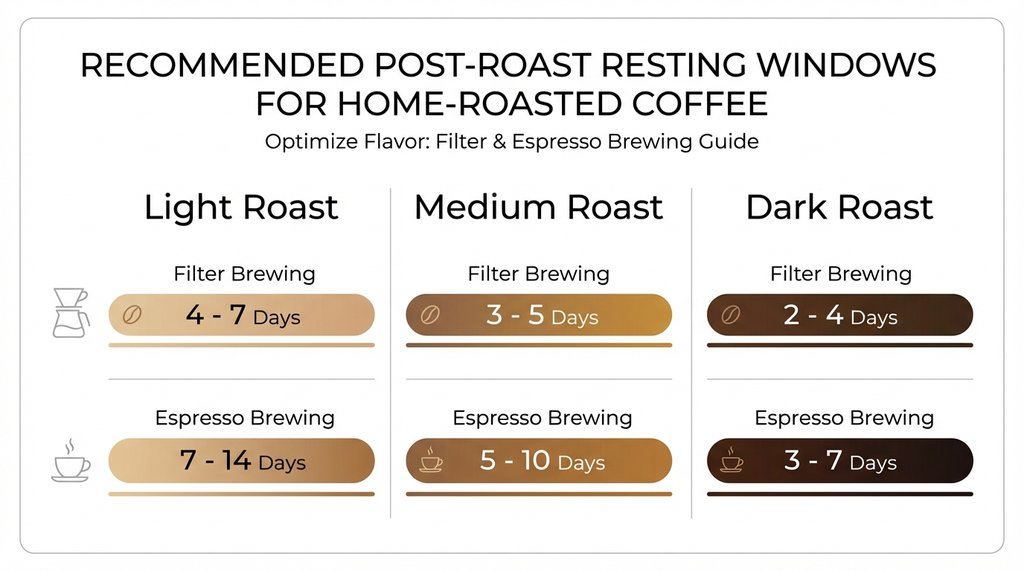
The non-consensus part: for espresso, a lot of home-roast communities push 7–10 days as the sweet spot for lighter roasts (especially true when analyzing post-roast degassing for single-origin washed coffees). In my experience on a medium-light — say, a Guatemalan Huehuetenango dropped around City+ — pulling at day 7 versus day 4 actually makes the shot harder to dial in, not easier. The window between day 4 and day 6 is where I get the most consistent extraction on that profile. By day 8 the shot wants a finer grind to compensate for the CO₂ loss, and if I don’t adjust, the body drops off and the aftertaste gets slightly papery.
This is not a universal truth. It’s specific to my roast profile, my machine (a Gaggia Classic Pro with the OPV set to 9 bar), and my water (filtered to around 80 ppm TDS). Anyone who gives you a single resting timeline without knowing those variables is guessing.
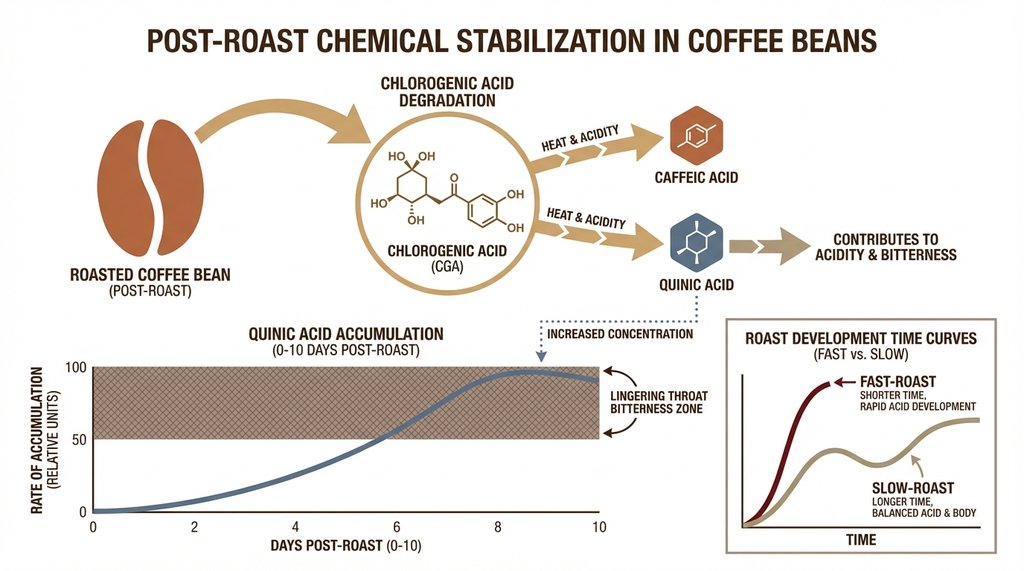
There’s a second thing happening in the 24-hour window that’s separate from CO₂ and almost never gets mentioned in beginner guides: chemical stabilization and the dissipation of harsh volatiles. During roasting, chlorogenic acids break down into caffeic acid and quinic acid. The rate of that breakdown varies by roast temperature and duration. A fast, hot roast through first crack will have a different breakdown curve than a slower development time. Quinic acid is one of the primary contributors to the kind of lingering bitterness that hits you on the back of the throat rather than the front of the tongue, while highly volatile sulfur compounds contribute to a harsh, aggressive flavor immediately post-roast. Allowing these volatile compounds to dissipate before brewing is part of what resting accomplishes — the CO₂ explanation is accurate but incomplete.
When I stopped thinking about resting as “just letting gas out” and started thinking about it as allowing the chemical composition of the bean to stabilize post-roast stress, I started making better decisions about timing.
One last thing I’ve tested and would argue against: vacuum sealing immediately after roast to “preserve freshness.” I tried this across six batches on the same green, same roast profile, using a FoodSaver with a mason jar attachment. The hypothesis was that if I vacuum-sealed at the 48-hour mark, I could extend my resting window’s benefit further out.
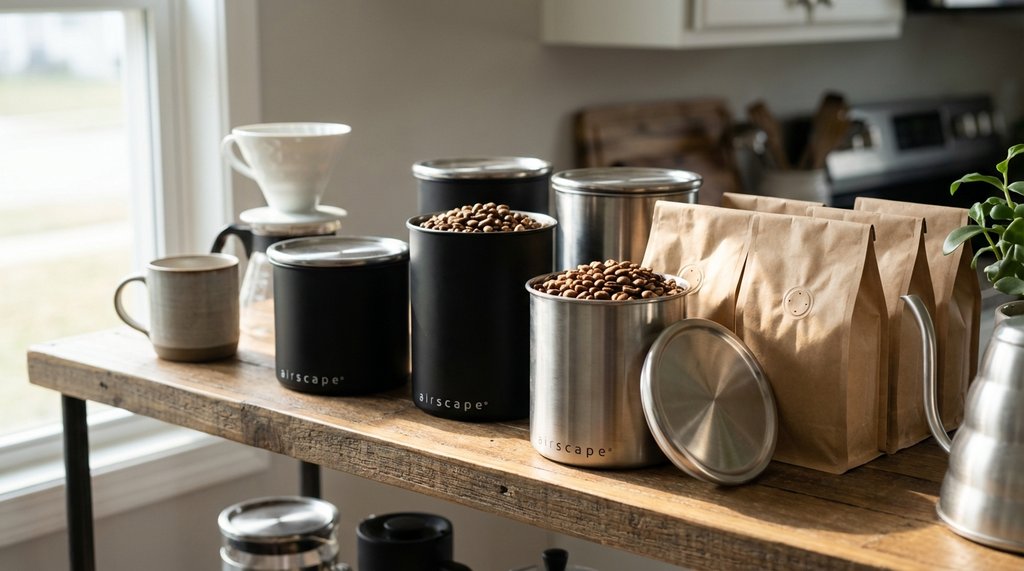
What actually happened: the beans that went into vacuum at 48 hours tasted flat at day 7 compared to beans stored in a one-way valve bag with natural CO₂ venting. My best guess — and I’ve seen this discussed in the SCA research materials, though I haven’t read the original studies — is that the residual CO₂ in a vented environment plays some role in slowing oxidation during the early resting phase. Removing it too early by vacuum may be counterproductive. I’ve since moved to storing everything in Airscape canisters and only sealing them tightly after day 5, which gives the remaining CO₂ somewhere to go while still protecting against oxygen exposure.
The Airscape approach isn’t novel advice. But the timing of when I close the seal — that made a concrete difference. My cups from week two of a light roast are reliably cleaner now than they were when I was vacuum-sealing early and wondering why the brightness I tasted at day 6 had faded into cardboard by day 12.
2 thoughts on “Home-Roasted Coffee Bitter? The CO2 Degassing Window”