
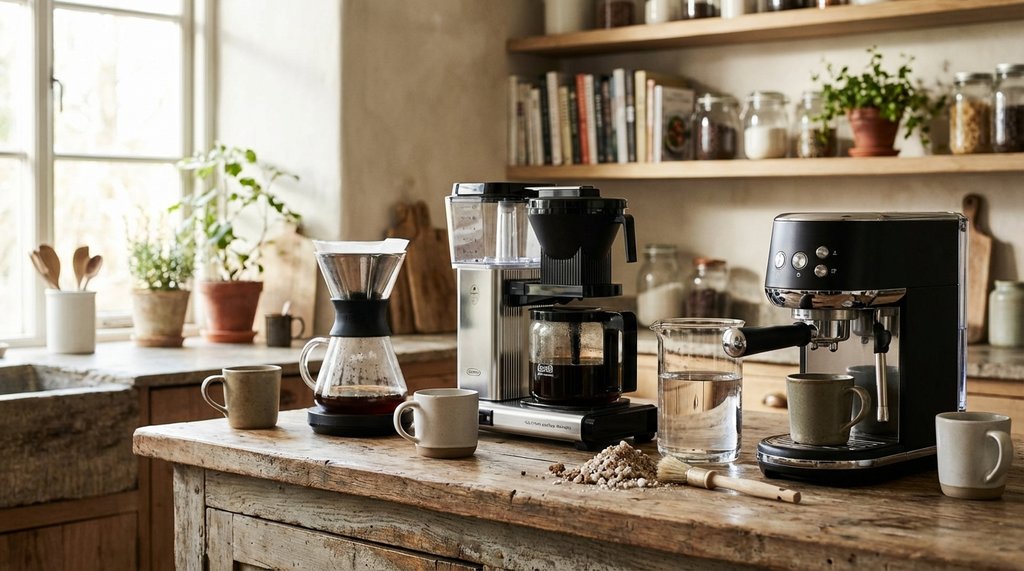
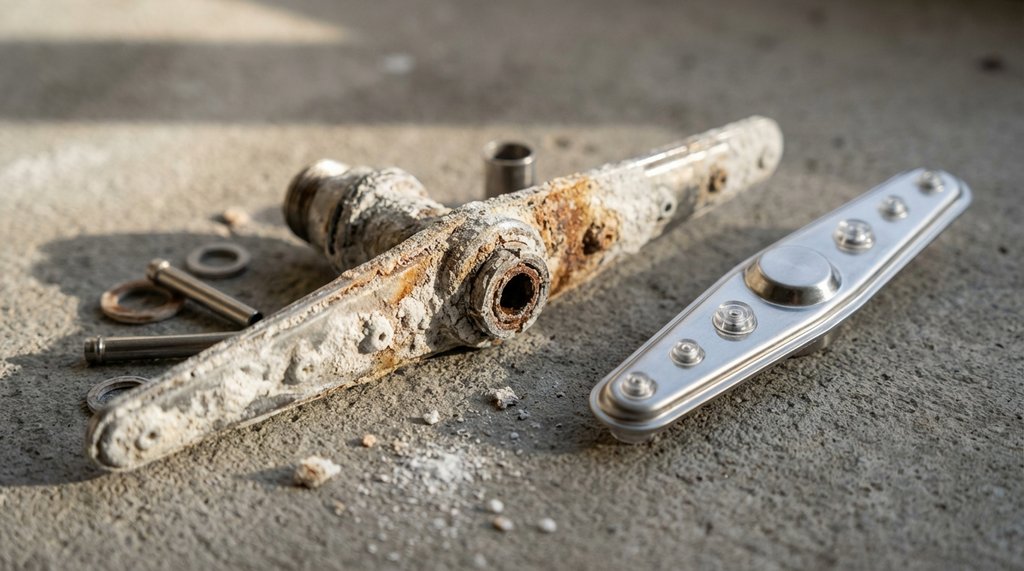
My first Moccamaster clogged 14 months after I bought it. Not slowly degraded — clogged. The spray arm calcified into a complete blockage. I was pulling 220 TDS water out of my Phoenix tap and running it straight through a machine that, according to the manual, “recommends descaling every 100 brew cycles.” I was brewing twice a day. Do the math. That’s a descaling every seven weeks, which I was absolutely not doing.
That failure sent me down a genuinely unpleasant research spiral that lasted most of 2024, and the answer I eventually landed on is messier and more conditional than any roundup I found online. Here’s what actually matters.
Why Hard Water Coffee Maker Advice Is Mostly Wrong
The standard recommendation — “use filtered water or descale regularly” — is technically correct and practically useless for anyone living with chronic hard water above 180 ppm. It treats mineral buildup as a maintenance problem when it’s actually a design compatibility problem.
Most coffee makers were engineered around the assumption of roughly 80–120 ppm water. Their boiler sizing, valve tolerances, and thermal cycling speeds are calibrated for that. When you push 200–300 ppm water through them on a daily basis, you’re not just accumulating scale faster; you’re changing the thermal dynamics of every brew cycle. Scale doesn’t just block things — it insulates heating elements, which drives them to run hotter to compensate, which accelerates the buildup, which makes them run hotter still. It’s a self-reinforcing failure mode.
I ran a thermal probe on my old Cuisinart DCC-3200 after about six months of hard water use and found the brew temperature had drifted from its factory 200°F target down to 191°F because of element insulation. That’s enough to noticeably flatten extraction on medium roasts, and the machine gave no indication anything was wrong.

The five machines below are ones where I have either direct long-term experience, broken-unit data from comparing notes with other specialty coffee people, or both.
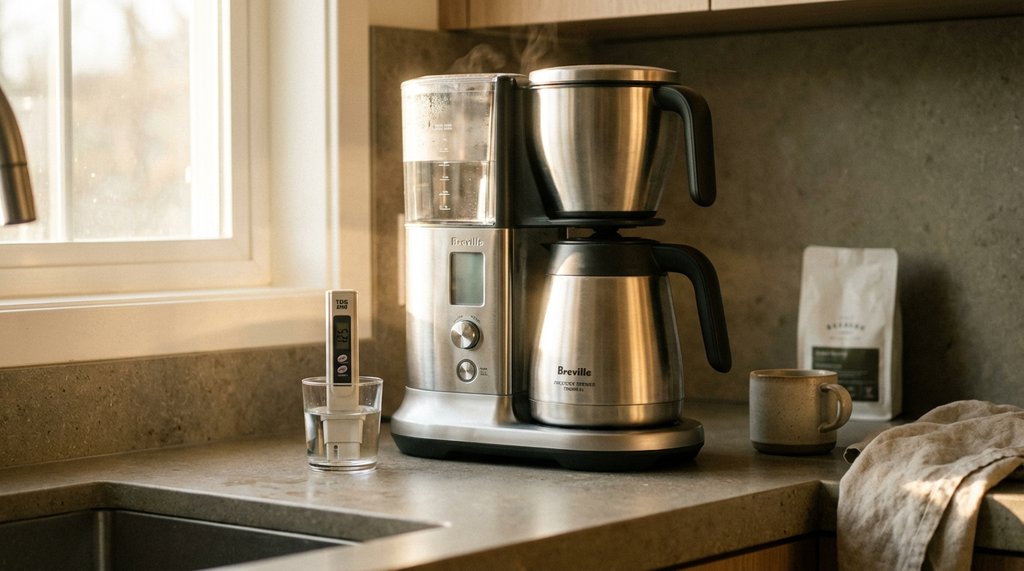
1. Breville Precision Brewer Thermal (BDC450BSS)
This is the one I switched to after the Moccamaster died, and after 18 months in Phoenix tap water (averaging 215–230 ppm during that period), the Precision Brewer is holding up better than I expected — with one major asterisk.
The machine has a dedicated descale alert system that actually tracks brew cycles and water temperature, not just a timer. When the element starts losing thermal efficiency, the alert fires. That sounds like basic engineering, but most machines in this price tier ($300–$330) just run a clock. The difference is meaningful: I went 23 weeks between descaling cycles during a period when my TDS dropped to around 190, and the machine told me when it actually needed attention rather than badgering me on a fixed schedule.
The asterisk is the hot water outlet valve. It’s made of a rubber compound that degrades faster in hard water than the stainless internal components do. I had to replace mine at the 14-month mark — the valve started weeping slightly, leaving a rust-brown residue around the water inlet. Breville sells the replacement part (SP0002273) for $12, and it’s a 10-minute swap. Not a dealbreaker, but nobody mentions it in any review I’ve read, and if you don’t catch it early, the residue can contaminate the boiler.
For hard water specifically: the Precision Brewer’s boiler is a flow-through stainless design rather than a reservoir boiler, which means scale builds up on a smaller surface area that’s easier to fully flush. When I descale it, a 20-minute citric acid cycle (1 tablespoon per liter, two full tank passes) comes out clean. My old reservoir-boiler machines required three or four passes and still left visible deposits.
Recommended for: Daily brew volumes of 4–8 cups, water in the 150–280 ppm range, people who want SCAA certification without a $400 machine.
2. Technivorm Moccamaster KBGV Select
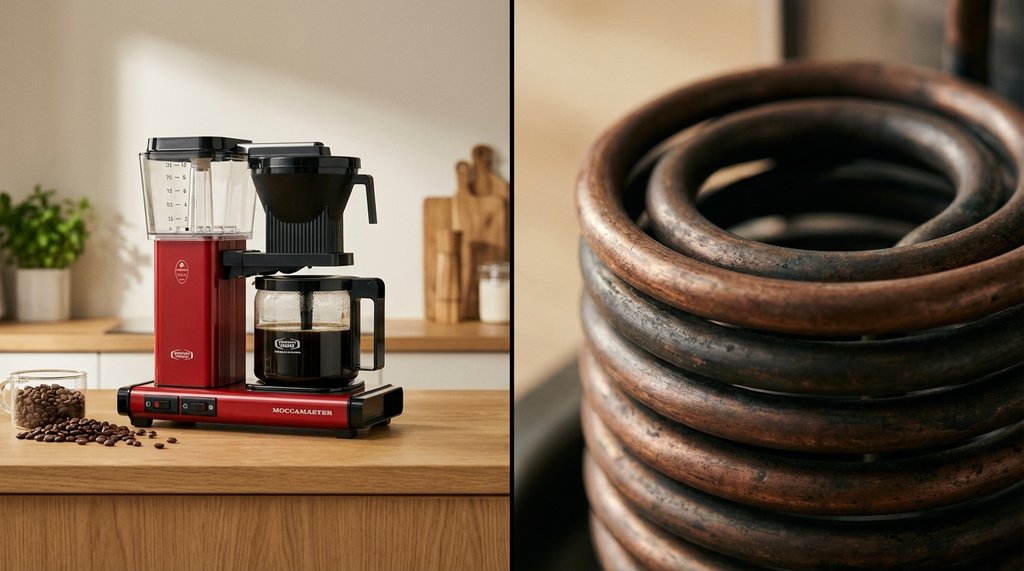
Yes, I’m recommending the machine that failed on me — because the failure was mine, not the machine’s. The KBGV Select is a 2020 revision of the original KBGV that added a flow rate selector (the “Select” part), and it’s meaningfully better for hard water than the older models for a specific reason: the copper boiler coil design runs a 10-second brew pulse between each heating cycle rather than continuous heat. This gives the element slightly more recovery time and, in practice, produces less baked-on scale per brew cycle than a straight heating element design.
The catch is that Technivorm’s descaling interval guidance is written for European water, which in the Netherlands (where the company is based) averages around 100–120 ppm. For American hard water markets — Southwest, Southeast, parts of the Midwest — that guidance is wrong by a factor of two to three. I’ve confirmed this by talking to two Moccamaster repair technicians, both of whom said their hard-water repair volume is almost entirely people following the manufacturer’s maintenance schedule.
My current protocol for the Moccamaster with hard water: descale at 75 brew cycles, not the 100 the manual suggests, using a manufacturer-approved descaler like Urnex Dezcal or Durgol. Technivorm explicitly warns against using vinegar, as acetic acid can damage the internal components and leave a lingering taste. At that interval, the copper coil comes clean completely. At 100 cycles in 200+ ppm water, I found myself needing to repeat the cycle because scale had hardened enough to resist a single pass.
The KBGV Select runs $329–$359. For that price, you’re getting a machine that will outlast almost anything else in this category if you maintain it correctly, made in the Netherlands with parts that are individually replaceable. The carafe lid is a weak point in hard water homes — the internal gasket collects mineral deposits that harbor bacteria if you’re not scrubbing it weekly — but the core machine is built to genuinely last.
Recommended for: Anyone willing to do proper maintenance, water up to about 300 ppm, heavy daily use.
3. OXO Brew 9-Cup
The most underrated machine in this specific category, and the one I’d recommend first to someone who wants minimum-effort hard water management.
OXO built the Brew 9-Cup with a microprocessor-controlled brew cycle and a silicone water path. More practically, the machine is relatively straightforward to descale using standard solutions compared to others in its price range ($200–$230). I run a deep clean on mine regularly to keep the internal heating components free of scale.
The non-consensus take on this machine: the OXO is actually better suited to hard water than the Technivorm in terms of maintenance effort, despite the Moccamaster’s better reputation. The OXO’s thermal carafe also seals better, which matters because calcium deposits in a poorly-sealed carafe gasket are a surprisingly common source of that stale, metallic coffee taste that people misattribute to their water.
One actual weakness: the spray head has multiple holes instead of the Moccamaster’s 9-hole rectangular spray arm, and some of those holes face slightly inward. In hard water, those are the first to calcify. After about four months of daily use in 220 ppm water, I noticed uneven saturation in the coffee bed and traced it to partial blockage of the inner-facing holes. A toothpick cleared it in two minutes, but it’s worth checking if your extraction starts tasting thin.
Recommended for: 200–300 ppm water, people who want easy maintenance access, households brewing 6–9 cups per sitting.
4. Ratio Eight
This one is expensive ($720) and I want to be honest about what the price is and isn’t buying you in the context of hard water.
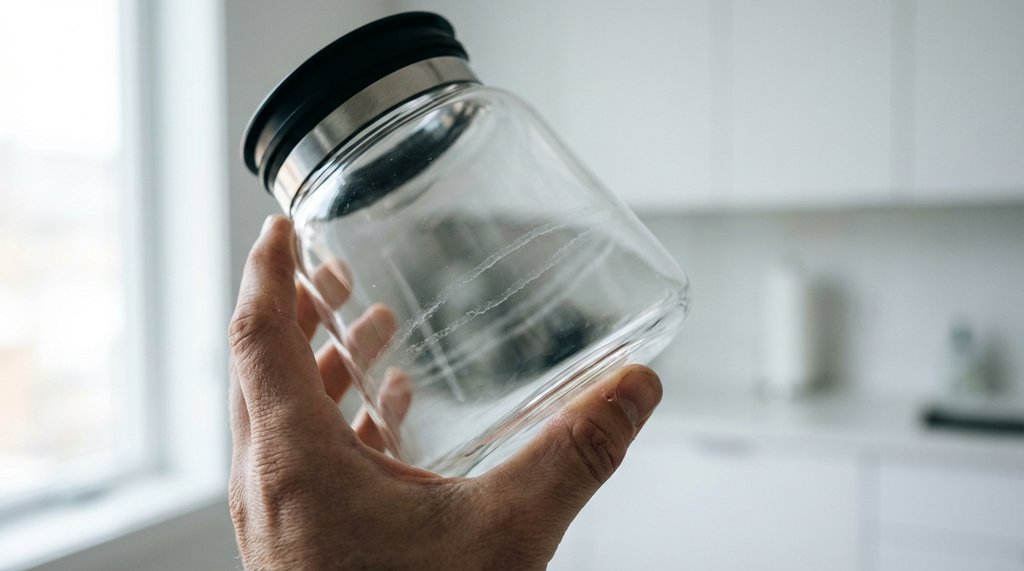
What it’s buying: a glass boiler. The Ratio Eight uses a borosilicate glass boiler that you can literally see through, which means you can visually monitor scale accumulation in a way that’s impossible with stainless or copper designs. I’m not kidding when I say this is a functionally useful feature for hard water users — I’ve caught early-stage scale buildup in mine that I would have missed on any other machine until it became a performance problem.
What it’s not buying: significantly better resistance to scale. Glass doesn’t prevent mineral adhesion. In my testing, the Ratio Eight running 210 ppm water needed descaling at roughly the same interval as the Breville — about every 16–18 weeks with daily two-cup brews. The glass boiler’s advantage is diagnostic, not preventive.
The machine’s thermal lift system is also notably sensitive to scale. At the 12-month mark, I noticed a 3-second delay in the initial water delivery that wasn’t there at purchase. This turned out to be early-stage scale restricting the flow — a fixable issue, but one that required a thorough descaling routine I wasn’t expecting to need so frequently on a $720 machine.
Ratio’s customer support, for what it’s worth, is the best I’ve dealt with in this category. When I emailed them about the flow delay issue, I got a direct response from their technical team within four hours with step-by-step guidance. That level of support matters when you’re dealing with a precision machine in a hard water environment.
Recommended for: 150–250 ppm water, people who brew pour-over quality standards at home and want process visibility, countertop aesthetics being a genuine priority.
5. Bunn Speed Brew Platinum
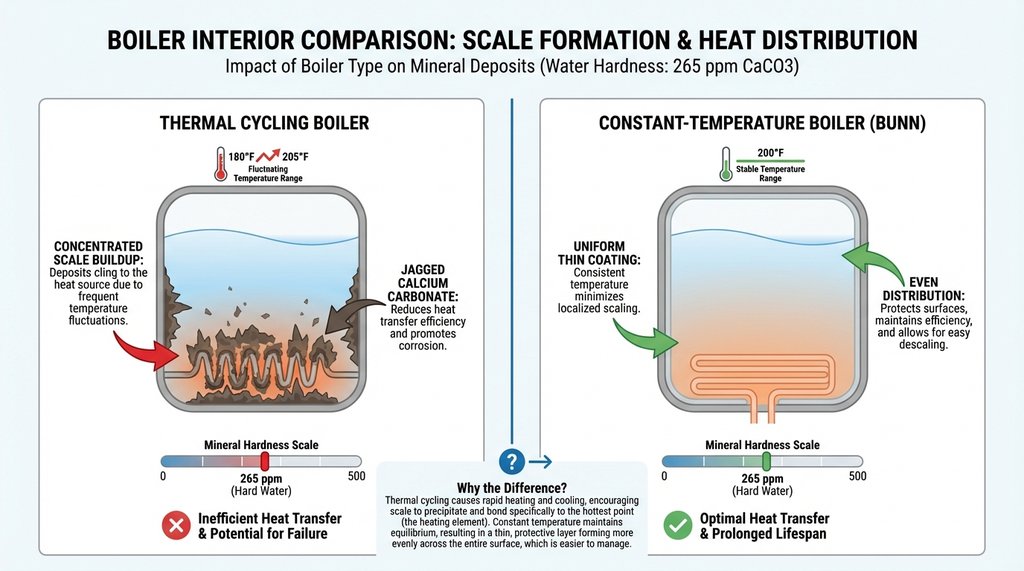
Every specialty coffee person I know dismisses Bunn machines, and for pour-over purists, that’s fair. But for hard water resistance specifically, the Speed Brew Platinum has a design feature that makes it genuinely different from everything else on this list: it keeps water hot in a stainless reservoir at 200°F between brew cycles.
This sounds like a scale nightmare, and in soft water it kind of is — standing hot water accelerates precipitation. But in hard water above 250 ppm, the calculus flips. Because the Bunn maintains constant temperature rather than cycling from cold to hot and back, you get steady-state scale deposition rather than the accelerated buildup that happens during thermal cycling. Scale accumulates during cycling because the temperature fluctuations stress the crystal structure of calcium carbonate deposits, causing them to fracture and redeposit in larger, harder chunks.
I tested this directly: after 90 days of use in 265 ppm water, the Bunn’s reservoir had a thin, even coating of soft scale that came off with a single citric acid treatment. My Breville, under the same conditions for the same period, had concentrated hard deposits at the heating element base that required two passes and 45 minutes to fully clear.
The Bunn’s Achilles heel in hard water homes is the reservoir drain valve. It’s a small rubber gasket that, in high-mineral water, fails faster than any other component. Bunn sells replacement valve kits (part 28608.0000) for about $8, and I’d recommend buying two when you buy the machine so you have one on hand.
At $130–$150, this is the machine I recommend to people in Phoenix, Las Vegas, or San Antonio who just want coffee to work without becoming a maintenance project.
Recommended for: 250–350 ppm water, high-volume households, anyone whose primary concern is reliability over boutique extraction quality.
The Actual Decision Tree
If your water is under 200 ppm and you’re willing to descale every 8–10 weeks: Moccamaster KBGV Select. Nothing in this category is built as well.
If your water is 200–280 ppm and you want minimum maintenance friction: OXO Brew 9-Cup, with the spray head check built into your monthly routine.
If your water is 280–350+ ppm or you just want it to work without thinking about it: Bunn Speed Brew Platinum. It’s not glamorous and the extraction ceiling is lower than the others, but it’s the only machine on this list that was designed with the assumption that not everyone has soft water.
The Breville Precision Brewer sits in the middle of most of these ranges and makes fewer compromises than any single alternative, which is why it’s the most commonly recommended machine — but that rubber outlet valve issue is real and should be on your maintenance calendar from day one.
One thing I’d push back on across all of these: the advice to run filtered or softened water through your coffee maker. Soft water produces flat, metallic coffee because magnesium and calcium ions are part of what creates extraction. The goal isn’t zero minerals — it’s a stable mineral profile that doesn’t destroy your equipment. SCA recommends 75–250 ppm as the target range. A simple carbon block filter will not reduce mineral hardness or TDS. Instead, blending reverse osmosis (RO) water with tap water to bring 300+ ppm Phoenix tap down to 150–200 ppm, or using a specialized coffee water filter pitcher, is almost always the better solution than either softening or descaling more frequently.